



Corrugated Aluminum Sheet Metal
1. Introduction to Corrugated Aluminum Sheet Metal
Corrugated aluminum sheet metal refers to aluminum sheets that manufacturers have cold-formed into a series of parallel ridges and grooves.
This corrugation process dramatically increases the sheet's stiffness and load-bearing capacity perpendicular to the corrugations, transforming a relatively flexible flat sheet into a robust structural panel.
Historically, the concept of corrugating metal for strength dates back to the 19th century, primarily with iron and later steel.
However, as aluminum production became more widespread and cost-effective in the 20th century, its inherent advantages – particularly its light weight and corrosion resistance – made corrugated aluminum an attractive alternative.
Today, despite advancements in material science, corrugated aluminum maintains its modern relevance.
Indeed, its use continually expands due to ongoing innovations in alloys, coatings, and manufacturing techniques, ensuring its place as a high-performance material for contemporary architectural and industrial demands.

2. Alloy Selection and Material Composition
Choosing the right alloy and temper for corrugated aluminum sheet metal underpins both performance and longevity.
Designers balance formability, strength, corrosion resistance, and cost to pinpoint an optimal grade.
In this section, we examine the most common aluminum alloys, the roles of key alloying elements, and how tempering fine-tunes mechanical behavior.
Common Aluminum Grades Used
- 3003: This Mn-strengthened alloy dominates corrugated roofing and siding. With 1.0–1.5 % manganese and minimal magnesium, 3003 delivers a tensile strength around 180 MPa in H14 temper and excellent resistance to general atmospheric corrosion.
- 3105: Sharing 3003's base chemistry, 3105 raises manganese to 1.5–2.0 % for a roughly 10 % increase in yield strength (up to 115 MPa in H14). It retains similar ductility-around 12 % elongation-making it ideal for more heavily loaded wall applications.
- 5005: By adding 0.8–1.2 % magnesium, 5005 achieves 200 MPa tensile strength and 145 MPa yield in H34 temper. This alloy resists pitting in marine environments better than 3003, while still allowing corrugation depths up to 32 mm without cracking.
6061: When structural rigidity tops priority lists-such as in heavy-duty industrial canopies-6061-T6 enters the mix. Containing 1.0 % Mg and 0.6 % Si, it reaches tensile strengths beyond 310 MPa but sacrifices some formability, demanding larger bend radii (≥ 4× thickness).

Role of Alloying Elements
Each alloying element adjusts the aluminum matrix to meet specific demands:
- Manganese (Mn):
At 1–2 %, Mn dissolves in solid solution and forms fine Al₆Mn dispersoids.
These particles refine grain structure, boost work-hardening rates, and deliver up to 20 % higher yield strength without hindering formability. - Magnesium (Mg):
Present at 0.8–1.2 % in 5005 and 6061, Mg provides solid-solution strengthening-elevating tensile and yield strengths by 15–30 %.
It also increases pitting resistance, which proves critical in coastal or industrial atmospheres. - Silicon (Si):
Primarily alloyed in 6061 (0.4–0.8 %) rather than in 3xxx-series, Si promotes fluidity in casting and helps form Mg₂Si precipitates during T6 ageing.
In corrugated sheet production, Si can reduce springback in bends, improving profile fidelity.
Impact of Temper on Performance
Temper designations indicate the degree of cold work or heat treatment, directly influencing strength, ductility, and residual stress:
- O (Annealed): Softest condition, with elongations above 30 % but yields as low as 55 MPa. Rarely used in corrugated panels due to poor stiffness.
- H14 (Strain-Hardened): Imparts a 10–15 % cold-work reduction, achieving 180–200 MPa tensile and 95–115 MPa yield in 3003 and 3105. It strikes a balanced trade-off between bendability and load capacity.
- H24 (Strain-Hardened & Partial Anneal): Applies a mild anneal after work-hardening to regain some ductility (15–20 % elongation) while maintaining elevated strength (~10 % lower than H14). This temper reduces springback and cracking in tighter corrugation radii.
- H34/H36 (Strain-Hardened on Mg Alloys): Used primarily for 5005, H34 and H36 tempers deliver peak yield (up to 145 MPa) and tensile (200 MPa) without additional heat treatment, optimizing marine-grade panels for structural loads.
By understanding how alloy choice and tempering intersect-enhancing strength, controlling ductility, and resisting environmental attack-specifiers ensure that corrugated aluminum panels perform reliably throughout their service life.
3. Manufacturing Processes
Material Selection
Producers match alloy and temper to application:
3003-H14 for highly curved awnings, 5005-H34 for structural wall panels, and 6061-T6 where building codes demand higher wind‐load resistance.
Coil Production and Temper Rolling
The selected alloy is cast into large ingots, which are then hot-rolled and subsequently cold-rolled to the desired thickness.
Temper rolling imparts the specific strain hardening (temper) required.
Corrugation Techniques
- Roll Forming:
This is the most common and efficient method for high-volume production.
The aluminum coil feeds continuously through a series of precisely shaped roller dies arranged in multiple stands.
Each successive roll stand progressively bends the aluminum, gradually forming the desired corrugated profile.
This method allows for long, continuous lengths and complex profiles. Press Forming (Press Braking):
For shorter lengths, custom profiles, or lower volume production, manufacturers may use press forming.
Hydraulic or pneumatic presses equipped with V-shaped or custom-profiled dies bend sections of the sheet.
This method offers flexibility but is generally slower and less economical for large quantities.

Surface Treatments In-Line
- Pre-painting (Coil Coating):
Liquid paint systems (e.g., Polyester, PVDF, SMP) are applied to the flat coil using a continuous roller coating process and then cured in ovens.
This ensures a uniform, high-quality finish. The coil is then corrugated. - Anodizing:
While less common to do in-line for corrugation on a massive scale, flat sheets or cut-to-length pieces can be anodized before or after corrugation if a premium, highly durable metallic finish is desired (common with 5005 alloy). - PVDF (Polyvinylidene Fluoride) Coatings:
These high-performance fluoropolymer coatings, like Kynar 500® or Hylar 5000®, offer exceptional UV resistance, color retention, and chemical resistance, making them ideal for long-life architectural applications.
Quality Control
Rigorous quality control measures are implemented throughout the manufacturing process. These include checks for:
- Thickness: Ensuring consistency across the sheet using micrometers or non-contact gauges.
- Profile Accuracy: Verifying the pitch, depth, and angles of the corrugations against specifications.
- Flatness and Straightness: Checking for any bowing or warping beyond acceptable tolerances.
- Surface Finish: Inspecting for defects in coatings or the base metal.
4. Standard Dimensions and Tolerances
- Thickness (Gauge): 28 GA (0.36 mm) – 16 GA (1.52 mm) with tolerances of ± 0.02 mm.
- Widths: Total coil widths up to 1 250 mm; effective coverage widths of 1 000–1 200 mm after lap allowances.
- Lengths: Stock lengths from 2 000 mm to 6 000 mm; custom extrusion up to 15 000 mm for long‐span applications.
Profile Dimensions: Typical pitch of 76 mm, depths of 18–35 mm, and corrugation angles of 45–60°, tailored to balance stiffness and water‐shedding.
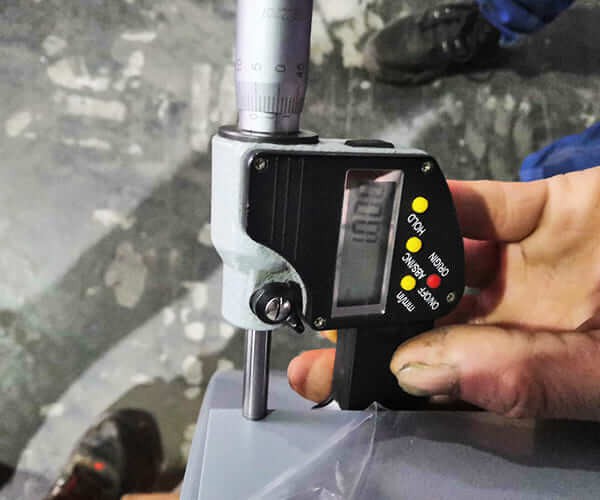
5. Physical and Mechanical Properties
Corrugated aluminum's unique geometry amplifies its inherent material advantages.
By combining a lightweight core alloy with periodic corrugations, manufacturers achieve panels that excel under load, resist impact, and perform reliably across temperature extremes.
Below, we quantify these benefits and explain their practical implications.
Density and Lightweight Advantage
Aluminum's base density of 2.70 g/cm³ underpins its status as a lightweight structural material.
When formed into corrugated panels, designers reduce dead loads on supporting frameworks by up to 50 kg per 10 m² compared to galvanized steel of similar thickness.
This weight savings translates directly into smaller purlins, lighter fasteners, and lower overall project costs.
Tensile and Yield Strength
Below is a detailed breakdown of typical tensile and 0.2 % yield strengths for common corrugated-sheet alloys in their most used tempers:
| Alloy | Temper | Tensile Strength (MPa) | 0.2 % Yield Strength (MPa) |
|---|---|---|---|
| 3003 | H14 | 180 | 95 |
| 3003 | H24 | 160 | 80 |
| 3105 | H14 | 190 | 105 |
| 5005 | H34 | 200 | 145 |
| 6061 | T6 | 310 | 275 |
| 6061 | O | 140 | 55 |
Note:
- 3003-H14/H24 and 3105-H14 represent work-hardened conditions optimized for deep corrugation and bending.
- 5005-H34 leverages Mg-strengthening for better marine performance.
- 6061-T6/O shows the trade-off between high‐strength heat-treatable (T6) and maximum ductility (O).
Flexural Rigidity and Section Modulus of Corrugation
Corrugation increases bending stiffness more than eightfold versus flat sheet of equal gauge.
For a 32 mm-deep profile in 0.76 mm aluminum, flexural rigidity (D) reaches approximately 9 Nm²/m, compared to 1 Nm²/m for a flat panel.
Engineers leverage this gain to design long‐span roofs-up to 3 m unsupported-without intermediate bracing.
Impact Resistance and Energy Absorption
In laboratory drop tests (EN 13501 standard), corrugated aluminum panels withstand 20 J impacts without cracking or permanent deformation.
Their energy absorption during impact also reduces noise and vibration transmission, making them ideal for transportation shelters, industrial enclosures, and areas subject to hail or flying debris.
Temperature-Dependent Behavior
Aluminum expands at 23 µm/m·K, so a 3 m panel may grow by 7 mm over a 30 °C temperature rise. Manufacturers address this by:
- Specifying slotted fastener holes to allow lateral movement.
- Incorporating expansion joints at regular intervals (typically every 6–8 m).
Below –15 °C, some tempers (H14) retain over 80 % of their room-temperature elongation, avoiding brittle failure in cold climates.
At elevated service temperatures up to 80 °C, tensile properties decline by less than 5 %, ensuring stable performance under solar heating or industrial heat loads.
6. Corrosion Resistance and Durability
Native Oxide Film
Aluminum's spontaneous Al₂O₃ layer prevents oxidation in most rural or urban environments, yielding service lives exceeding 30 years when uncoated.
Environmental Effects
Marine salt‐spray tests (ASTM B117) reveal uncoated aluminum begins pitting at ~ 1 200 h, whereas PVDF‐coated panels exceed 5 000 h before coating breakdown.
Coating Systems
- Anodic Oxide: 10–20 µm thick, enhances abrasion resistance.
- PVDF: Meets AAMA 2605, sustaining color and gloss for 20+ years under UV exposure.
- Polyester/Epoxy Hybrid: Cost‐effective option for moderate environments, offering 2 000+ h salt‐spray resistance.
Maintenance Cycles and Lifecycle
Annual rinse with low‐alkaline detergent suffices. Over a 50-year lifecycle, corrugated aluminum's minimal maintenance costs and end-of-life recyclability (100%) yield a 30% lower total‐cost‐of‐ownership than painted steel.
7. Core Advantages and Benefits
Corrugated aluminum sheet metal delivers a suite of performance and sustainability benefits that few competing materials can match.
Below, we highlight seven core advantages-supported by quantitative data and real-world insights-to demonstrate why specifiers consistently choose corrugated aluminum for demanding applications.
Exceptional Strength-to-Weight Ratio
Corrugations amplify panel stiffness by up to 8× versus flat sheet, allowing a 0.61 mm aluminum panel (2.70 g/cm³) to support uniform loads over 2 kN/m² with deflection under L/240.
Consequently, architects reduce supporting-structure weight by up to 50 kg per 10 m² compared to galvanized steel, translating into smaller framing members and lower installation labor.
Superior Corrosion Resistance
Aluminum's natural oxide layer (2–5 nm thick) confers baseline protection, enabling uncoated panels to last 20–30 years in rural and urban environments.
Moreover, factory-applied PVDF coatings (25–35 µm) extend salt-spray resistance from ~1 200 h to over 5 000 h (ASTM B117), ensuring coastal and industrial installations remain free of pitting and maintain their finish for decades.
Thermal Reflectivity and Energy Efficiency
Bright-mill aluminum corrugated panels reflect ≥ 70 % of solar radiation, which cuts roof surface temperatures by 15–20 °C compared to dark absorptive materials.
As a result, building owners can reduce peak cooling loads by up to 20 %, lowering energy consumption and operational costs in hot climates.
Aesthetic Versatility and Design Flexibility
Manufacturers offer corrugated aluminum in dozens of profiles, gauges, and color systems-from natural anodized finishes to custom PVDF hues.
Furthermore, roll-forming and press-forming technologies accommodate curved, tapered, or embossed shapes, empowering designers to create dynamic façades, intricate canopies, and bespoke interior accents without sacrificing performance.
Longevity, Durability, and Low Maintenance
Corrugated aluminum resists denting and fading; in impact tests per EN 13501, panels withstand 20 J drops without cracking.
In service, they require only an annual rinse with mild detergent to remove dirt and salt deposits.
This minimal maintenance-combined with a 50-year design life-yields a total-cost-of-ownership up to 30 % lower than painted steel or composite alternatives.
Fire Resistance
Classified as non-combustible (ASTM E84 Class A; Euroclass A1), corrugated aluminum panels do not contribute to flame spread or smoke development.
Therefore, they meet the strictest building-code requirements for high-rise façades, public assembly roofs, and industrial structures-enhancing occupant safety and reducing insurance premiums.
Recyclability and Sustainability
Aluminum recovers 100 % of its value at end-of-life, and recycled content in new panels often exceeds 80 %, slashing embodied energy by up to 90 % versus primary aluminum production.
Consequently, corrugated aluminum contributes points toward LEED, BREEAM, and other green-building certifications, supporting circular-economy goals and corporate sustainability mandates.
8. Diverse Applications of Corrugated Aluminum Sheet Metal
Roofing Systems
This is arguably the most prominent application for corrugated aluminum.
Its inherent properties make it an ideal roofing material for a wide range of structures:
- Residential Buildings:
Increasingly popular for modern architectural designs seeking a sleek, durable, and energy-efficient roofing solution.
It's also chosen for homes in coastal areas due to its superior corrosion resistance compared to steel.
Profiles can range from classic sinusoidal waves to contemporary trapezoidal designs. - Commercial Buildings:
Widely used for roofing large-span structures like warehouses, retail outlets, shopping malls, and office complexes.
The long lengths achievable with roll-formed corrugated aluminum minimize seams, reducing potential leak points and installation time. - Industrial Facilities:
Factories, processing plants, and workshops benefit from its resistance to industrial pollutants (when properly coated) and its ability to cover vast areas efficiently.
Its non-sparking nature can also be an advantage in certain industrial environments. - Agricultural Structures:
Barns, stables, poultry houses, and storage sheds frequently utilize corrugated aluminum for its longevity, low maintenance, and ability to withstand harsh rural environments.
Its reflective properties can also help keep interiors cooler. Public and Institutional Buildings:
Schools, hospitals, and community centers often opt for corrugated aluminum roofing for its durability, fire resistance, and long-term cost-effectiveness.

Siding and Wall Cladding
Corrugated aluminum serves both functional and aesthetic purposes as a siding and wall cladding material:
- Exterior Protective Siding:
Provides a robust and weather-resistant barrier for buildings, protecting the underlying structure from rain, wind, and sun.
It's a durable alternative to wood, vinyl, or fiber cement siding. - Architectural Facades and Rainscreens:
Architects increasingly use corrugated aluminum to create visually striking and contemporary building facades.
It can be installed horizontally or vertically, and with various profiles and colors, to achieve unique design statements.
As a rainscreen component, it helps manage moisture and improve building envelope performance. - Interior Decorative Paneling:
Its industrial-chic aesthetic makes it popular for interior design elements in lofts, retail spaces, restaurants, and feature walls, adding texture and a modern feel. Sound Barriers:
Perforated corrugated aluminum panels, often with sound-absorbing backing, are used along highways and railways to mitigate noise pollution.

Awnings, Canopies, and Walkway Covers
The lightweight nature and good spanning capabilities of corrugated aluminum make it an excellent choice for these overhead structures:
- Residential Awnings:
Provides shade and protection over windows, doors, and patios. - Commercial Canopies:
Used for storefronts, entrances, and outdoor dining areas, offering weather protection and enhancing curb appeal. - Covered Walkways:
Connects buildings or provides sheltered paths in campuses, transport hubs, and commercial complexes.
Fencing and Barriers
Corrugated aluminum offers a durable, low-maintenance, and often aesthetically pleasing solution for enclosures:
- Privacy Fences:
Provides a solid visual barrier for residential and commercial properties. - Security Fencing:
Can be used in industrial or utility sites, often in taller profiles. - Temporary Hoarding:
Used at construction sites for safety and to screen off work areas. - Decorative Garden Screens:
Smaller corrugated sections can be used to create attractive and durable garden features.
Ductwork and Industrial Enclosures
Its formability and resistance to corrosion are advantageous in these applications:
- HVAC Ductwork:
While less common than galvanized steel for standard ducting, corrugated aluminum can be used for specialized ducting or jacketing, especially where corrosion is a concern or light weight is critical. - Protective Enclosures for Equipment:
Used to house machinery, generators, or electrical components, protecting them from the elements and physical damage. - Tunnel Linings:
In some civil engineering projects, corrugated aluminum can be used for lining smaller tunnels or culverts.
Transportation Applications
The demand for lightweight yet strong materials in the transportation sector makes corrugated aluminum a valuable component:
- Trailer Siding and Roofing:
Commonly seen on semi-trailers and utility trailers, where reducing overall vehicle weight improves fuel efficiency and payload capacity. - Recreational Vehicles (RVs) and Caravans:
Used for body panels due to its light weight and ease of fabrication. - Bus Shelters and Transit Stops:
Provides durable and weather-resistant structures. - Components in Marine Craft:
Smaller boat hulls or superstructures can utilize corrugated aluminum for stiffness and corrosion resistance, especially certain marine-grade alloys. Cargo Containers (Specialized):
While steel dominates standard shipping containers, aluminum is used for some specialized lightweight or refrigerated containers.

DIY Projects and Smaller Structures
The ease of handling and relative simplicity of installation make corrugated aluminum popular among DIY enthusiasts and for smaller constructions:
- Sheds and Garden Outbuildings:
A common choice for roofing and siding small utility structures. - Carports and Lean-tos:
Provides a cost-effective and durable covering. - Greenhouse Panels (Opaque Sections):
Can be used for walls or non-glazed roof sections. - Creative and Artistic Projects:
Artists and designers sometimes use corrugated aluminum for sculptures, installations, or unique furniture pieces.
9. Standards, Codes, and Certifications
ASTM International:
- ASTM B209: Standard Specification for Aluminum and Aluminum-Alloy Sheet and Plate.
- ASTM B221: Standard Specification for Aluminum and Aluminum-Alloy Extruded Bars, Rods, Wire, Profiles, and Tubes (relevant for some trim components).
EN Standards (European Norms):
- EN 485: Aluminum and aluminum alloys - Sheet, strip and plate.
- EN 573: Aluminum and aluminum alloys - Chemical composition and form of wrought products.
Building Codes and Fire Ratings:
- International Building Code (IBC): Provides requirements for roofing and siding materials, including wind load resistance and fire performance.
- Eurocodes: European standards for structural design.
- Fire ratings (e.g., Class A in North America) are typically achievable, confirming non-combustibility.
Environmental Certifications:
- Cradle to Cradle Certified™: Some aluminum products achieve this certification for material health, recyclability, and sustainable manufacturing.
- Environmental Product Declarations (EPDs): Provide transparent data on the environmental impact of a product throughout its lifecycle.
Quality Labels:
- ISO 9001: Indicates adherence to quality management systems in manufacturing.
- ISO 14001: Indicates adherence to environmental management systems.
10. Corrugated Aluminum Sheet Metal vs. Other Materials
Corrugated Aluminum vs. Corrugated Steel (Galvanized/Galvalume)
- Weight: Aluminum is significantly lighter (approx. 1/3 the weight of steel), reducing structural load and easing installation.
- Corrosion Resistance: Aluminum generally offers superior inherent corrosion resistance, especially in marine or unpainted applications.
Steel relies on its coatings (zinc or aluminum-zinc alloy) for protection; once breached, steel rusts. - Cost: Aluminum typically has a higher initial material cost per unit weight, but its lighter weight means less material by weight is needed for the same coverage area.
Life-cycle costs can be competitive due to longevity and low maintenance. - Thermal Properties: Aluminum has better thermal reflectivity.
Corrugated Aluminum vs. Corrugated Plastic/Fiberglass/Polycarbonate
- Strength & Durability: Aluminum offers far superior strength, impact resistance (though it can dent), and dimensional stability, especially over wide temperature ranges.
- UV Resistance & Longevity: Plastics can degrade, become brittle, or discolor with prolonged UV exposure unless specifically formulated. Aluminum maintains its integrity.
- Fire Resistance: Aluminum is non-combustible; plastics typically are combustible and can release harmful smoke.
- Cost: High-quality UV-stabilized plastics can be comparable in price for some applications, but aluminum generally offers better long-term value.
Corrugated Aluminum Sheet Metal vs. Other Roofing/Siding Materials
- Lifespan: Metal roofing, including aluminum, generally outlasts asphalt shingles significantly (40-60+ years vs. 15-30 years).
- Maintenance: Aluminum requires less maintenance than wood (which needs regular painting/staining and is susceptible to rot/insects).
- Weight: Aluminum is much lighter than asphalt shingles or fiber cement siding.
- Recyclability: Aluminum has a higher recyclability rate and value compared to many other options.
11. Conclusion
Corrugated aluminum sheet metal merges lightweight efficiency with unparalleled strength and durability.
Through meticulous alloy selection, precision forming, and advanced coatings, manufacturers deliver panels that withstand decades of service in the harshest environments.
Whether specified for industrial roofing, architectural façades, or DIY projects, corrugated aluminum remains the professional's choice for performance, sustainability, and aesthetic versatility.
FAQs
Q1: What are the primary advantages of using corrugated aluminum sheet metal?
A: Corrugated aluminum offers exceptional strength-to-weight ratio, superior corrosion resistance, and low maintenance requirements.
Q2: In what applications is corrugated aluminum most commonly used?
A: It is widely used in roofing, siding, transportation, and various industrial applications.
Q3: How does corrugated aluminum compare to galvanized steel?
A: Corrugated aluminum is lighter, more corrosion-resistant, and often requires less maintenance than galvanized steel.
Q4: How long does corrugated aluminum roofing last?
A: With proper installation and appropriate alloy/coating selection for the environment, corrugated aluminum roofing can easily last 40 to 60 years, or even longer.
Q5: Can corrugated aluminum be painted?
A: Yes, it can be painted. Most often, it comes pre-painted from the factory using a coil coating process for a durable, uniform finish. Site painting is possible but requires careful surface preparation.
Send Inquiry
