



High-Barrier Aluminum Foil — Ultimate Barrier For Shelf-Life & Stability
1. Introduction
High-barrier aluminum foil (HB-Al foil) and aluminum-based laminates are the industry's go-to materials when near-complete exclusion of oxygen, moisture and light is required to protect product quality and extend shelf life.
Used across food, pharmaceutical, electronics and specialty markets, HB-Al foil combines unmatched barrier performance with formability and heat-sealability.
This article explains what constitutes "high-barrier" in aluminum foil systems, describes common alloys and manufacturing steps, reviews key physical and barrier properties (with representative data), contrasts aluminum-based solutions with competing barrier technologies, and summarizes regulatory and quality-control considerations for specifiers and engineers.
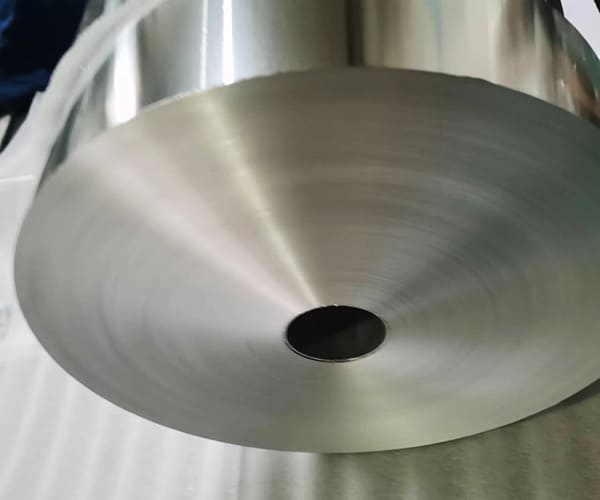
2. What is High-barrier aluminum foil
"High-barrier aluminum foil" refers to aluminum foil constructions (single foil or foil within a laminate) engineered to provide extremely low gas and vapor transmission, negligible light transmission, and reliable mechanical performance in converting and end-use. In practice this means:
- Oxygen transmission is effectively zero (below instrument detection limits).
- Water-vapour transmission is also effectively negligible for the metallic layer; overall WVTR for laminates depends on polymer layers and seals.
- Light and UV are fully blocked.
- Constructions are designed to maintain integrity through forming, filling, sealing and transport.
Because metal foil is essentially an impermeable metallic layer, performance is often limited by defects (pinholes, mechanical damage) and by the performance of non-metal layers (sealants, adhesives, lamination layers).
3. Common Alloys of High-barrier aluminum foil
| Alloy Designation | Primary Chemistry (wt%) | Purity / Total Impurities | Tensile Strength (MPa) | Elongation (%) | Typical Pinhole Density | Standard Thickness Range | Key Applications |
|---|---|---|---|---|---|---|---|
| 1235 | Al: ≥99.35% Fe: 0.30–0.50% Si: ≤0.65% Cu: ≤0.05% | 99.35% Al (<0.65% total) | 50–80 (O-temper) | 20–35 | Moderate (20–50/m² at 9 μm) | 6–50 μm | Flexible packaging, household foil, flexible ducting |
| 1060 | Al: ≥99.60% Fe: 0.25–0.35% Si: 0.20–0.30% Cu: ≤0.05% | 99.60% Al (<0.40% total) | 60–90 (O-temper) | 18–30 | Low (15–40/m² at 9 μm) | 9–50 μm | Food containers, heat exchangers, chemical equipment |
| 1145 | Al: ≥99.45% Fe: ≤0.55% Si: ≤0.55% Cu: ≤0.05% | 99.45% Al | 55–85 (O-temper) | 20–32 | Low (15–35/m² at 9 μm) | 10–200 μm | Electrolytic capacitors, chemical processing equipment, insulation |
| 8011 | Al: Balance Fe: 0.60–1.00% Si: 0.50–0.90% Cu: ≤0.10% Mn: ≤0.20% | ~98.5% Al (1.5% alloying) | 80–110 (O-temper) 140–180 (H18) | 15–25 (O) 3–8 (H18) | Very Low (<10/m² at 20 μm) | 6–200 μm | Pharmaceutical blisters, bottle caps, flexible packaging, heat exchangers |
| 8079 | Al: Balance Fe: 0.70–1.30% Si: 0.50–1.00% Cu: ≤0.05% Zn: ≤0.10% | ~98.2% Al (1.8% alloying) | 90–120 (O-temper) 150–200 (H18) | 12–22 (O) 2–6 (H18) | Very Low (<8/m² at 20 μm) | 8–100 μm | Cold-form pharmaceutical foil (Alu-Alu), high-strength flexible packaging, cable shielding |
| 8021 | Al: ≥99.50% Fe: 0.30–0.60% Si: ≤0.30% Cu: ≤0.05% Other: ≤0.05% each | ≥99.50% Al (Ultra-high purity) | 70–100 (O-temper) | 18–28 | Extremely Low (<5/m² at 25 μm) | 20–100 μm | Premium pharmaceutical primary packaging, biologics, parenteral drug containers |
| 8111 | Al: Balance Fe: 0.50–0.90% Si: 0.40–0.80% Mn: 0.05–0.20% | ~98.7% Al | 85–115 (O-temper) | 16–24 | Low (<12/m² at 20 μm) | 15–80 μm | Intermediate to 8011/8079; specialized lamination applications |
4. Manufacturing Process of High-Barrier Aluminum Foil
4.1 Rolling and thickness control
Aluminum foil is produced by multi-pass cold rolling, often with annealing stages, to reach final gauge and temper. Typical thickness ranges and guidance (typical industry practice - not absolute):
- Household foil: ~10–24 µm (micrometers).
- Flexible packaging foil (laminates): ~6–50 µm (thinner gauges used where polymer layers provide mechanical support).
- Heavier/structural foils (specialty, some blisters): can range from tens to several hundreds of µm depending on forming method (cold-form/thermoforming).
Thickness (gauge) control is critical because barrier performance is insensitive to small thickness changes (the metal layer is impermeable), but mechanical behavior (puncture resistance, formability) and cost are strongly gauge-dependent.

4.2 Laminating and coating
To convert bare metal foil into a package-ready film, the foil is laminated to one or more polymer layers (PET, OPP, PE, adhesive tie layers, etc.) using techniques such as:
- Extrusion lamination - polymer melt extruded onto foil and subsequently laminated.
- Adhesive (wet) lamination - solvent or water-based adhesives join pre-formed films.
- Coating - direct application of heat-seal or barrier coatings to the foil surface (e.g., for sealability or peelable constructions).
Laminates commonly used in high-barrier pouches and sachets include PET/Al/PE, PET/Al/PET, and more complex multi-layer stacks tailored for thermoforming, retort, or peelable seals.
4.3 Surface treatments
Before lamination or printing, foil surfaces are often treated to improve adhesion and printability:
- Corona or plasma treatment - increases surface energy.
- Primers or tie coatings - applied to increase bond strength with adhesives or extruded polymers.
- Lacquers and heat-seal coatings - provide the heat-seal surface and can be formulated for peelable or permanent seals.
4.4 Quality control
QC in foil production and converting targets gauge uniformity, surface cleanliness, lamination bond strength, lack of pinholes, and seal integrity. Typical inline and lab tests include:
- Thickness gauge mapping (eddy-current or beta gauge).
- Visual / automated inspection for flecks and pinholes.
- Adhesion and peel tests for laminated bonds.
- Seal integrity tests (peel strength, burst/pressure tests).
- Barrier testing (OTR/WVTR) where applicable.
5. Properties of High-Barrier Aluminum Foil
5.1 Barrier Performance
Gas Impermeability: Monolithic aluminum exhibits zero bulk permeability. Measured OTR values (0.001–0.01 cm³/m²/24h) reflect transport exclusively through pinholes and defects.
For comparison, EVOH barrier resins achieve 1–3 cm³/m²/24h under ideal conditions, and metallized PET manages 0.5–2.0 cm³/m²/24h.
Moisture Exclusion: Aluminum's hydrophobic native oxide limits WVTR to <0.05 g/m²/24h at 38°C/90% RH, compared to 1–5 g/m²/24h for metallized films.
Moreover, aluminum maintains this performance across 0–100% relative humidity, whereas polymer barriers degrade significantly above 70% RH.
Light and Radiation: Foil >15 μm provides 100% opacity (optical density >4.0), blocking UV degradation of photosensitive pharmaceuticals (e.g., doxorubicin, vitamins).
Additionally, aluminum reflects 95–98% of infrared radiation, providing thermal insulation in building applications.
5.2 Mechanical Properties
| Property | 1235-O (6 μm) | 8011-O (20 μm) | 8079-O (25 μm) |
|---|---|---|---|
| UTS (MPa) | 50–80 | 80–110 | 90–120 |
| Yield (MPa) | 30–50 | 50–80 | 60–90 |
| Elongation (%) | 20–35 | 18–25 | 15–22 |
| Burst Strength (kPa) | 80–120 | 250–350 | 350–450 |
Flex Durability: While foil cracks under severe flexing (Gelbo test: 20–50% OTR increase after 100 cycles), lamination with PET or PP constrains crack propagation, maintaining barrier integrity in dynamic applications.
5.3 Thermal Properties
- Melting Point: 660°C (aluminum substrate)
- Service Temperature: -200°C to 300°C (limited by polymer laminates)
- Thermal Conductivity: 205–235 W/(m·K) through-plane
- Coefficient of Linear Expansion: 23.2×10⁻⁶/°C (critical for heat-seal dimensional stability)
These properties enable steam sterilization (121°C) and retort processing (130°C) without substrate degradation, though delamination risks require compatible polymer selection (PP rather than PE for high temperatures).
5.4 Surface and Aesthetic Qualities
Surface Finish Options:
- Bright Annealed (BA): Mirror finish (Ra <0.1 μm) for decorative pharmaceutical caps
- Mill Finish: Matte surface (Ra 0.3–0.8 μm) for mechanical bonding with adhesives
- Chemical Matte: Etched finish (Ra 0.8–1.2 μm) for enhanced printability
The material accepts high-resolution flexographic and rotogravure printing, enabling brand customization and regulatory marking (lot numbers, expiration dates) at >150 lines per inch resolution.

6. Advantages of High-Barrier Aluminum Foil
6.1 Superior Preservation
By eliminating oxygen and moisture ingress, high-barrier foil prevents oxidation of lipids (rancidity in nuts), hydrolysis of APIs (pharmaceutical degradation), and moisture absorption by hygroscopic chemicals (Li-ion battery electrolytes).
Consequently, products maintain specified potency without chemical preservatives (BHA, BHT) that consumers increasingly reject.
6.2 Extended Shelf Life
Pharmaceutical blisters utilizing cold-form foil (Al 60 μm) achieve 5-year shelf lives for moisture-sensitive drugs, compared to 18–24 months for PVC-only blisters.
Similarly, retort pouches with aluminum laminates enable 2-year ambient stability for ready meals without refrigeration, reducing cold-chain costs by 60–80%.
6.3 Lightweight and Flexible
At 2.7 g/cm³ density, aluminum provides barrier functionality at 50–70% lower weight than steel or glass alternatives.
Furthermore, foils below 25 μm offer hand-formability, allowing converters to create custom pouch sizes without tooling investments, a flexibility impossible with rigid containers.
6.4 Heat Sealability
Despite aluminum's high melting point, laminated constructions (Al/PP or Al/PE) heat-seal at 130–180°C, achieving peel strengths of 4–8 N/25mm.
Induction sealing exploits aluminum's electrical conductivity (35% IACS), generating localized heat through eddy currents to bond foils to container necks without heating the product.
6.5 Aesthetic Customization
The material accepts metallic and holographic embossing, matte/gloss lacquers, and up to 8-color process printing.
Such customization supports premium branding (coffee capsules, luxury chocolates) while simultaneously providing tamper-evidence through irreversible deformation patterns.
7. Applications of High-Barrier Aluminum Foil
7.1 Food and Beverage Packaging
Retort Pouches: PET/Al/PP laminates (Al 7–9 μm) withstand 121°C/30-minute sterilization cycles, delivering shelf-stable curries, soups, and pet foods with 24-month shelf life.
The aluminum layer prevents Maillard browning and lipid oxidation during prolonged storage.
Aseptic Cartons: Paperboard/Al/PE structures (Al 6–7 μm) package milk and juice, utilizing the foil barrier to exclude light and oxygen during 6-month ambient distribution.
Global consumption exceeds 180 billion units annually. Snack Foods: Metallized foil maintains crispness in potato chips and coffee by maintaining internal equilibrium relative humidity <10%, preventing moisture absorption (sogginess) or loss (staling).

7.2 Pharmaceutical and Medical Applications
Cold-Form Blister (Alu-Alu): OPA/Al/PVC laminates utilize 50–60 μm aluminum that deep-draws 8–10 mm to form cavities for tablets/capsules.
This construction provides 100% light blockage and moisture protection for hygroscopic drugs (effervescent tablets, gelatin capsules).
Strip Foil: Al/PE (20 μm/30 μm) laminates package unit-dose medications, providing child-resistant and senior-friendly opening characteristics through controlled tear propagation.
Vial Seals: 8011 alloy (0.18–0.25 mm) forms flip-off caps for injectable drugs, combining hermetic sealing with steam autoclavability (121°C sterilization).
7.3 Industrial Applications
Lithium-Ion Batteries: 40–100 μm aluminum foil serves as cathode current collectors in pouch cells, with PP laminates providing electrolyte barrier and laser-weldability.
The high-purity surface (cleanliness Class 1000) prevents cell shorting.
Insulation Barriers: Al/PE woven fabrics provide reflective insulation (radiant barrier) in building construction, achieving R-value improvements of R-3 to R-6 when properly installed.
Cable Shielding: Al/PET laminates wrap communication cables, providing EMI/RFI shielding (40–80 dB attenuation) at 60–70% lower weight than copper braid.
7.4 Specialty Applications
Cryogenic Storage: Multi-layer insulation (MLI) blankets for LNG storage utilize alternating layers of aluminum foil and fiberglass paper, achieving thermal conductivity of 0.0001–0.0005 W/(m·K) in vacuum conditions.
Electronics: High-purity 1145 foil (99.45% Al) forms electrolytic capacitor anodes after etching and forming processes, requiring oxide uniformity critical for capacitance stability.

8. Comparative Analysis with Alternative Barrier Technologies
| Comparison dimension | High-barrier aluminum foil / Al-laminates | Metallized films | EVOH-based multilayer structures | PVdC / high-barrier coated films | All-polymer multilayer structures |
|---|---|---|---|---|---|
| Typical construction | Aluminum foil (6–50 µm) laminated with polymers (e.g., PET/Al/PE, Alu-Alu) | PET or OPP base film with vacuum-deposited aluminum layer | Multilayer co-extruded or laminated structures (e.g., PET/EVOH/PE) | Polymer films coated with PVdC or other barrier coatings | Engineered multilayer polymer stacks (e.g., PET/PE/EVOH/PE) |
| Representative OTR (package level) | ≈ 0 (below instrument detection limit) | 0.01 – 2 cm³·m⁻²·day⁻¹ | <0.01 – 0.1 cm³·m⁻²·day⁻¹ (under low humidity) | 0.01 – 0.1 cm³·m⁻²·day⁻¹ | 0.01 – 0.5 cm³·m⁻²·day⁻¹ |
| Representative WVTR (package level) | <0.01 g·m⁻²·day⁻¹ (high-performance laminates) | 0.05 – 1 g·m⁻²·day⁻¹ | 0.01 – 0.5 g·m⁻²·day⁻¹ | 0.02 – 0.5 g·m⁻²·day⁻¹ | 0.01 – 0.5 g·m⁻²·day⁻¹ |
| Light-barrier performance | Complete light blocking (>99.9%) | Very good but not absolute | None (transparent or translucent) | None (unless combined with opaque layer) | None (unless pigmented or opaque layers used) |
| Sensitivity to humidity | Low (aluminum layer unaffected by humidity) | Low–moderate (metal layer vulnerable to abrasion) | High (EVOH barrier decreases at high RH) | Moderate | Depends on polymer combination |
| Mechanical & converting robustness | Good (requires control of pinholes and mechanical damage) | Good but lower abrasion resistance | Good | Good, though coatings can be process-sensitive | Good; can be engineered for forming and retort |
| Relative cost level | High | Low–medium | Medium | Medium–high | Medium |
| Recyclability / end-of-life | Pure aluminum highly recyclable; multi-material laminates difficult | Often recyclable if mono-material base film | Favorable for mono-material design strategies | Coatings complicate recycling | Good potential depending on structure |
| Typical applications | Coffee, powdered milk, pharmaceutical blisters, electronic moisture-barrier packaging | Snack packaging, decorative and cost-sensitive packs | Oxygen-sensitive foods, some pharmaceutical packaging | Ready meals, high-barrier flexible packs | Food pouches, retortable packaging |
| Key advantages | Best overall barrier performance + complete light protection | Low cost, lightweight, good appearance | Excellent oxygen barrier under dry conditions | High barrier in thin layers | Balance of barrier performance and recyclability |
| Main limitations | Higher cost; recycling challenges for laminates | Lower absolute barrier than true foil | Performance degrades at high humidity | Environmental/regulatory concerns; recycling issues | Difficult to achieve absolute barrier and light blocking |
9. Standards, Regulations, and Compliance
Key considerations for compliance:
- Food contact safety: adhesives, coatings and polymer layers must meet local food-contact regulations (e.g., US FDA food contact notifications / EU Framework Regulation (EC) No 1935/2004) and migration limits where applicable.
- Pharmaceutical standards: blister and pouch materials intended for pharmaceutical use often require documented supplier GMP practices, traceability, and validation of packaging performance (moisture ingress, seal integrity).
- Barrier testing standards: industry standard methods such as ASTM F1249 (WVTR by instrumental method) and ASTM E96 (water vapor transmission gravimetric method) are widely used. Oxygen transmission testing follows instrument-specific protocols and must report test conditions.
- Recyclability and labeling: designers must consider local collection and recycling infrastructure; multi-material laminates can be challenging to recycle mechanically.
10. Conclusion
High-barrier aluminum foil stands as the definitive packaging material for applications demanding absolute environmental isolation.
By selecting appropriate alloys-ranging from ultra-pure 1235 for flexible lamination to high-strength 8079 for deep-drawn pharmaceutical blisters-engineers optimize the balance between barrier performance, mechanical integrity, and cost.
Furthermore, integration with advanced lamination technologies creates composite structures that leverage aluminum's impermeability while addressing its limitations through polymer heat-seal layers.
As regulatory pressures increase for extended pharmaceutical shelf life and reduced food waste, the technical specifications of high-barrier aluminum foil-quantified by OTR <0.01 and WVTR <0.05-provide the measurable performance necessary for critical packaging applications where failure is not an option.
FAQs
Q1 - Is aluminum foil always "food-safe"?
A: The aluminum metal itself is inert in most food contact situations.
However, finished packaging often includes adhesives, sealants and polymer layers - those must be food-grade and compliant with the relevant regulatory regime (FDA, EU, etc.).
Always verify supplier documentation for food-contact compliance.
Q2 - How does foil compare to metallized film for aroma-rich products?
A: True foil generally outperforms metallized films for aroma retention and long-term barrier because metallized layers are microscopically discontinuous and are more susceptible to abrasion and pinholes.
Q3 - Can foil laminates be recycled?
A: Pure aluminum is infinitely recyclable. Mixed metal-polymer laminates pose recycling challenges in conventional streams.
Several industrial recycling and delamination technologies exist, and circular-economy design (peelable layers, mono-material approaches) improves recyclability.
Check local infrastructure and supplier DfR (design for recycling) guidance.
Q4 - What are common failure modes for foil packaging?
A: Pinholes or microtears (mechanical damage), poor adhesion/delamination in laminates, defective seals, and compatibility issues with inks/coatings. Robust incoming inspection and inline QC reduce these risks.
Q5 - When should I specify cold-form foil vs. heat-formable foil?
A: Cold-form foil (thicker, ductile) is chosen for cold-form blistering where material flow forms cavities without heat; thermoformable laminates use heat and a polymer face web to create cavities.
Specify based on forming process (cold vs. thermoforming), dose protection needs and desired barrier integrity.
Send Inquiry
