



8021 Cold Forming Aluminum Foil — Deep Draw & Low Pinhole Material
1. Introduction
The demand for high-performance materials capable of complex shaping at ambient temperatures has led to the specialization of aluminum alloys. Among these, 8021 cold forming aluminum foil stands out as a paramount solution.
Specifically engineered for deep drawing and intricate cold forming processes, 8021 alloy offers an exceptional blend of ductility, consistent formability, and superior barrier properties.
Unlike general-purpose foils, its precisely controlled microstructure minimizes defects like tearing and "earing," making it indispensable in critical applications such as pharmaceutical cold-form blister packaging, deep-drawn food containers, and specialized electronic enclosures.
This article delves into the metallurgical science, manufacturing intricacies, key properties, and diverse applications that underscore 8021 foil's authoritative position in advanced cold forming.

1. What is Aluminum Foil and Cold Forming
1.1 What is Aluminum Foil?
Aluminum foil is a thin, flexible sheet of aluminum typically less than 0.2 millimeters (200 micrometers) thick, produced through a series of hot and cold rolling operations.
It combines lightweight properties with excellent corrosion resistance, thermal conductivity, and complete impermeability to light, moisture, oxygen, and microorganisms.
These characteristics make it indispensable in industries where product protection, shelf-life extension, and hygiene are paramount.
1.2 Introduction to Cold Forming (Cold Stamping/Drawing)
Cold forming refers to a group of metalworking processes that involve shaping metal at temperatures significantly below its recrystallization temperature, typically at room temperature.
For foils, this often includes cold stamping, deep drawing, and bending.
Deep Drawing: A process where a flat sheet metal blank is formed into a three-dimensional shape (like a cup or box) by drawing it into a die cavity with a punch.
Advantages of Cold Forming: It yields parts with excellent dimensional accuracy, improved surface finish, and enhanced mechanical properties (due to work hardening). Crucially, it avoids the oxidation and scale formation associated with hot forming, making it ideal for precision and aesthetic applications.
Challenges: Cold forming requires materials with high ductility and specific flow characteristics. If the material is unsuitable, issues such as tearing, cracking, or excessive "earing" (uneven material flow leading to wavy edges) can occur, leading to high scrap rates.
1.3 Why a Specialized Alloy for Cold Forming Foil?
While standard aluminum foils like 1235 (pure aluminum) or 8011 (general-purpose Al-Fe-Si alloy) offer good general formability for many uses (e.g., wrapping, simple bending), they are not optimized for the extreme demands of deep drawing or complex cold forming. These processes require a foil with:
Exceptional and Consistent Ductility: The ability to stretch and deform significantly without fracturing.
Precise Microstructure Control: To manage work hardening rates and promote uniform material flow.
Low Anisotropy (Directional Properties): To minimize "earing" during deep drawing, ensuring consistent flange height and reducing material waste.
Superior Resistance to Tearing: Especially when forming deep cavities or intricate shapes.
General-purpose foils may exhibit inconsistent formability, higher tearing rates, and excessive earing, rendering them inefficient or unsuitable for precision cold forming.
This necessitates the development of specialized alloys like 8021.
2. Materials Science and Metallurgy of 8021 Aluminum Alloy
2.1 Chemical Composition
8021 aluminum foil is classified within the 8xxx series (Al-Fe-Si system), with composition optimized for cold formability and barrier performance:
| Element | Content (wt%) | Metallurgical Function |
|---|---|---|
| Aluminum (Al) | ≥98.3 | Base matrix; provides ductility and corrosion resistance |
| Iron (Fe) | 0.5–1.0 | Forms Al-Fe-Si intermetallics; enhances strength and controls grain structure |
| Silicon (Si) | 0.3–0.7 | Eutectic formation with Fe; improves fluidity and rolling characteristics |
| Copper (Cu) | ≤0.05 | Minimized to prevent corrosion susceptibility |
| Manganese (Mn) | ≤0.2 | Grain size control; limited to avoid excessive work hardening |
| Magnesium (Mg) | ≤0.05 | Trace levels for solid solution strengthening |
| Zinc (Zn) | ≤0.1 | Impurity control |
| Titanium (Ti) | ≤0.05 | Grain refiner during casting |
2.2 Phase Transformations and Microstructure Control
Grain Structure and Texture:
For deep drawing, an equiaxed (equally sized in all directions) and fine grain structure is highly desirable.
This promotes uniform deformation and reduces the likelihood of localized thinning and tearing.
The rolling process and intermediate annealing steps are carefully controlled to achieve a specific crystallographic texture (preferred orientation of grains) that minimizes planar anisotropy.
Anisotropy (Planar & Normal):
Planar Anisotropy: Refers to the variation of mechanical properties (like yield strength and ductility) in different directions within the plane of the sheet. For deep drawing, low planar anisotropy is crucial to prevent "earing"-the formation of wavy edges on the drawn cup, which leads to significant material waste (often 5-10% in less optimized alloys).
Normal Anisotropy (r-value): The plastic strain ratio (r-value) measures the ratio of width strain to thickness strain during uniaxial tension. A high and uniform r-value indicates good resistance to thinning through the thickness, meaning the material will flow into the die cavity more readily rather than thinning excessively. For 8021, r-values typically range from 0.8 to 1.2, and crucially, this value is kept consistent across different directions in the sheet.
Recrystallization Behavior:
The precise control of annealing temperatures and times (both intermediate and final) is vital.
This ensures complete recrystallization of the work-hardened microstructure, resulting in a soft, ductile 'O' temper with the desired grain size and texture, ready for severe deformation.
3. Manufacturing and Processing of 8021 Cold Forming Aluminum Foil
The production of 8021 cold forming aluminum foil is a highly specialized and technically demanding process, meticulously controlled to impart the alloy's unique formability.

3.1 Ingot Casting and Homogenization
Casting: High-purity aluminum and precisely weighed alloying elements (Fe, Si) are melted and cast into large ingots. The casting process is optimized to control solidification rates, minimizing segregation and ensuring a uniform distribution of alloying elements.
Homogenization: Ingots undergo a crucial high-temperature heat treatment. This process dissolves and spheroidizes coarse intermetallic phases formed during casting, leading to a more uniform microstructure and significantly improving hot workability and final cold formability.
3.2 Hot Rolling
The homogenized ingots are hot-rolled at elevated temperatures to reduce their thickness to an intermediate gauge (e.g., 2-6 mm).
This process further refines the grain structure and prepares the material for subsequent cold working, ensuring the initial metallurgical state is conducive to deep drawing characteristics.
3.3 Cold Rolling to Foil Gauge
This is the most critical stage for achieving the final foil thickness and mechanical properties.
Multi-Pass Rolling: The material undergoes numerous passes through powerful cold rolling mills, with significant thickness reduction in each pass.
Intermediate Annealing: Between rolling passes, the foil typically undergoes intermediate annealing. This process softens the work-hardened material, allowing it to be further reduced without fracturing, and plays a key role in developing the desired grain structure and texture for formability.
Precision Control: Extreme precision in rolling parameters (speed, tension, reduction per pass) is maintained to ensure uniform thickness (gauge control) across the width and length of the foil.
3.4 Final Annealing (Temper 'O')
After achieving the desired final gauge, the foil undergoes a final full annealing treatment to achieve the 'O' (fully annealed) temper.
Controlled Heating and Cooling: This heat treatment is carefully controlled in terms of temperature and time. It promotes complete recrystallization, transforming the severely work-hardened microstructure into a soft, ductile state. This 'O' temper is essential for maximum formability, ensuring the foil can undergo deep drawing without tearing.
Surface Quality: Annealing parameters also help in preventing "sticky foil" issues where layers adhere to each other due to surface roughness or residual lubricants.
3.5 Slitting and Winding
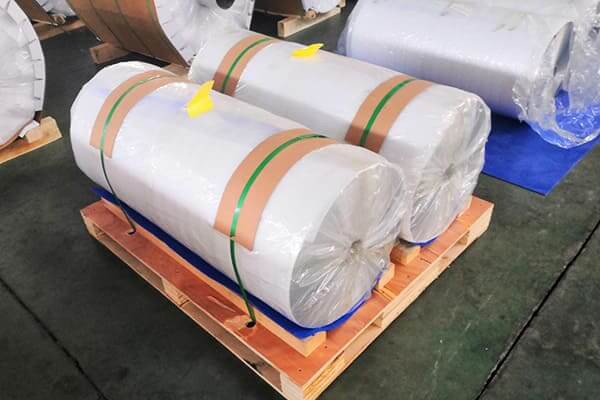
The wide, annealed foil coils are precisely slit into narrower strips of specific widths required by end-users.
The slitting operation must be clean and burr-free to prevent defects. The slit coils are then wound onto cores under controlled tension to create high-quality, stable rolls for packaging and transport.
3.6 Surface Finish and Quality Control
Throughout the entire manufacturing process, rigorous quality control is paramount:
Surface Inspection: Advanced optical and automated inspection systems detect surface defects (e.g., scratches, stains) and pinholes. For pharmaceutical blister foils, a near-zero pinhole count is critical.
Mechanical Property Testing: Samples are regularly tested for tensile strength, yield strength, elongation (typically >10% for O temper), and crucial r-value (plastic strain ratio) to confirm optimal deep drawing performance and minimal planar anisotropy.
Dimensional Accuracy: Gauge (thickness) and width are continuously monitored and controlled to stringent tolerances.
Metallurgical Analysis: Microstructural analysis confirms the desired grain size, texture, and intermetallic distribution.
4. Key Properties of 8021 Cold Forming Aluminum Foil
The specialized manufacturing and metallurgical control endow 8021 cold forming aluminum foil with a unique set of properties optimized for severe deformation.
4.1 Superior Formability and Ductility
High r-value: As discussed, 8021 is engineered for a high average plastic strain ratio (r-value), typically in the range of 0.8 to 1.2. This indicates exceptional resistance to thinning through the thickness during drawing, allowing material to flow into deeper cavities without fracturing.
Low Planar Anisotropy: The minimal variation of r-value in different directions results in very low "earing" during deep drawing. This significantly reduces material waste and allows for more consistent flange heights on drawn components, enhancing efficiency.
High Elongation: In its 'O' temper, 8021 foil exhibits high elongation values, often 12-18%, meaning it can stretch significantly before fracture. This ductility is essential for complex shapes and deep draws.
Benefit: Enables manufacturers to create intricate, deep, and precisely formed shapes with high reliability and minimal scrap rates, which is crucial for cost-sensitive high-volume production.

4.2 Mechanical Properties (O Temper)
Tensile Strength: Typically in the range of 80-120 MPa (11.6-17.4 ksi).
Yield Strength: Often 30-60 MPa (4.3-8.7 ksi).
Elongation: As noted, >10%, typically 12-18%.
These properties allow the foil to deform easily and uniformly under cold forming pressure.
The final strength of the component is then derived from the work hardening that occurs during the forming process itself.
4.3 Excellent Barrier Properties
Like all aluminum foils, 8021 inherently offers an outstanding barrier.
Absolute Barrier: It provides an impermeable barrier against moisture, oxygen, light, and micro-organisms.
Pinhole-Free Capability: Through stringent control during casting and rolling, 8021 is produced with an extremely low density of pinholes, which is critical for maintaining barrier integrity, especially after forming into complex shapes. This is paramount for moisture-sensitive products.
Benefit: Essential for protecting sensitive contents like pharmaceuticals from environmental degradation, ensuring product stability and shelf life.
4.4 Thermal and Electrical Conductivity
Thermal Conductor: Aluminum's excellent thermal conductivity (approx. 205 W/m·K) allows for efficient heat transfer, beneficial in applications requiring heat dissipation or insulation.
Electrical Conductor: Good electrical conductivity (approx. 60% IACS) makes it suitable for certain electrical components, although its primary use is not as a conductor itself in these applications.
Benefit: Contributes to the overall functional profile, for instance, in controlled-temperature packaging or specific electronic enclosures.
4.5 Surface Finish and Aesthetics
8021 foil can be produced with consistent surface quality.
Clean and Uniform Surface: Provides an ideal substrate for printing, lacquering, or lamination, crucial for branding and product information.
Bright or Matte Finish: Depending on the rolling process, it can exhibit a bright, reflective finish or a matte appearance.
Benefit: Supports high-quality branding and functional coatings.
4.6 Recyclability
Aluminum is infinitely recyclable without loss of properties. While current cold-form structures-typically triplex laminates of foil/nylon/PVC-are not easily recyclable in municipal streams due to material complexity, industry initiatives are advancing mono-material alternatives.
Recycling 8021 scrap requires only 5% of the energy needed for primary production, offering significant environmental benefits when collection systems are in place.
5. Applications of 8021 Cold Forming Aluminum Foil
The exceptional cold forming capabilities of 8021 aluminum foil make it the material of choice for applications requiring complex, seamless, and high-barrier structures.
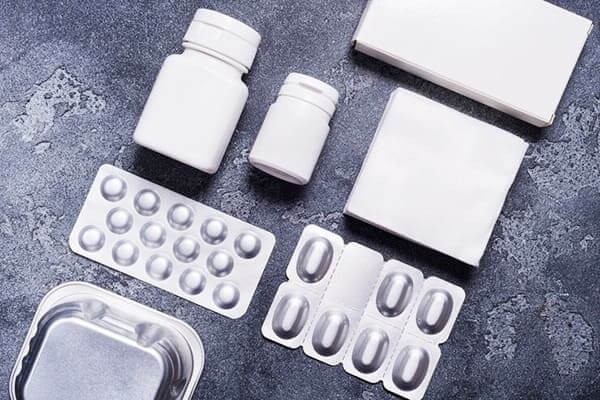
5.1 Pharmaceutical Packaging (Cold Form Blister Foils - "Formable Foils")
This is arguably the most dominant and critical application for 8021 foil.
Primary Application: Production of pharmaceutical cold-form blister packs, often referred to as "formable foils."
Requirements: Absolute barrier protection for highly sensitive drugs against moisture, oxygen, light, and microbial ingress. The ability to be deep drawn into precise, uniform cavities without pinholes or tearing is paramount. The foil must also be non-reactive with pharmaceutical compounds.
Process: 8021 foil is typically laminated with polymer layers (e.g., OPA/Alu/PVC or OPA/Alu/PP) to create a multi-layer composite. The 8021 aluminum core provides the deep-draw capability and ultimate barrier, while the polymer layers facilitate heat sealing and provide structural support. This creates individual, tamper-evident pockets for pills, capsules, or tablets.
5.2 Food Packaging
8021 foil's formability and barrier properties are highly valued in the food industry.
Deep Drawn Containers: Used to produce small, seamless, rigid aluminum containers for specialty foods, pet food, premium desserts, or ready meals. These containers offer excellent product protection and are often ovenable.
Formable Lids and Closures: High-quality, deep-drawn lids for yogurt cups, coffee capsules, single-serve condiment portions, or other dairy/beverage products requiring a robust and easily openable seal. The material's formability allows for intricate sealing profiles.
Portion Packs: For products like coffee capsules, tea pods, or individual jam/sauce portions, where complex, deep cavities need to be formed to perfectly fit the contents while providing an absolute barrier.
5.3 Automotive & Battery Applications
Battery pouch cells demand puncture resistance, sealability and thermal management.
8021 in thicker gauges (30–80 µm) acts as an inner barrier/structural layer in pouch stacks, contributing to seam integrity and mechanical protection.
5.4 Electronic Components
Miniaturization and precision drive the use of 8021 in electronics.
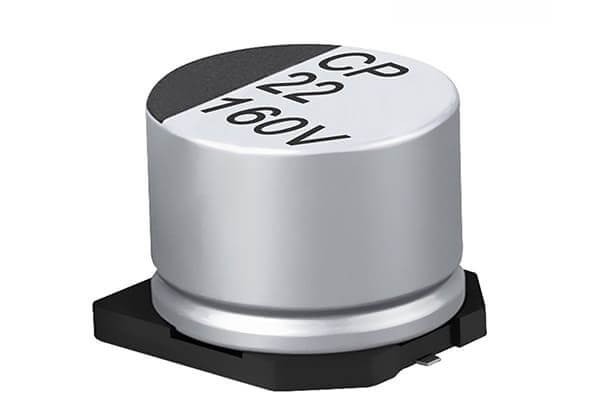
Capacitor Housings/Cans: Small, deep-drawn aluminum cans or enclosures for electrolytic capacitors. The material's formability allows for precise, seamless enclosures that protect the capacitor's internal components and ensure consistent internal volume.
Battery Cases (Small Format): For miniature batteries in consumer electronics or medical devices, 8021 can be deep drawn into complex shapes, providing a protective, lightweight enclosure.

5.5 Other Industrial Uses
Any application requiring a thin-gauge aluminum formed into complex 3D shapes can potentially benefit.
Small Formed Parts: Custom industrial components, specialized trays, or enclosures where precision cold forming of thin aluminum is required.
Medical Devices: Beyond pharmaceuticals, some small, formable aluminum components for medical instruments or drug delivery systems may utilize 8021 for its barrier and formability.
6. Considerations of 8021 Cold Forming Aluminum Foil
While 8021 cold forming aluminum foil offers exceptional advantages, its successful application requires careful consideration of several key factors throughout design, processing, and integration.
6.1 Temper Selection
'O' Temper Dominance: For cold forming applications, 8021 foil is almost exclusively used in its 'O' (fully annealed) temper. This temper signifies maximum ductility and minimum strength, which is crucial for allowing the material to deform significantly without fracturing.
Work Hardening: While in 'O' temper, the material will naturally work harden during the cold forming process, increasing its strength in the final formed part. Designers must account for this change in mechanical properties from the initial foil to the finished component.
Consistency: Ensuring consistent 'O' temper across batches is vital for predictable forming behavior and uniform product quality in high-volume production.
6.2 Thickness
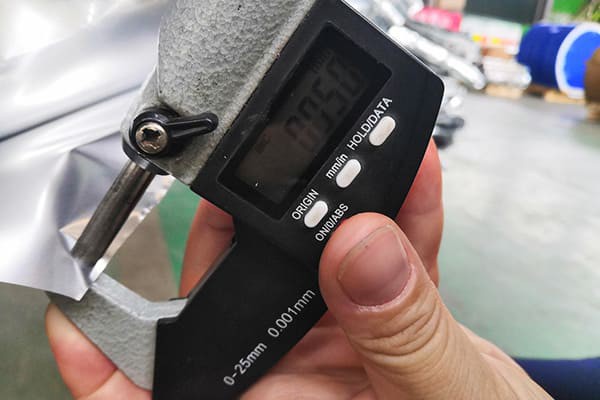
Gauge Specificity: 8021 foil is produced in various gauges, typically ranging from 25 microns (0.001 inch) up to 150 microns (0.006 inch) for cold forming applications, with common pharmaceutical blister foils often being 45-60 microns.
Impact on Formability and Barrier: Thinner gauges are more flexible but inherently offer slightly less resistance to pinholes during extreme deep drawing. Thicker gauges provide more robust barrier properties and mechanical strength but require higher forming forces and may have slightly reduced ductility. The optimal thickness is a balance between required barrier integrity, mechanical robustness of the formed part, and the achievable draw depth.
6.3 Lubrication in Cold Forming
Crucial for Success: Effective lubrication is paramount in cold forming aluminum foil. Aluminum has a tendency to gall (adhere) to tooling surfaces under high pressure.
Types of Lubricants:
Dry Film Lubricants: Often applied as a very thin polymer coating during foil manufacturing or as a pre-treatment.
Liquid Lubricants: Oils or emulsions applied just before forming.
Function: Lubricants reduce friction between the foil and the punch/die, allowing the material to flow smoothly, preventing tearing, reducing tool wear, and improving surface finish of the formed part. Improper lubrication is a leading cause of defects.
6.4 Lamination Compatibility
Multi-Layer Structures: In its most critical application (pharmaceutical blister packaging), 8021 foil is rarely used alone but as a core layer in a multi-layer laminate (e.g., OPA/Alu/PVC).
Adhesion: The surface of the 8021 foil must be optimized for strong and consistent adhesion to the laminating polymer films. This often involves specific surface treatments or primers applied during foil manufacturing or lamination.
Layer Interaction: The properties of the polymer layers (e.g., their formability, temperature resistance, chemical inertness) must be compatible with the 8021 foil to ensure the entire laminate performs as a cohesive unit during forming and throughout the product's shelf life.
6.5 Pinhole Control
Barrier Integrity: For sensitive products like pharmaceuticals, the complete absence of pinholes in the formed foil is non-negotiable for barrier integrity.
Manufacturing Control: Pinhole formation is meticulously controlled during the entire foil manufacturing process (casting, rolling, annealing). 8021's specialized metallurgy helps minimize pinholes even at thin gauges.
Post-Forming: The cold forming process itself, if not optimally managed, can induce micro-pinholes or tears. Proper tooling design, lubrication, and process parameters are critical to prevent this.
Testing: Blister packs are subjected to rigorous leak detection tests to ensure no pinholes are present after forming and sealing.
6.6 Cost-Benefit Analysis
Higher Material Cost: 8021 cold forming aluminum foil typically has a higher material cost per unit weight or area compared to general-purpose aluminum foils (e.g., 8011, 1235) due to its specialized alloy composition and more intensive manufacturing process.
7. Comparison with Other Aluminum Alloys for Cold Forming
| Parameter | 8021 | 8011 | 8079 | 1235 | 3003 |
|---|---|---|---|---|---|
| Alloy Series | 8xxx (Al-Fe-Si optimized) | 8xxx (Al-Fe-Si) | 8xxx (Al-Fe-Si) | 1xxx (Commercial purity) | 3xxx (Al-Mn) |
| Primary Design Purpose | Cold forming & high-barrier foil | General packaging foil | Packaging & container foil | Household & light packaging | Semi-rigid containers |
| Typical Temper for Forming | O / H22 | O / H22 | O | O | O |
| Tensile Strength (MPa) | 90–150 | 80–140 | 85–150 | 60–120 | 110–170 |
| Yield Strength (MPa) | 40–90 | 35–80 | 40–85 | 20–60 | 70–120 |
| Elongation (%) | 15–30 | 10–20 | 10–22 | 15–35 | 8–15 |
| Deep Draw Performance | ★★★★★ | ★★★★ | ★★★★ | ★★★ | ★★★★ |
| Cup Height Stability | Excellent | Good | Good | Moderate | Good |
| Pinhole Control | Excellent (low density) | Good | Good | Moderate | Good |
| Barrier Reliability (WVTR/OTR) | Very High | High | High | Moderate | High |
| Lamination Compatibility | Excellent | Good | Good | Moderate | Good |
| Web Handling Strength | Good | Good | Good | Low | Very Good |
| Typical Cold-Forming Thickness (µm) | 18–80 | 15–60 | 15–60 | 8–50 | 20–120 |
| Relative Cost Level | Premium | Medium | Medium | Low | Medium |
| Typical Applications | Pharma blister, battery pouch | Food blister, seals | Packaging foil | Household foil | Food trays |
8. Industry Specifications and Quality Requirements
Although no single corporate entity like Huawei sets public standards for this material, leading global converters and pharmaceutical companies enforce stringent internal specifications aligned with international norms. Typical requirements include:
Alloy Designation: 8021
Temper: O (Fully Annealed)
Thickness Range: e.g., 0.045 mm - 0.100 mm (45 - 100 microns)
Width Range: e.g., 50 mm - 1200 mm (slit to customer requirements)
Tensile Strength (MPa): e.g., 80-120 MPa
Yield Strength (MPa): e.g., 30-60 MPa
Elongation (%): e.g., ≥12% (in 50mm)
r-value (Plastic Strain Ratio): e.g., 0.8-1.2, with minimal directional variation
Pinhole Count: e.g., <5 pinholes/m² @ 60 microns (or per unit area/gauge)
Surface Finish: Bright/Matte, suitable for printing/lamination
Wettability/Dyne Level: For lamination adhesion
Compliance: Adherence to international standards such as ASTM B479, EN 546-2, or relevant pharmaceutical grade standards (e.g., USP, EP).
Packaging: Details on core type, coil OD/ID, packaging for transport.
9. Conclusion
8021 cold-forming aluminum foil is a modern engineering product targeted at applications where deep drawing, low pinhole density and strong barrier performance are essential.
It combines metallurgical tuning, rigorous processing and controlled surface finishing to deliver consistent forming performance and improved yield.
For critical applications-pharmaceutical blister packs, battery pouches and specialty packaging-specifying 8021 and qualifying suppliers through MTRs, sample trials and clear acceptance criteria is a practical way to reduce risk and improve manufacturing outcomes.
FAQs
Q1 - What gauge of 8021 should I choose for pharmaceutical blisters?
Typical choices are 18–50 µm, selected by required cup depth and seal architecture. Very shallow blisters can use lighter gauges (~18–25 µm); deep cavities need thicker gauges.
Q2 - How do I validate a supplier's pinhole claim?
Request MTRs, pinhole test reports and run at least one sample coil on your production tooling with full laminate, then perform WVTR/OTR and seal integrity tests on finished packs.
Q3 - Can 8021 be welded or heat treated after forming?
Welding is possible but requires removal of surface oils/oxides and welding parameters tuned for thin foil. 8021 is not heat-treatable for strengthening; annealing is used to adjust temper and ductility.
Q4 - How much process variation is acceptable?
Specification should set limits on thickness tolerance (µm), tensile/elongation ranges, pinhole count per m² and coil-to-coil thickness variation; acceptable Cp/Cpk targets (e.g., Cp ≥ 1.33, Cpk ≥ 1.33) can be established for critical dimensions.
Send Inquiry
