


8011 Aluminum Foil For Snack Bags
1. Introduction
8011 Aluminum Foil for Snack Bags plays a critical role in preserving product freshness, flavor, texture, and shelf life.
Products such as potato chips, nuts, crackers, and dried fruit can deteriorate when exposed to moisture, oxygen, light, and external odors.
For manufacturers and packaging converters, selecting the right barrier material is therefore essential to maintaining product quality throughout storage, transportation, and retail distribution.
8011 aluminum foil is one material that can be considered for high-barrier flexible snack packaging. Its aluminum layer can provide an excellent barrier against light, moisture, and gases when the foil remains intact.
In practical applications, manufacturers usually combine the foil with polymer films and adhesives to create a multilayer packaging structure that provides barrier protection, mechanical strength, printability, and heat-sealing performance.
However, packaging performance depends on more than the alloy designation.
Foil thickness, pinhole quality, surface cleanliness, lamination compatibility, and the properties of the finished package all influence the final result.
A suitable material specification should therefore reflect the snack's sensitivity to moisture and oxygen, the intended shelf life, the packaging equipment, and the expected distribution environment.
2. What Is 8011 Aluminum Foil for Snack Bags?
2.1 Definition and Material Characteristics
8011 aluminum foil is a wrought aluminum alloy in the 8xxx series, primarily alloyed with iron (Fe) and silicon (Si).
Manufacturers process it through rolling and annealing to produce thin, flexible foil with controlled thickness and surface quality.
For snack packaging, converters commonly use soft-annealed 8011-O foil as a barrier layer in flexible laminates.
The O temper provides a soft, ductile material that can be handled and bonded during converting.
The appropriate thickness and temper depend on the laminate design and the requirements of the converting process.
2.2 Why 8011 Aluminum Foil Is Used in Snack Packaging
The main purpose of the aluminum foil layer is to limit the transfer of external environmental factors into the package and help retain product quality.
Light protection: An intact foil layer blocks light, helping protect light-sensitive ingredients and fats.
Moisture barrier: Aluminum foil provides a very strong barrier to water vapor, helping dry snacks maintain their intended texture.
Gas and aroma barrier: An intact foil layer strongly limits oxygen transmission and the loss or ingress of volatile aromas.
Flexible conversion: Thin foil can be incorporated into laminated films for roll-fed packaging and pouch production.
Packaging design flexibility: The foil layer can be combined with suitable outer and inner films to meet printing, handling, and sealing requirements.
These benefits depend on the integrity of the foil and the complete package.
Pinholes, flex cracks, poor lamination, or defective seals can reduce the barrier performance of the finished snack bag.
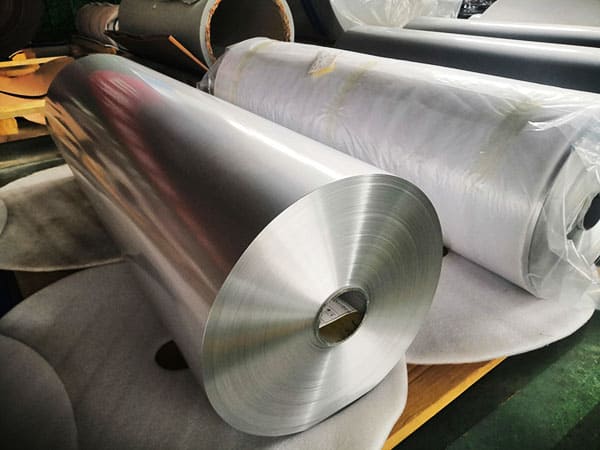
3. Key Specifications of 8011 Aluminum Foil for Snack Bags
Selecting the correct specifications for 8011 aluminum foil is essential for achieving consistent barrier performance, stable lamination, and efficient pouch production.
Buyers should evaluate the foil according to the finished package design rather than choosing thickness or width in isolation.
3.1 Typical Technical Specifications of 8011 Aluminum Foil for Snack Bags
The specifications of 8011 aluminum foil for snack bags should account for foil thickness, alloy temper, surface quality, coil dimensions, and converting requirements.
| Parameter | Typical Specification |
|---|---|
| Alloy | 8011 |
| Temper | O (Annealed) |
| Foil Thickness | 6–12 μm |
| Thickness Tolerance | Agreed tolerance based on thickness and applicable standard |
| Foil Width | 200–1,500 mm, customizable |
| Width Tolerance | Defined in the purchase specification |
| Surface Finish | Mill finish; typically one bright side and one matte side |
| Surface Cleanliness | Controlled rolling-oil residue and contamination |
| Pinhole Quality | Thickness-specific limits agreed between buyer and supplier |
| Tensile Strength | Confirm according to temper, thickness, and applicable standard |
| Elongation | Confirm according to temper, thickness, and applicable standard |
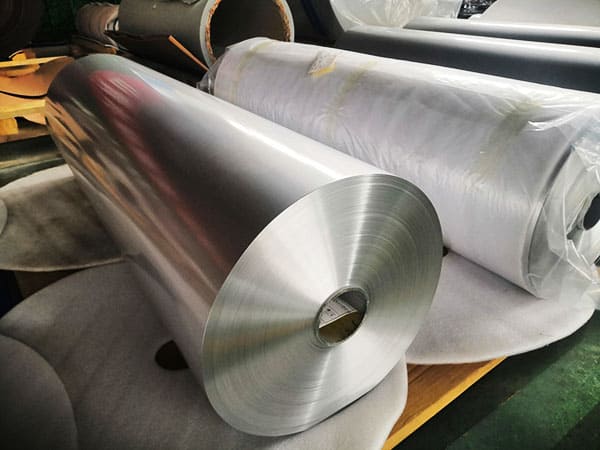
| Coil Inner Diameter (ID) | 76 mm or 152 mm, subject to confirmation |
| Coil Outer Diameter (OD) | Approximately 300–800 mm, subject to order requirements |
| Coil Weight | Customized to equipment limits and order requirements |
| Edge Condition | Clean slit edges with controlled burrs |
| Splices | Quantity and marking requirements agreed before production |
| Core Material | Paper or another compatible core, as agreed |
| Packaging | Moisture-resistant export packaging |
| Main Applications | Snack bags, chips, nuts, crackers, and dry-food laminates |
| Downstream Processing | Lamination, printing of other laminate layers, slitting, and pouch conversion |
| Quality Documentation | Material certificate and agreed inspection records |
4. Chemical Composition of 8011 Aluminum Foil
The chemical composition of 8011 aluminum foil determines its alloy classification and contributes to its mechanical and processing characteristics.
The alloy primarily uses iron and silicon as alloying elements, while aluminum forms the balance of the material.
For snack packaging, composition control supports consistent foil production.
4.1 Chemical Composition Table
The following table presents representative composition limits commonly published for 8011 foil under relevant product specifications.
Exact limits can differ according to the governing standard and edition, so the applicable standard should be stated in the purchase order and verified against the manufacturer's material certificate.
| Element | Representative Content (wt.%) | Main Significance |
|---|---|---|
| Aluminum (Al) | Remainder | Forms the base metal and provides the foil's primary barrier function |
| Iron (Fe) | 0.60–1.00 | Contributes to alloy strength and influences rolling behavior |
| Silicon (Si) | 0.50–0.90 | Works with iron to influence the alloy's microstructure and processing characteristics |
| Copper (Cu) | ≤ 0.10 | Controlled as a minor alloying element |
| Manganese (Mn) | ≤ 0.20 | Limited to maintain the specified alloy composition |
| Magnesium (Mg) | ≤ 0.10 | Present only at a low level in the representative specification |
| Zinc (Zn) | ≤ 0.10 | Controlled as a minor element |
| Titanium (Ti) | ≤ 0.08 | Limited according to the relevant composition specification |
Important: This table is a representative composition reference, not a substitute for a standard-specific chemical analysis certificate.
Some specifications use different ranges-for example, a wider permitted silicon range.
Confirm the required composition against the exact standard and product specification before ordering.

5. Physical and Mechanical Properties of 8011 Aluminum Foil
The physical and mechanical properties of 8011 aluminum foil influence its barrier performance, flexibility, handling stability, and suitability for snack-bag production.
For packaging applications, the most important factors include density, thermal conductivity, tensile strength, elongation, thickness consistency, and resistance to defects during converting.
These properties depend on foil thickness, temper, rolling conditions, and annealing.
Therefore, buyers should use the values in the applicable material specification or supplier's test certificate when establishing acceptance criteria.
5.1 Physical Properties
| Property | Typical Reference Value | Significance for Snack Packaging |
|---|---|---|
| Alloy | 8011 | Al-Fe-Si alloy commonly used for rolled foil products |
| Density | Approximately 2.70 g/cm³ | Helps determine material weight and consumption |
| Thermal Conductivity | Approximately 130–220 W/(m·K), depending on material condition and reference source | Influences heat transfer through the foil layer during processing |
| Melting Range | Approximately 640–660°C | Describes the metal's high-temperature behavior; not the allowable temperature of a complete laminate |
| Surface Appearance | Typically one bright side and one matte side | Depends on rolling method and foil configuration |
| Light Barrier | Essentially opaque when intact | Helps protect light-sensitive snack ingredients |
| Moisture and Gas Barrier | Extremely high when the foil layer is intact | Helps limit moisture ingress, oxygen transmission, and aroma transfer |
The physical values above are indicative references. Thermal conductivity varies with composition, temperature, and material condition; the exact figure is generally less important for snack packaging than the foil's integrity and the performance of the complete laminate.
5.2 Mechanical Properties of 8011-O Aluminum Foil
The O temper is fully annealed and relatively soft, making it suitable for many flexible-packaging lamination applications.
However, mechanical properties vary with gauge and test method, especially for very thin foil.
The following ranges are indicative reference values for 8011-O foil, not universal acceptance limits.
| Foil Thickness | Indicative Tensile Strength | Elongation | Main Consideration |
|---|---|---|---|
| 6–9 μm | Approximately 60–90 MPa | Thickness- and test-dependent | Requires careful handling and pinhole control |
| 10–20 μm | Approximately 65–95 MPa | Thickness- and test-dependent | Balance of flexibility and handling robustness |
| 21–50 μm | Approximately 70–100 MPa | Generally increases with thickness and test conditions | May offer greater robustness for applications requiring a heavier foil gauge |
Note: These ranges are compiled from published supplier reference data and should not replace a standard-specific specification.
Elongation results can differ significantly according to gauge, specimen geometry, and test method. Confirm certified values with the supplier before ordering.
6. Key Properties of 8011 Aluminum Foil for Snack Bags
8011 aluminum foil is widely considered for snack packaging because of its excellent barrier properties and compatibility with flexible laminates.
Its performance depends on foil integrity, thickness, surface quality, and the design of the complete package.
6.1 Excellent Light Barrier
Intact aluminum foil blocks light, helping protect light-sensitive ingredients and reduce light-related deterioration of oils, flavors, and colors.
This makes it suitable for opaque, high-barrier snack bags.
6.2 Strong Moisture Barrier
Aluminum foil provides an excellent barrier against water vapor, helping snacks such as chips and crackers retain their crispness.
Actual moisture protection also depends on laminate quality and package seal integrity.
6.3 Excellent Oxygen and Aroma Barrier
An intact foil layer greatly limits oxygen transmission and aroma transfer.
This can help reduce oxidation in nuts and fried snacks while preserving characteristic flavors.
6.4 Good Flexibility and Lamination Compatibility
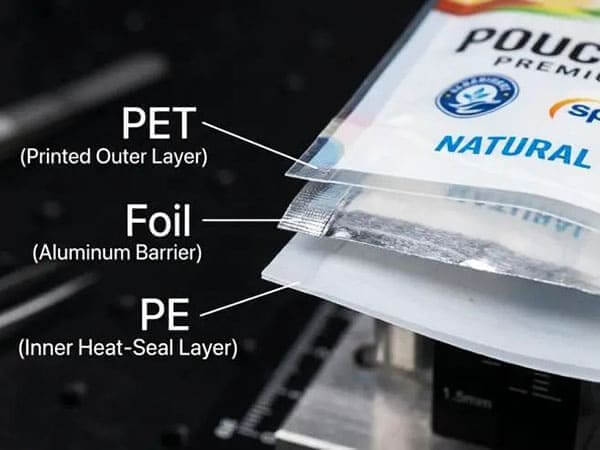
Soft-annealed 8011-O foil can be laminated with suitable materials such as PET, PE, and CPP.
In a multilayer structure, the outer film provides printability and support, the foil supplies barrier protection, and the inner film provides heat sealing.
6.5 Surface Quality and Processing Consistency
Consistent thickness, clean surfaces, and controlled edge quality support stable slitting and lamination.
Excessive rolling-oil residue, scratches, wrinkles, or contamination can affect adhesive bonding and increase production defects.
6.6 Limitations to Consider
Thin aluminum foil can develop pinholes or flex cracks during handling and distribution.
It also requires a suitable sealing layer in most snack-bag structures. In addition, multilayer foil packaging can be difficult to recycle through conventional systems.

7. Common Laminate Structures of 8011 Aluminum Foil for Snack Bags
8011 aluminum foil is generally used as one layer within a flexible packaging laminate rather than as a standalone snack bag.
Each layer contributes specific functions, including printability, mechanical strength, barrier protection, and heat sealing.
The appropriate laminate structure depends on the snack's moisture sensitivity, fat content, target shelf life, filling process, and distribution conditions.
7.1 PET / Adhesive / Aluminum Foil / Adhesive / PE
Structure: PET / AL / PE
A common high-barrier laminate for flexible food packaging.
| Layer | Main Function |
|---|---|
| PET | Provides a printable outer surface, stiffness, and mechanical support |
| Adhesive | Bonds PET to the foil |
| 8011 aluminum foil | Provides the primary barrier against light, moisture, and gases |
| Adhesive | Bonds the foil to the inner film |
| PE | Commonly provides heat sealing and a suitable inner packaging surface |
This structure is suitable for evaluating applications such as nuts, crackers, chips, and other dry snacks that require strong barrier protection.
The actual PE grade and laminate construction must meet the package's sealing and food-contact requirements.
7.2 PET / Adhesive / Aluminum Foil / Adhesive / CPP
Structure: PET / AL / CPP
| Layer | Main Function |
|---|---|
| PET | Supports printing and dimensional stability |
| Aluminum foil | Provides the principal barrier layer |
| CPP (cast polypropylene) | Can provide heat sealing and mechanical performance when correctly specified |
CPP may be selected when the converter needs a polypropylene-based sealant layer.
However, seal initiation temperature, seal strength, hot tack, and compatibility with the packaging line must be verified before production.
This structure can be considered for selected snack pouches, depending on the required sealing performance and package design.
7.3 BOPP / Adhesive / Aluminum Foil / Adhesive / PE
Structure: BOPP / AL / PE
BOPP (biaxially oriented polypropylene) provides an outer film option for packaging applications requiring good print presentation and handling characteristics.
The aluminum foil supplies the barrier, while PE commonly provides the heat-sealing layer.
The suitability of this construction depends on the selected BOPP grade, adhesive system, foil gauge, and inner sealant film.
Buyers should also confirm the intended printing method and the packaging converter's lamination process.
7.4 Comparison of Common Laminate Structures
| Laminate Structure | Primary Advantages | Potential Applications | Key Considerations |
|---|---|---|---|
| PET / AL / PE | Strong barrier, printable outer layer, widely used sealing structure | Nuts, chips, crackers, dry snacks | Confirm seal performance and laminate bonding |
| PET / AL / CPP | Foil barrier with a CPP-based sealant option | Selected snack pouches | Verify sealing window and line compatibility |
| BOPP / AL / PE | Combines an oriented polypropylene outer film with a foil barrier and PE sealant | Selected flexible snack packaging | Confirm printability, adhesive compatibility, and seal properties |
| Paper / AL / PE | Paper-based exterior appearance combined with foil barrier and a heat-sealing layer | Selected wraps and specialty snack packaging | Evaluate fold behavior, moisture exposure, and seal integrity |
These structures are design options rather than interchangeable solutions.
Their performance depends on the exact film grades, foil thickness, adhesive system, sealing conditions, and finished-package quality.
8. Applications of 8011 Aluminum Foil for Different Snack Products
8011 aluminum foil can serve as the barrier layer in flexible packaging for a range of snack products.
Its suitability depends on the product's sensitivity to moisture, oxygen, light, and aroma, as well as the required shelf life and package format.

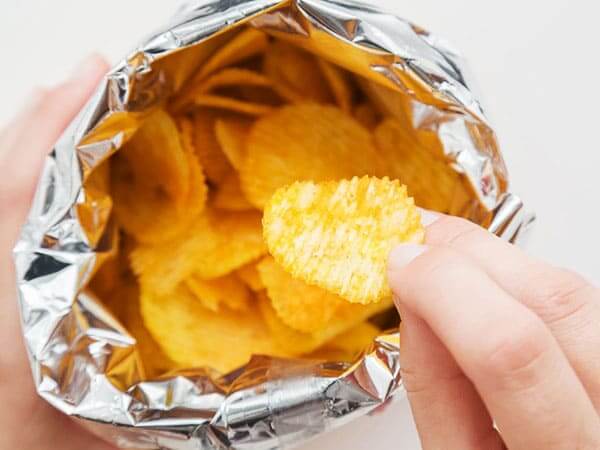
8.1 Potato Chips and Other Fried Snacks
Key packaging requirements
Maintain crispness by limiting moisture ingress.
Reduce oxygen exposure that may contribute to fat oxidation.
Protect the product from light.
Maintain reliable seals during storage and distribution.
Fried snacks often contain oils that can oxidize over time, leading to undesirable flavor changes.
A foil laminate can provide a strong barrier against oxygen, moisture, and light, helping preserve product quality.
The complete package also needs suitable puncture resistance, reliable seals, and compatibility with the filling line.
In addition, controlling residual oxygen during filling can be important for products susceptible to oxidation.
8.2 Nuts and Seeds
Key packaging requirements
Limit oxygen exposure to help control oxidation.
Protect characteristic aromas and flavors.
Reduce moisture transmission.
Provide sufficient package durability for distribution.
Nuts and seeds may contain substantial amounts of unsaturated fats, making oxidation control an important packaging consideration.
A foil-based laminate can help limit oxygen and light exposure when its barrier layer remains intact.
Package size, headspace oxygen, flushing conditions, and storage temperature also influence product stability.
The selected structure should therefore be validated against the product's shelf-life target rather than relying on foil alone.
8.3 Crackers and Biscuits
Key packaging requirements
Preserve a crisp texture.
Limit moisture uptake.
Protect against external odors.
Prevent damage during handling and transport.
Crackers and biscuits can lose crispness when they absorb moisture. A properly designed foil laminate can help control moisture ingress and protect aroma-sensitive ingredients.
Because these products can break under compression, the overall package design should also provide suitable mechanical protection.
Depending on the product format, the converter may need to balance barrier performance with stiffness, pouch shape, and resistance to handling damage.
8.4 Dried Fruit Snacks
Key packaging requirements
Control moisture transfer.
Protect color and aroma.
Limit exposure to oxygen and light where relevant.
Maintain package integrity throughout distribution.
Dried fruit products vary considerably in moisture content, sugar composition, and sensitivity to oxidation.
Some products can absorb moisture and become sticky, while others may lose moisture and become excessively hard.
A foil laminate may be appropriate where strong environmental protection is required.
However, the required moisture barrier should be based on the fruit's formulation, target texture, and storage conditions.
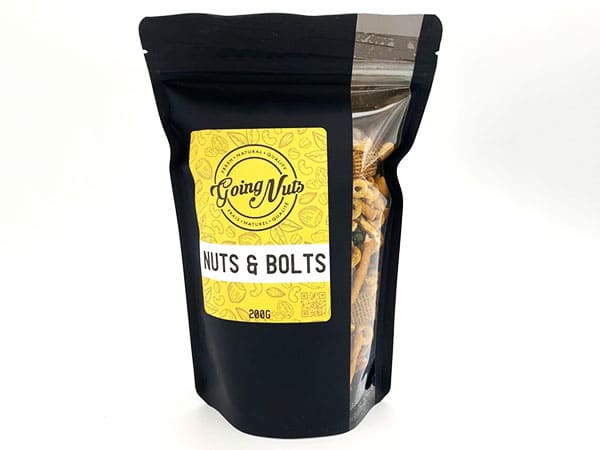
8.5 Seasoned Snacks and Snack Mixes
Key packaging requirements
Retain seasoning aromas.
Reduce moisture exposure.
Protect fats and flavor-sensitive ingredients.
Maintain seals despite differences in product shape.
Seasoned snack mixes may contain oils, spices, powders, and ingredients with different moisture sensitivities.
A high-barrier foil laminate can help protect the combined product from external moisture, oxygen, and aroma transfer.
The converter should also assess whether crumbs, powders, or oily residues may contaminate the sealing area during filling.
Even a high-barrier laminate cannot compensate for a defective seal.
9. 8011 Aluminum Foil vs. Other Alloys for Snack Bags
| Comparison Item | 8011 Aluminum Foil | 1235 Aluminum Foil | 8079 Aluminum Foil | 8021 Aluminum Foil |
|---|---|---|---|---|
| Alloy Series | 8xxx | 1xxx | 8xxx | 8xxx |
| Main Characteristics | Balanced strength, processability, and cost | High aluminum purity and good ductility | Good foil-forming and flexible-packaging characteristics | Commonly used in specialized high-barrier packaging |
| Mechanical Properties | Suitable for general flexible packaging | Soft and ductile | Depends on thickness and temper | Depends on thickness and temper |
| Barrier Performance | Excellent when the foil remains intact | Excellent when the foil remains intact | Excellent when the foil remains intact | Excellent when the foil remains intact |
| Lamination Compatibility | Suitable for PET, PE, and other compatible film structures | Suitable for flexible laminates | Suitable for flexible laminates | Suitable for specialized laminate structures |
| Snack Bag Applications | Chips, nuts, crackers, and mixed snacks | General flexible packaging and selected snack laminates | Snack packaging requiring consistent foil quality and processing | Specialized high-barrier packaging applications |
| Main Advantages | Balanced performance and broad application potential | High purity and ductility | Suitable for demanding foil-processing requirements | Suitable for selected specialized packaging needs |
| Selection Considerations | Verify thickness, pinhole quality, surface condition, and converting performance | Confirm strength and processing suitability at the required gauge | Evaluate actual processing performance and supply specifications | Confirm whether the application requires its specific properties |
| Best Selection Basis | General-purpose snack-bag requirements | Purity and ductility priorities | More demanding processing or quality requirements | Specialized packaging requirements |
Note: The table provides general selection guidance. Actual performance depends on alloy composition, temper, foil thickness, manufacturing quality, lamination structure, and finished-package testing.
No alloy automatically guarantees better barrier performance than another when the foil is intact and manufactured to the same relevant quality requirements.
10. Manufacturing Process of 8011 Aluminum Foil for Snack Bags
Manufacturing 8011 aluminum foil requires control over alloy composition, rolling reduction, annealing, surface quality, and final coil dimensions.
For snack-bag applications, the supplier must also consider the requirements of downstream printing, adhesive lamination, slitting, and pouch making.
10.1 Main Production Stages
Alloy preparation and casting
The producer controls the chemical composition of the molten aluminum and casts it into suitable rolling stock.
Composition control helps ensure consistent material properties during subsequent processing.
Hot rolling and cold rolling
Rolling reduces the material to the required gauge. Multiple passes progressively reduce thickness while controlling flatness, surface condition, and thickness consistency.
Foil rolling
Specialized foil mills produce the specified thin gauge. Operators monitor thickness variation, rolling stability, surface defects, and pinhole quality according to the agreed specification.
Annealing
Controlled annealing adjusts softness and ductility to the required temper, such as O temper.
Temperature and time must suit the material and target properties.
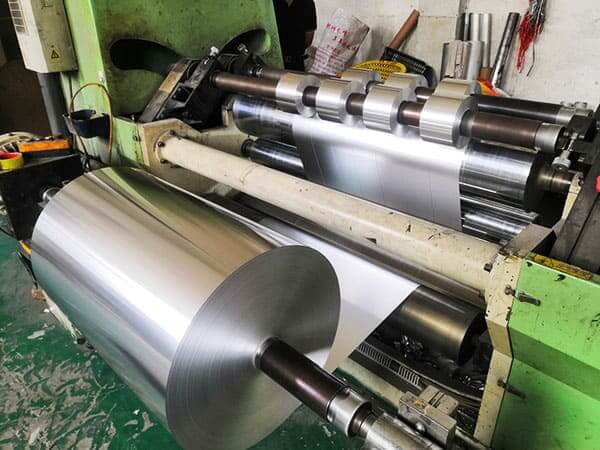
Slitting and rewinding
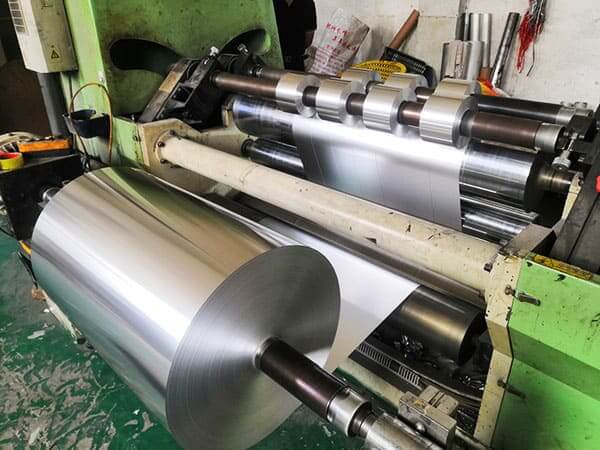
The master coil is slit to the required width and rewound into customer-specified rolls.
Edge quality, winding tension, roll alignment, and splice requirements are important for downstream processing.
Inspection and packaging
The producer checks key dimensions and surface conditions, reviews applicable test records, and protects the coils against moisture, contamination, and transport damage.
11. Factors Affecting the Price of 8011 Aluminum Foil for Snack Bags
The price of 8011 aluminum foil depends on raw material costs, foil specifications, production requirements, order volume, and delivery conditions.
Buyers should compare quotations based on the same technical requirements rather than unit price alone.
11.1 Main Cost Factors
| Factor | Impact on Price |
|---|---|
| Aluminum ingot price | Market fluctuations in primary aluminum directly influence material costs. |
| Foil thickness | Thicker foil uses more aluminum per square meter; very thin foil may require tighter process control and generate more production waste. |
| Alloy and temper | Alloy composition and the required temper affect processing conditions and the properties that the producer must achieve. |
| Quality requirements | Tighter thickness tolerances, stricter pinhole limits, and additional inspections may increase production costs. |
| Coil width and dimensions | Non-standard widths, specified inner diameters, and special coil weights may require additional setup or handling. |
| Surface and lamination requirements | Requirements for low residue, consistent surface quality, and reliable adhesive bonding may affect process control and inspection. |
| Order quantity | Larger orders may distribute setup and production costs across more material, subject to the producer's minimum order quantity. |
| Packaging and logistics | Export packaging, freight, insurance, delivery terms, and destination requirements affect the final landed cost. |
11.2 How to Control Procurement Costs
Buyers can manage costs without compromising package performance by:
Selecting the thinnest gauge that consistently meets barrier and converting requirements, validated through trials.
Confirming width, coil weight, core dimensions, and tolerances before requesting a quotation.
Avoiding unnecessary specifications while retaining essential controls for pinholes, cleanliness, and thickness.
Comparing total usable material cost, including waste and production downtime, rather than price per kilogram alone.
Providing a realistic forecast so the supplier can evaluate production scheduling and order quantities.
A lower-priced roll may not be the most economical option if it causes frequent web breaks, poor lamination, or excessive scrap.
The target should be a stable finished package at a competitive total cost.
12. Reliable 8011 Aluminum Foil Supplier – Huawei
Henan Huawei Aluminum Co., Ltd. is a China-based aluminum manufacturer established in 2001.
Its published product range includes aluminum foil, strip, coil, sheet, and plate, alongside other aluminum products.
For buyers sourcing 8011 aluminum foil for snack bags, Huawei Aluminum can be considered as a potential supplier.
Before placing an order, buyers should confirm the company's current availability for the specific alloy, temper, thickness, and food-packaging application.
12.1 What to Confirm with a Supplier
When evaluating Huawei Aluminum or another manufacturer, request clear answers to the following questions:
Material specifications: Can the supplier provide the required 8011 alloy, O temper if needed, thickness, width, and coil dimensions?
Quality control: Are thickness consistency, pinhole criteria, surface cleanliness, edge quality, and mechanical properties covered by documented inspection procedures?
Technical documentation: Can the supplier provide a material certificate, inspection records, and traceability information for the delivered batch?
Lamination suitability: Can the foil meet the surface and cleanliness requirements of the intended adhesive and film system?
Food-contact documentation: Can the supplier provide relevant declarations or supporting documents for the intended food-contact use? Compliance must be assessed for the actual material and finished packaging structure.
Order and delivery terms: Are the minimum order quantity, sample availability, lead time, export packaging, and shipping terms acceptable?
13. Conclusion
8011 Aluminum Foil for Snack Bags is a practical option for snack-bag laminates because it offers a useful balance of mechanical properties, processability, and barrier protection.
When properly manufactured and incorporated into a suitable laminate, it can help protect chips, nuts, crackers, and other snacks from moisture, oxygen, light, and aroma transfer.
Successful packaging depends on more than alloy selection. Buyers should specify thickness, temper, pinhole quality, surface condition, and roll dimensions, then verify lamination performance and finished-bag seal integrity.
By comparing suppliers on consistent specifications, technical documentation, production reliability, and total cost, packaging manufacturers can select a foil that meets their product's protection and commercial requirements.
FAQs
Is 8011 aluminum foil suitable for snack bags?
Yes. It can be used as the barrier layer in flexible snack-bag laminates. The final package must meet the required barrier, sealing, and food-contact requirements.
What thickness of 8011 aluminum foil is used for snack bags?
The suitable thickness depends on the laminate structure, target shelf life, and converting process. Buyers should specify the required gauge and validate it through barrier and packaging trials rather than relying on a universal thickness.
Is 8011 aluminum foil better than 1235 aluminum foil?
Neither alloy is always better. 8011 offers a useful balance of strength and processability, while 1235 provides high aluminum purity and good ductility. The choice should depend on processing needs, quality requirements, and total cost.
Can 8011 aluminum foil be laminated with PET and PE?
Yes, where the foil surface, adhesive system, and film grades are compatible. PET commonly provides printability and support, while PE often serves as the heat-sealing layer.
Does aluminum foil alone guarantee a long shelf life?
No. Shelf life also depends on foil integrity, laminate design, seal quality, filling conditions, storage, and the characteristics of the snack itself.
What quality checks should buyers request?
Key checks include thickness and width, pinhole quality, surface cleanliness, mechanical properties, slit-edge condition, coil dimensions, and batch traceability. Finished laminates should also undergo relevant bonding, sealing, and barrier tests.
What affects the price of 8011 aluminum foil for snack bags?
Major factors include aluminum market prices, thickness, temper, quality requirements, order volume, coil dimensions, packaging, and freight.
How can I choose a reliable 8011 aluminum foil supplier?
Confirm the supplier's ability to meet your exact specification, review material and inspection documentation, test samples on your production line, and assess delivery consistency and total usable-material cost.
Send Inquiry
