

Introduction to Aluminium
Aluminium is a lightweight, corrosion-resistant metal known for its versatility and strength. It is widely used in various industries due to its unique properties, including its low density compared to other metals.
Key Properties of Aluminium
Low Density: Approximately 2,700 kg/m³ or 0.1 lb/in³, and cubic foot of aluminum weighs 168.5 pounds.
High Strength-to-Weight Ratio: Offers strength with less weight
Corrosion Resistance: Excellent resistance to various environmental conditions
Recyclability: Highly recyclable with no loss of properties

Density Comparison with Common Metals
To better understand the density of aluminium, it is useful to compare it with other commonly used metals:
| Metal | Density (g/cm³) | Density (kg/m³) |
|---|---|---|
| Aluminium | 2.70 | 2700 |
| Copper | 8.96 | 8960 |
| Iron | 7.87 | 7870 |
| Steel | 7.85 | 7850 |
| Zinc | 7.14 | 7140 |
| Titanium | 4.51 | 4510 |
| Magnesium | 1.74 | 1740 |
Factors Affecting Aluminium Density
Several factors can influence the density of aluminium:
Alloy Composition: Different alloying elements (Aluminium Alloys) can alter the density.
Temperature Variations: Density decreases slightly with increasing temperature.
Purity Levels: Higher purity aluminium tends to have a density closer to the standard value.
Manufacturing Processes: The manufacturing process can affect the density of aluminium products, particularly in castings due to the presence of porosity.
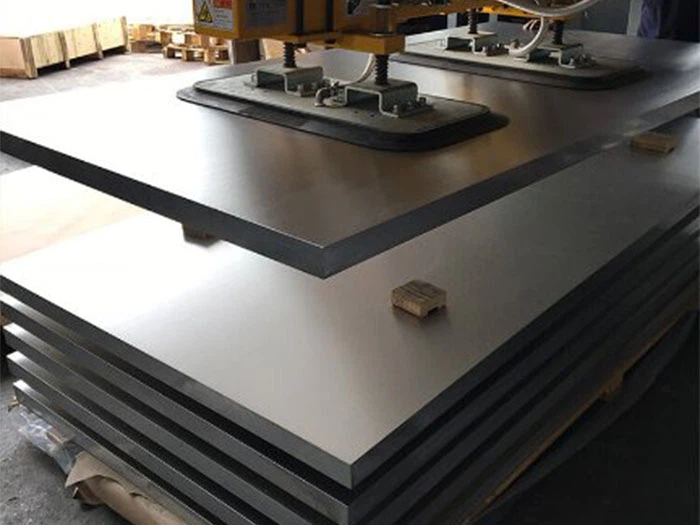
Density of Aluminium Alloys
The density of aluminum is about 0.1 lb/in3 [2,700 kg/m3] and density values of aluminum alloys don't vary much because alloying elements make up a small portion of the composition. Most of aluminum alloys are within 5% of this number. This is about one-third the density of carbon and stainless steels.
| Alloy Series | Density (g/cm³) | lb/in³ | Characteristics |
|---|---|---|---|
| 1xxx | 2.7 | 0.098 | High purity, soft |
| 2xxx | 2.78 | 0.100 | Copper added for strength |
| 3xxx | 2.73 | 0.099 | Manganese added |
| 5xxx | 2.66 - 2.70 | 0.096 - 0.098 | Magnesium added, very light |
| 6xxx | 2.7 - 2.8 | 0.097 - 0.101 | Magnesium and silicon |
| 7xxx | 2.81 | 0.101 | Zinc added, high strength |
Density and application of Common aluminum alloys:
Aluminium alloys are categorized into series based on their primary alloying elements. Each series has distinct properties and applications. Here's a detailed look at the densities of common aluminium alloys:
1000 Series (Commercially Pure Aluminium)
| Alloy | Density (g/cm³) | Applications |
|---|---|---|
| 1050 | 2.71 | Chemical and food processing equipment |
| 1100 | 2.71 | Heat exchangers, decorative uses |
2000 Series (Aluminium-Copper Alloys)
| Alloy | Density (g/cm³) | Applications |
|---|---|---|
| 2024 | 2.78 | Aerospace structures, truck wheels |
| 2219 | 2.84 | High-temperature applications, aerospace |
3000 Series (Aluminium-Manganese Alloys)
| Alloy | Density (g/cm³) | Applications |
|---|---|---|
| 3003 | 2.73 | Cooking utensils, chemical equipment |
| 3105 | 2.73 | Residential siding, mobile homes |
4000 Series (Aluminium-Silicon Alloys)
| Alloy | Density (g/cm³) | Applications |
|---|---|---|
| 4032 | 2.68 | Automotive pistons, cylinder heads |
| 4047 | 2.68 | Brazing filler metal, cladding alloy |
5000 Series (Aluminium-Magnesium Alloys)
| Alloy | Density (g/cm³) | Applications |
|---|---|---|
| 5052 | 2.68 | Marine environments, pressure vessels |
| 5083 | 2.66 | Shipbuilding, marine applications |
6000 Series (Aluminium-Magnesium-Silicon Alloys)
| Alloy | Density (g/cm³) | Applications |
|---|---|---|
| 6061 | 2.70 | Structural applications, bridges |
| 6063 | 2.70 | Architectural applications, window frames |
7000 Series (Aluminium-Zinc Alloys)
| Alloy | Density (g/cm³) | Applications |
|---|---|---|
| 7075 | 2.81 | Aerospace components, high-stress parts |
| 7050 | 2.83 | Aircraft structures, sporting equipment |
Impact of Temperature on Aluminium Density
Temperature changes can affect the density of aluminium. As temperature increases, the metal expands, leading to a slight decrease in density. This thermal expansion is crucial for applications involving temperature fluctuations.
| Temperature (°C) | Density (g/cm³) |
|---|---|
| -100 | 2.73 |
| 0 | 2.70 |
| 20 | 2.70 |
| 100 | 2.69 |
| 200 | 2.68 |
| 300 | 2.67 |
Density and Manufacturing Processes
The manufacturing process can affect the density of aluminium products, particularly in castings due to the presence of porosity. Common Manufacturing Processes
Casting: Creating shapes by pouring molten metal into molds
Extrusion: Pushing metal through a die to create long shapes
Rolling: Thinning and lengthening metal sheet or plate effect of Manufacturing on Density
Casting Density: Typically 95% to 100% of theoretical due to porosity
Wrought Density: Close to nominal value as it is worked into shape

Applications of Aluminium Based on Density
Because aluminum has only about one-third the density of steel, this feature makes it suitable for a wide range of applications:
Aerospace Industry
Application: Aircraft structures, fuselage, and wings.
Benefit: Reduces weight, improving fuel efficiency and payload capacity.
Automotive Industry
Application: Car frames, engine blocks, and wheels.
Benefit: Enhances vehicle performance and fuel economy.
Construction Industry
Application: Building facades, window frames, and roofing.
Benefit: Combines strength with light weight, easing transportation and installation.
Packaging Industry
Application: Beverage cans, food packaging, and foil.
Benefit: Lightweight nature reduces transportation costs and energy usage.
Electronics Industry
Application: Heat sinks, casings, and connectors.
Benefit: Good thermal conductivity and light weight enhance device performance.
Future Trends and Innovations
Exploring how advancements in aluminium technology and alloy development are pushing the boundaries of its applications.
Emerging Alloys
High-Strength Alloys: For use in demanding environments
Nano-Alloys: Enhanced properties through nano-technology
Industry Applications
Green Energy: Solar panels, wind turbines
Electronics: Lightweight components for portable devices