


Cold Forming Aluminum Foil For Blister Packs
1. Introduction
Every tablet that reaches a patient's hand has traveled through a packaging system designed to preserve its potency, protect it from environmental degradation, and ensure it arrives intact.
Among the many packaging formats available to pharmaceutical manufacturers, the blister pack stands as the dominant primary container for solid oral dosage forms - tablets, capsules, and lozenges - globally.
Within blister packing, two fundamentally different technologies compete: thermoforming and cold forming.
Thermoforming heats a thermoplastic web to its softening point, then draws it over a mold under vacuum or pressure. Cold forming, by contrast, mechanically deforms a laminated aluminum foil at ambient temperature, creating drug cavities without applying heat.
That distinction - no heat - turns out to carry profound consequences for barrier performance, drug stability, regulatory strategy, production economics, and sustainability.
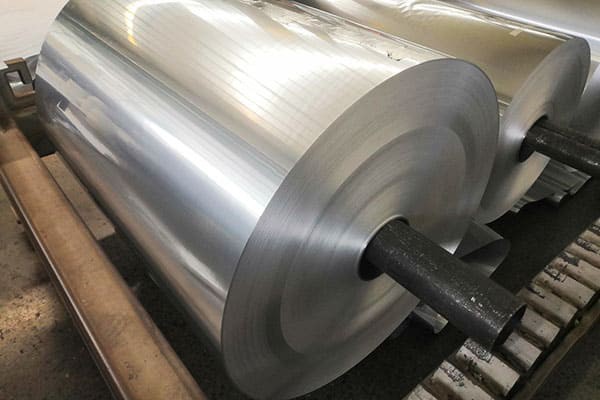
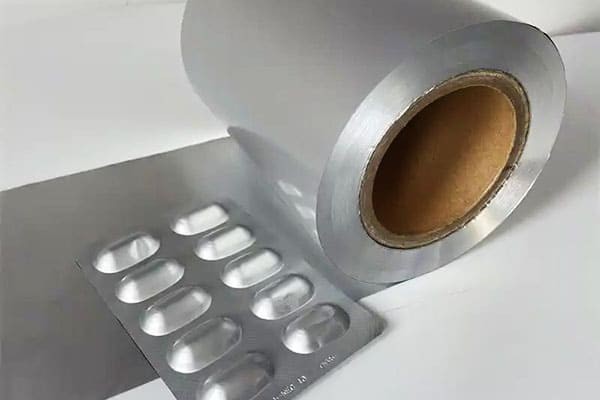
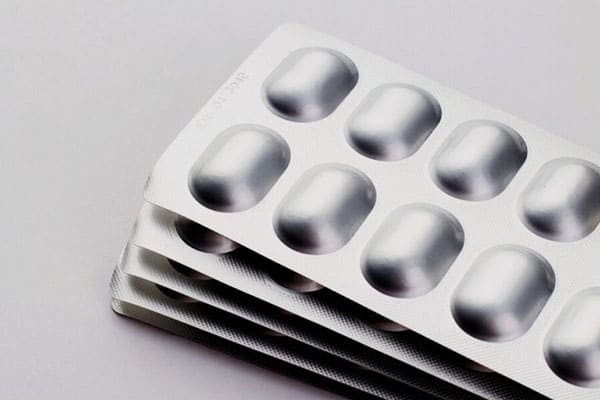
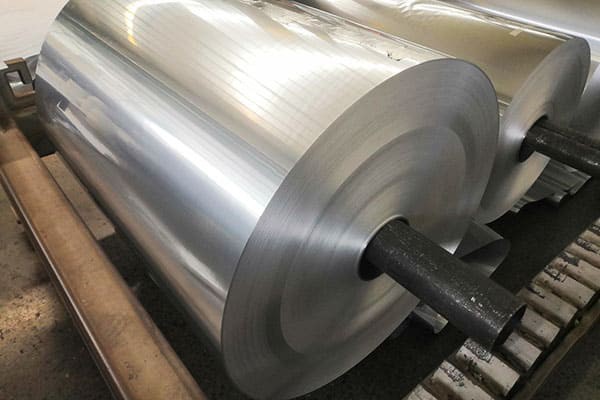
Cold form foil (CFF) - also called Alu-Alu foil or cold-pressed foil in industry parlance - achieves near-hermetic sealing against moisture, oxygen, and light, making it indispensable for a growing class of moisture-sensitive APIs, biologics, and stability-challenged generics.
As drug molecules grow more complex and as regulatory agencies tighten packaging qualification requirements, CFF adoption continues to expand well beyond its traditional niche in developed markets.
2. Fundamentals of Cold Form Foil Technology
2.1 What Cold Forming Actually Means
Cold forming borrows its name from metalworking, where "cold" describes any deformation performed below the material's recrystallization temperature.
In blister packaging, cold forming means that a multi-layer foil laminate - at room temperature - passes through a forming station equipped with a punch, a die, and a plug-assist mechanism.
The punch pushes the foil into the die cavity, stretching and thinning it plastically until a discrete pocket forms. No heat source, no vacuum: pure mechanical deformation.
This process imposes significant demands on the aluminum layer at the heart of the laminate. The foil must stretch without cracking, thin without developing pinholes, and hold its formed shape without springback.
Meeting these demands simultaneously explains why the laminate structure, alloy selection, and temper grade of the aluminum are so carefully engineered.
2.2 Standard Laminate Structure
The canonical cold form foil laminate consists of three bonded layers:
| Layer | Material | Typical Thickness | Primary Function |
|---|---|---|---|
| Outer | Oriented Polyamide (OPA) | 25 µm | Mechanical strength, formability, puncture resistance |
| Core | Aluminum foil | 45–60 µm | Barrier against moisture, oxygen, and light |
| Inner | Polyvinyl Chloride (PVC) | 60 µm | Heat-sealable surface, drug contact layer |
The OPA layer serves as a mechanical carrier - it gives the laminate enough tensile strength to survive the forming process without tearing, while its biaxial orientation provides the elongation needed for deep pockets.
The aluminum core is the functional heart of the system: even at 45 µm, it provides a water vapor transmission rate (WVTR) orders of magnitude lower than any plastic film.
The PVC inner layer melts locally when the lidding foil is heat-sealed, creating the hermetic closure that traps the drug inside.
Some premium formulations replace PVC with polypropylene (PP) or cyclic olefin copolymer (COC) to eliminate chlorinated polymers entirely. These alternatives improve the laminate's environmental profile, though they require more precise sealing temperature control.
Layers are bonded using either solvent-based adhesives or solvent-free (dry lamination) systems. Bond strength - measured in peel force per unit width - must exceed the mechanical stress of forming without allowing delamination at the cavity edges, which represent the highest-strain zones in the structure.
2.3 Aluminum Alloy and Temper Selection
Not all aluminum foil performs equally in cold forming. Pharmaceutical CFF almost exclusively uses two alloy families:
AA8011: An Al-Fe-Si alloy widely used in packaging. Its slightly higher iron content stabilizes grain structure and improves elongation. Most commonly supplied in soft or dead-soft temper (O-temper).
AA1235: A higher-purity (≥99.35% Al) alloy that offers excellent corrosion resistance and is preferred for drug-contact applications where trace element migration is a regulatory concern.
Temper designation - the degree of cold working after rolling - is equally critical:
| Temper | Description | Elongation at Break | Application |
|---|---|---|---|
| H18 | Fully hard | ~2% | Lidding foil only |
| H14 | Half hard | ~4–6% | Moderate-depth pockets |
| O (soft) | Fully annealed | ≥18–22% | Deep-draw CFF forming |
Dead-soft (O-temper) foil undergoes full annealing after rolling, which recrystallizes the grain structure and restores maximum ductility.
This high elongation - typically ≥20% - is what allows the foil to deform into 6–8 mm deep pockets without fracturing. Selecting a temper harder than necessary is one of the most common root causes of pinhole formation and cavity cracking in CFF operations.

2.4 CFF vs. Thermoform: The Essential Distinction
Before diving deeper, it is worth crystallizing the fundamental performance gap between these technologies:
| Property | Cold Form Foil (CFF) | Thermoform PVC/PVDC | Thermoform PVC/PCTFE |
|---|---|---|---|
| WVTR (g/m²/day) | <0.005 | 0.1–3.0 | 0.01–0.1 |
| Oxygen barrier | Near-zero | Moderate | Good |
| Light barrier | Complete (opaque) | None | None |
| Pocket clarity | Opaque | Transparent | Transparent |
| Forming depth | Limited (~8 mm) | Deep (>15 mm) | Deep |
| Relative cost | High | Low | Very high |
| Recyclability | Difficult | Difficult | Very difficult |
The transparency of thermoform blisters - often cited as an advantage for patient compliance, since patients can see the tablet - comes at the cost of dramatically inferior barrier performance.
For hygroscopic drugs, photolabile APIs, or any compound with a degradation half-life sensitive to parts-per-million moisture exposure, that tradeoff is unacceptable.
CFF closes that gap definitively, at the expense of opacity and forming depth.
3. Material Science: Aluminum Metallurgy and Barrier Physics
3.1 Crystal Structure and the Mechanics of Cold Deformation
Aluminum's face-centered cubic (FCC) crystal structure gives it twelve independent slip systems - more than most metals - which is precisely why it deforms plastically without fracturing under the compressive and tensile stresses of cold forming.
When the punch descends into the die, the foil experiences a complex stress state: biaxial tension across the cavity floor, combined with compressive stress at the punch radius and shear stress along the cavity walls.
Work hardening occurs throughout this process. As dislocations multiply and interact within the aluminum grains, the local yield strength increases - a phenomenon that is self-limiting and, at the thicknesses used in CFF, largely manageable.
However, the anisotropy introduced by rolling means that the foil does not deform uniformly in all directions. The phenomenon known as earing - where the foil develops wavy, ear-like ridges around a circular punch - arises directly from crystallographic texture.
Manufacturers mitigate earing by controlling the balance of cube and rolling texture during the annealing process, targeting a near-random grain orientation that minimizes directionality.
3.2 The Barrier Mechanism: Why Aluminum Works
The near-zero permeability of aluminum foil to water vapor and oxygen does not arise from a chemical reaction between the foil and the permeant. Instead, it is a purely physical consequence of the metal's crystal lattice.
Gases and water molecules permeate polymer films by a solution-diffusion mechanism - they dissolve into the polymer matrix and diffuse down a concentration gradient.
Metals offer no such mechanism. A defect-free aluminum film at 45 µm thickness is, for practical purposes, impermeable.
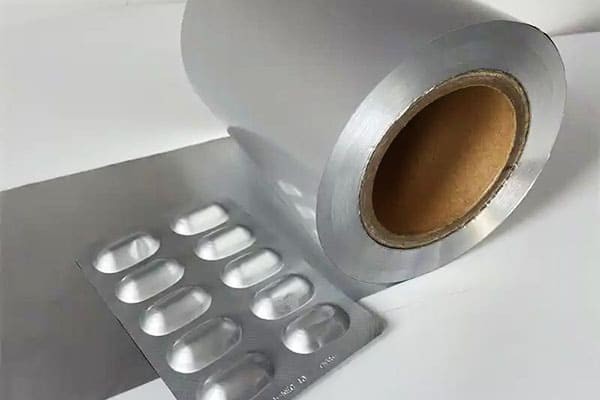
The critical qualifier is defect-free. Pinholes - microscopic through-holes in the foil - break the seal catastrophically.
A single pinhole 50 µm in diameter can elevate the WVTR of a cavity by two to three orders of magnitude, erasing the barrier advantage of the entire aluminum layer.
This is why pinhole count per unit area is one of the most tightly controlled specifications in CFF supply contracts, typically limited to fewer than one pinhole per square meter at a minimum detection diameter of 20 µm.
Pinholes originate from several sources:
Rolling defects: Inclusions in the aluminum melt that create voids as they are drawn out during rolling.
Forming-induced cracking: Excessive thinning during pocket formation, particularly at cavity corners with tight radii.
Lamination stress: Interfacial stresses during dry lamination that propagate pre-existing micro-defects through the foil.
Handling damage: Scratches or crease-induced fractures during web transport on the blister machine.
Understanding these failure modes guides both the foil specification process and the quality control strategy on the packaging line.
3.3 Adhesion Science: Making Layers Work Together
A CFF laminate is only as strong as the interfaces between its layers. Delamination - whether at the OPA/Al interface or the Al/PVC interface - degrades the forming behavior, compromises barrier integrity, and can introduce particulate contamination from adhesive breakdown.
Dry lamination systems use solvent-free polyurethane (PU) adhesives applied by gravure roller and cured under temperature and pressure.
Bond strength requirements for pharmaceutical CFF typically specify a minimum peel force of 2.0–3.5 N/15mm width, tested per ISO 11339 or equivalent.
Critically, bond strength must be maintained not only at ambient conditions but also under the temperature, humidity, and mechanical stress conditions encountered during forming and sealing.
Surface treatment of the aluminum layer - corona discharge, plasma treatment, or chemical priming - increases surface energy and improves adhesive wetting.
Without adequate surface treatment, the inherent oxide layer on aluminum (Al₂O₃) - which forms spontaneously in air - can prevent sufficient adhesive contact, leading to weak spots that manifest as delamination under forming stress.
3.4 Thickness-Barrier Trade-off
Reducing foil thickness saves material cost and improves formability - a thinner foil stretches more easily and reaches greater pocket depths without thinning-induced pinholes.
However, thinner foil also means less material to tolerate rolling defects, a narrower margin for forming-induced thinning, and potentially elevated pinhole risk.
The industry has largely converged on 45 µm as a practical minimum for pharmaceutical CFF, with 60 µm used where deeper pockets or higher barrier assurance is required.
Research into high-purity alloys with tighter inclusion control continues to push this boundary downward, with some specialty products now operating reliably at 40 µm.
4. Pharmaceutical and Regulatory Perspective
4.1 Matching Packaging to Drug Sensitivity
Selecting a blister format is not an aesthetic decision - it is a stability science decision driven by the chemical and physical properties of the active pharmaceutical ingredient (API) and its excipient matrix. Three sensitivity categories drive CFF selection most frequently:
Moisture-sensitive APIs represent the largest category. Many oral solid dosage forms absorb atmospheric moisture rapidly, triggering hydrolysis, polymorphic transitions, or physical caking that alters dissolution behavior.
Proton pump inhibitors (omeprazole, esomeprazole), certain antibiotics (amoxicillin-clavulanate), and many effervescent tablets fall into this category.
For these products, even the relatively modest moisture ingress permitted through a high-barrier thermoform PVC/PVDC blister may be insufficient under tropical climatic zones (ICH Zone IVb: 40°C/75% RH), making CFF the only viable primary container.
Oxygen-sensitive compounds include antioxidant vitamins (ascorbic acid), lipid-based formulations, and certain oncology agents where oxidative degradation pathways lead to toxic impurity formation.
CFF's metal barrier eliminates oxygen ingress entirely, whereas even high-barrier polymer films transmit measurable oxygen over the product shelf-life.
Photolabile drugs - including many antimicrobials, cardiovascular agents, and psychiatric medications - undergo degradation reactions when exposed to ultraviolet or visible light.
CFF's opacity provides complete light protection across the entire spectrum, eliminating the need for secondary packaging (amber bottles, cartons) in many cases.
4.2 ICH Stability Guidelines and Packaging Qualification
The ICH Q1A(R2) guideline on stability testing of new drug substances and products establishes the framework within which primary packaging selection must be justified. Specifically:
Stress testing must evaluate the effect of environmental factors (temperature, humidity, light) on the drug product, with packaging in the proposed commercial container.
Accelerated and long-term stability studies must be conducted in the actual primary packaging, since the packaging is part of the stability system.
The ICH Q1B photostability guideline further requires that light-sensitive products either demonstrate stability in transparent packaging under controlled light exposure, or demonstrate that the proposed packaging provides sufficient protection.
For CFF-packaged products, the near-zero WVTR and complete light opacity typically simplify stability protocol design, since the packaging eliminates - rather than merely attenuates - environmental stress pathways.
Equally important is the container closure system (CCS) qualification framework described in FDA guidance documents and EMA guidelines. A CCS qualification for CFF includes:
Identity and specification of each laminate component (OPA, Al, PVC/PP)
Adhesive composition and bond strength specification
Extractables and leachables (E&L) study, particularly for PVC and adhesive components
Seal integrity testing across the proposed processing and storage conditions
Compatibility study between the drug product formulation and all contact surfaces
The extractables and leachables assessment deserves particular attention for CFF. PVC contains plasticizers (typically di(2-ethylhexyl) phthalate, DEHP, or alternatives), stabilizers, and processing aids that can migrate into drug products over time.
Regulatory expectations, particularly in the EU under EMA's guideline on plastic immediate packaging materials, require a risk-based E&L assessment and, where migration levels exceed safety thresholds, full toxicological justification or material substitution.

4.3 Regulatory Standards at a Glance
| Standard / Guideline | Scope | Key CFF Relevance |
|---|---|---|
| ICH Q1A(R2) | Stability testing | Packaging as part of stability system |
| ICH Q1B | Photostability | Light protection requirement |
| USP <661> | Container materials | Plastic identity and performance tests |
| USP <671> | Container performance | Moisture vapor transmission testing |
| FDA Guidance: CCS | Container closure systems | Qualification framework |
| EMA Guideline on Plastic Packaging | EU market | Extractables/leachables, material specs |
| ISO 15223 | Medical device symbols | Labeling symbols on blister packs |
| ISO 8317 | Child-resistant packaging | CR closure testing |
| WHO TRS 902 | Packaging guidelines | Developing country market requirements |
4.4 Child Resistance and Senior Accessibility: A Persistent Tension
Child-resistant (CR) CFF packaging combines the aluminum barrier system with a closure mechanism that a child cannot penetrate, typically by requiring a two-step action (peel then push, or press then slide).
ISO 8317 and US 16 CFR 1700 provide the testing protocols: a panel of 200 children aged 42–51 months must fail to open more than 20% of packages within 5 minutes, while a panel of adults aged 50–70 must achieve 90% success within 5 minutes without the instruction and 90% within 5 minutes with the instruction.
The engineering challenge is acute. The same aluminum stiffness that makes CFF an excellent moisture barrier also makes it harder to peel open, which can disadvantage elderly patients with reduced hand strength or dexterity.
Innovative CR-CFF designs have emerged to address this tension - notch-perforation patterns that reduce peel initiation force while maintaining child-resistance test compliance, and lever-assist designs that provide mechanical advantage without compromising barrier integrity.
Balancing these competing demands requires close collaboration between packaging engineers, human factors specialists, and regulatory affairs teams.
5. Engineering and Manufacturing Perspective
5.1 Blister Machine Architecture for CFF
Cold forming imposes fundamentally different machinery requirements compared to thermoforming.
A thermoform blister machine requires a heating station (infra-red or contact heating), a forming station, and a cooling station before cutting - cold forming eliminates heating and cooling, replacing them with a higher-force mechanical forming station.
Two principal machine architectures serve CFF production:
Flat-bed (intermittent motion) machines advance the foil web in discrete steps.
At each step, the forming station descends, presses the foil into the die, retracts, and the web indexes forward. Flat-bed machines offer maximum forming force per unit area, excellent pocket dimensional control, and easier tooling changeover - advantages that make them the dominant choice for CFF in pharmaceutical manufacturing.
Rotary (continuous motion) machines use rotating drums for forming and sealing, achieving higher throughput but applying lower dwell time and forming force.
Rotary machines suit thermoforming and shallow-draw applications better than deep CFF forming; their use in CFF is limited to specific shallow-pocket configurations.
Key machine parameters for CFF operations include:
| Parameter | Typical Range | Significance |
|---|---|---|
| Forming force | 15–40 kN | Determines pocket depth and dimensional accuracy |
| Punch-to-die clearance | 1.1–1.3× foil thickness | Controls thinning distribution; too tight → pinholes |
| Forming speed (strokes/min) | 10–40 | Lower speeds allow more controlled deformation |
| Die temperature | Ambient (no heating) | CFF distinguishing feature |
| Pocket depth maximum | ~8 mm | Dictated by laminate elongation limits |
5.2 Tooling Design: The Engineering Core
The geometry of the forming punch and die directly determines cavity quality. Several design principles govern CFF tooling:
Corner radii: Sharp corners concentrate stress and cause localized thinning that exceeds the foil's elongation capacity.
Minimum internal corner radius for CFF pockets is typically 0.5 mm; radii below this threshold reliably produce pinholes or micro-cracks at corner locations.
Plug-assist forming: A pre-stretching plug - often made from ultra-high-molecular-weight polyethylene (UHMWPE) or polyurethane - pre-deforms the foil before the main punch engages.
This distributes thinning more uniformly across the cavity floor and walls, enabling greater effective depth without corner failure.
Die surface finish: The die cavity surface must be polished to Ra ≤ 0.4 µm to minimize friction during forming.
Excessive friction causes non-uniform deformation and surface scoring of the foil, creating potential pinhole sites.
Draw ratio: Defined as the ratio of cavity volume to the projected area times average depth, the draw ratio quantifies the severity of the forming operation.
For CFF, draw ratios above 1.5 typically require plug-assist forming to maintain foil integrity.
5.3 Quality Control: Detecting Defects Before They Reach Patients
The pharmaceutical industry's zero-defect quality philosophy demands that every blister pack leaving the line meet specification.
Four complementary quality control systems work in concert on a modern CFF line:
Online vision inspection systems use high-resolution cameras and lighting arrays to inspect every cavity for dimensional conformance (depth, width, shape), foil surface defects (scratches, delamination bubbles), and print quality on the lidding foil. Modern systems resolve features down to 50 µm and operate at full machine speed.
Leak (seal integrity) testing verifies that the hermetic seal between the formed foil and the lidding foil is intact. Methods include:
Vacuum decay: Packages placed in a sealed chamber; pressure rise indicates leakage. Sensitive to ~10⁻⁴ mbar·L/s.
Dye ingress: Packages immersed in methylene blue solution under vacuum; dye penetration into any cavity indicates seal failure.
Helium mass spectrometry: Reference method for highest sensitivity (10⁻⁸ mbar·L/s), used for method development and validation rather than routine in-line testing.
Pinhole detection on the incoming foil reel uses either electrostatic discharge testing (pinholes allow current to pass) or transmitted-light inspection (pinholes transmit light that sensors detect). Incoming foil inspection is a critical control point, as a pinhole-containing reel should be rejected before it reaches the forming station.
Statistical process control (SPC) charts cavity depth and foil thickness measurements against control limits, providing real-time process monitoring.
Trends toward the lower control limit on cavity depth or upper control limit on thinning percentage trigger machine adjustment before defects occur.
5.4 Production Efficiency: Honest Benchmarks
CFF operation introduces efficiency challenges that packaging engineers must anticipate:
Lower throughput: Flat-bed CFF machines typically achieve 10–40 strokes per minute versus 30–80 strokes per minute for thermoform equivalents. Net output per hour can be 30–50% lower, which significantly affects production capacity planning.
Higher tooling complexity: CFF tooling requires tighter dimensional tolerances and more frequent inspection than thermoform tooling. Punch and die surfaces typically require refurbishment every 6–12 months in high-volume operations.
Foil waste: The forming process consumes foil in the areas between cavities (the "skeleton"), which typically accounts for 25–40% of total foil usage depending on cavity layout and pitch. Skeleton waste is generally unrecoverable for pharmaceutical use and requires controlled disposal.
Changeover time: Format changes - switching from one cavity size or layout to another - require full tooling replacement and validation runs. Changeover times of 2–4 hours are common, making CFF lines less flexible than thermoform lines for high-mix, low-volume production.
Despite these efficiency constraints, CFF remains the only viable technology for the growing proportion of drugs that genuinely require its barrier performance - making production planning around its limitations a necessity rather than a choice.
6. Supply Chain and Material Sourcing
6.1 The Global Aluminum Foil Supply Landscape
The CFF supply chain begins with primary aluminum smelting - an energy-intensive process that converts alumina (Al₂O₃), refined from bauxite ore, into molten aluminum using electrolytic reduction (the Hall-Héroult process).
From smelting, ingots pass to rolling mills where successive cold-rolling passes reduce the aluminum to the 45–60 µm thicknesses required for CFF.
After rolling, the foil undergoes annealing, slitting, and inspection before shipment to lamination converters, who bond the OPA and PVC layers and supply the finished laminate to pharmaceutical manufacturers.
Key actors in the global CFF supply chain include:
| Segment | Representative Companies | Geographic Concentration |
|---|---|---|
| Aluminum smelting | Hydro, Alcoa, Rusal, Chalco | Norway, USA, Russia, China |
| Foil rolling | Novelis, Hueck Folien, UACJ Foil | Global, Germany, Japan |
| Lamination converting | Constantia Flexibles, Amcor, Bilcare | Europe, India, Australia |
| Blister machine OEM | Uhlmann, IMA, Romaco | Germany, Italy |
This supply chain structure creates several strategic vulnerabilities for pharmaceutical manufacturers:
Commodity price exposure: Aluminum is traded on the London Metal Exchange (LME), and CFF foil pricing follows LME aluminum with a converting premium.
A 20% increase in LME aluminum - which has occurred multiple times in the past decade - translates directly to higher CFF costs, often with only 30–90 days' contractual price lag.
Energy price sensitivity: Aluminum smelting consumes approximately 14 MWh of electricity per tonne of primary aluminum - making it one of the most electricity-intensive industries globally.
European smelting capacity has curtailed significantly during energy price spikes, tightening foil supply and increasing dependence on Chinese production.
Geopolitical risk: Trade policy actions affecting aluminum - including Section 232 tariffs in the United States and EU anti-dumping measures on Chinese aluminum foil - create cost uncertainty and supply redirection risks that propagate through the pharmaceutical packaging supply chain.
Lead time fragility: Pharmaceutical-grade aluminum foil requires specific alloy certification, annealing control, and cleanliness standards that take weeks to produce and certify.
Typical foil lead times of 8–16 weeks, combined with lamination and qualification times, mean that CFF supply disruptions can take 3–6 months to resolve.
6.2 Cost Structure Analysis
CFF carries a meaningful cost premium over thermoform PVC blisters. Understanding this premium's structure enables better procurement decisions:
| Cost Component | Contribution to CFF Premium | Notes |
|---|---|---|
| Aluminum foil (45–60 µm) | ~40% | LME-linked; largest variable cost |
| OPA film | ~20% | Relatively stable pricing |
| PVC/PP inner layer | ~10% | Standard commodity film |
| Lamination adhesives | ~8% | Polyurethane systems |
| Converting labor and overhead | ~15% | Higher for multi-layer lamination |
| Quality certification costs | ~7% | Pharmaceutical grade testing |
At a system level, however, the cost comparison must extend beyond material price. A full total cost of ownership (TCO) analysis for packaging format selection includes:
Stability study costs: Products in inadequate packaging require longer or more expensive stability programs to meet ICH requirements.
Lower fill weight per cavity: CFF's superior moisture protection can allow reduction of hygroscopic desiccant in formulations, partially offsetting packaging cost.
Recall and return cost avoidance: Moisture-induced degradation failures can trigger costly product recalls. CFF's barrier performance substantially reduces this risk.
Secondary packaging savings: Complete light protection from CFF may eliminate the need for amber bottles or secondary cartons in some products, recovering cost at the system level.
When these downstream effects are included, the economic case for CFF strengthens considerably - particularly for high-value branded pharmaceuticals where stability failures carry reputational as well as financial consequences.
7. Sustainability and Environmental Perspective
7.1 The Environmental Footprint of Aluminum Production
Aluminum's remarkable barrier performance comes with a significant environmental price tag. Primary aluminum production generates approximately 8–15 kg of CO₂ equivalent per kilogram of aluminum, depending on the electricity grid mix of the smelter.
When coal-powered grids dominate - as is the case for much of Chinese production - this figure reaches the upper end of the range or beyond.
For context, the aluminum layer in a typical CFF blister pack weighs roughly 0.3–0.5 grams per cavity. Across a year's global production of CFF blisters (estimated at hundreds of billions of units), the aggregate carbon footprint of the aluminum alone is substantial.
This reality has not escaped the attention of pharmaceutical companies pursuing science-based emissions reduction targets under frameworks such as the Science Based Targets initiative (SBTi).
Secondary (recycled) aluminum offers a dramatically better environmental profile - approximately 0.5–0.7 kg CO₂ equivalent per kilogram, roughly 95% lower than primary production.
Unfortunately, pharmaceutical-grade aluminum foil cannot currently be produced entirely from recycled scrap. The trace element composition and microstructural requirements for thin-gauge, high-elongation pharmaceutical foil demand primary aluminum or very high-purity recycled streams that are not yet available at scale.
This is an active area of materials research, with some producers beginning to offer foil with defined recycled content fractions (typically 10–30%).
7.2 End-of-Life Challenges: The Recyclability Problem
Multi-layer laminates present a fundamental recyclability challenge. The OPA/Al/PVC structure of standard CFF bonds three dissimilar materials with adhesive layers, creating a composite that conventional mechanical recycling streams cannot separate.
Depositing used blister packs in aluminum recycling streams contaminates the aluminum melt with polymer inclusions; depositing them in plastic recycling streams achieves nothing useful from the aluminum. In most markets, CFF blister packs end up in residual waste - incinerated for energy recovery at best.
Several delamination technologies aim to change this:
Chemical delamination: Solvent systems or alkaline processes dissolve the adhesive layers, releasing the individual films for separate recovery. Pilot programs exist in Germany and the Netherlands, but chemical separation is energy-intensive and generates solvent waste streams of their own.
Mechanical/thermal separation: Shredding followed by density separation or melt filtration can recover aluminum-rich fractions, though polymer contamination limits the metallurgical quality of the recovered material.
Solvolysis: Emerging supercritical fluid and enzymatic delamination processes show promise for selective adhesive removal without damaging component films, but remain at laboratory scale.
The practical reality as of 2026 is that very little pharmaceutical CFF is recycled. Industry bodies including HCWH (Health Care Without Harm) and individual pharmaceutical companies have begun establishing take-back and specialized recycling programs in select markets, but scale and economics remain challenging.
7.3 Regulatory Pressure and the EU Packaging Regulation
The European Union's revised Packaging and Packaging Waste Regulation (PPWR), which entered force progressively from 2025 onward, introduces legally binding recyclability requirements for packaging placed on the EU market.
By 2030, all packaging must be technically recyclable; by 2035, defined recyclability rates must be achieved at scale.
Pharmaceutical primary packaging - including CFF blisters - is acknowledged in the PPWR as a category requiring derogation pathways, given that changing primary packaging requires full regulatory revalidation.
Nevertheless, the regulation creates strong directional pressure toward mono-material or separable multi-layer structures. This pressure is already influencing packaging material R&D investment across the supply chain.
Extended Producer Responsibility (EPR) schemes, increasingly mandatory under the PPWR, will require pharmaceutical companies to fund end-of-life collection and recycling infrastructure for their packaging - providing financial incentive to shift toward more recyclable formats over time.
7.4 The Sustainability Paradox
Packaging sustainability analysis for pharmaceuticals must confront a fundamental paradox: inadequate packaging that allows product degradation generates waste that is arguably worse than the packaging waste itself.
A batch of degraded tablets - whether discarded by the pharmacist, returned unused, or - worst of all - administered to patients with reduced efficacy - represents wasted chemical synthesis, energy, water, and transportation resources, in addition to the human cost of therapeutic failure.
Consequently, pharmaceutical packaging sustainability decisions cannot reduce to simple "less material is better" logic.
The sustainable choice is the one that provides adequate protection with the minimum viable environmental impact - a calculation that, for moisture-sensitive drugs in tropical climates, often still points to CFF despite its recyclability limitations.
8. Innovation and Emerging Trends
8.1 Advanced Foil Alloys: Pushing the Depth Boundary
The maximum pocket depth achievable with CFF - historically limited to approximately 6–8 mm - constrains the dosage forms that can be packaged in this format.
Large tablets, two-piece capsules, and multi-layered oral drug delivery systems often exceed this depth, forcing manufacturers back toward thermoforming or rigid packaging.
Materials scientists are addressing this through two parallel strategies.
First, high-elongation alloy development - optimizing grain size, texture, and precipitate distribution to achieve elongation values of 25–28% while maintaining the foil surface quality needed for pinhole-free production.
Second, reduced-gauge foil with tighter defect control - producing 35–40 µm foil with inclusion densities low enough to maintain adequate pinhole resistance despite the thinner cross-section.
Several European foil producers have commercialized aluminum alloys achieving reliable pocket depths of 9–10 mm, expanding CFF's viable application space to include certain capsule and effervescent tablet formats that previously required thermoform packaging.
8.2 Smart Packaging Integration
Cold form foil is increasingly serving as the substrate for functional and connected packaging features:
Printed electronics on CFF: Thin-film near-field communication (NFC) antennas can be printed directly onto the OPA outer layer of CFF blisters using conductive inks.
These antennas enable smartphone-readable dose monitoring, enabling patients and caregivers to track medication adherence in real time.
Clinical studies in chronic disease management - particularly for HIV antiretrovirals, immunosuppressants, and psychiatric medications - have demonstrated that NFC-enabled blister packs improve measured adherence by 15–25% compared to standard packaging.
Time-temperature indicators (TTI): Colorimetric TTI labels applied to CFF blisters provide a visual, irreversible record of cold-chain excursions during transportation and storage.
For temperature-sensitive products - such as certain biologics formatted as oral dosage forms - TTI integration transforms the blister pack from a passive container into an active quality indicator.
Anti-counterfeiting features: CFF's opaque aluminum surface accommodates a range of overt and covert security features - laser-engraved micro-text, holographic overlaminates, covert fluorescent inks, and digital watermarks - that can be incorporated without compromising barrier performance.
Given the scale of pharmaceutical counterfeiting in many markets, these features are increasingly specified by brand owners as standard.
8.3 Serialization and Track-and-Trace
Global regulatory requirements for pharmaceutical serialization - mandated by the EU Falsified Medicines Directive (FMD), the US Drug Supply Chain Security Act (DSCSA), and equivalent legislation in Brazil, China, Turkey, and others - require that each individual saleable unit carry a unique identifier, typically encoded in a 2D DataMatrix code.
For CFF blisters, serialization integration typically occurs at the heat-sealing station or on a downstream labeling module. Laser coding directly onto the lidding foil offers the highest permanence and tamper-evidence, as the laser ablates the foil surface rather than applying an overprint that can be removed.
Inkjet coding provides higher throughput at somewhat lower permanence. Either approach requires vision system verification of the printed code against the serialization database before the pack is released to the secondary packaging line.
8.4 Digital Twin Modeling of the Forming Process
Finite element analysis (FEA) models of the cold forming process have existed since the 1990s, but computing power and material characterization data were insufficient for practical process optimization.
Today, digital twin implementations integrate real-time machine data (forming force, speed, foil temperature) with FEA models to predict pocket geometry, thinning distribution, and pinhole risk continuously during production.
Practically, these systems enable:
Detecting tooling wear before it causes out-of-specification pockets, by comparing actual forming force signatures to the digital twin's predictions.
Predicting the impact of incoming foil property variations - elongation lot-to-lot variation, for example - on pocket quality before the lot is run.
Optimizing forming speed and plug-assist parameters for each new product format without requiring extensive physical trial runs.
9. Comparative Analysis: CFF vs. Alternative Technologies
Packaging engineers selecting a primary blister format balance seven dimensions simultaneously.
The following matrix provides a structured comparison across the formats most commonly considered for oral solid dosage forms:
| Evaluation Criterion | Cold Form Foil (CFF) | PVC/PVDC Thermoform | PVC/PCTFE Thermoform | HDPE Bottle | Amber Glass Bottle |
|---|---|---|---|---|---|
| WVTR (g/m²/day) | <0.005 | 0.1–3.0 | 0.01–0.1 | 0.5–2.0 | ~0 |
| Oxygen barrier | Near-zero | Moderate | Good | Low | Near-zero |
| Light barrier | Complete | None | None | Partial (HDPE) | Complete (amber) |
| Pocket/container visibility | Opaque | Clear | Clear | Opaque | Translucent |
| Maximum depth | ~8–10 mm | >15 mm | >15 mm | N/A | N/A |
| Unit-dose precision | Excellent | Excellent | Excellent | Poor | Poor |
| Child resistance | Achievable | Achievable | Achievable | Standard | Standard |
| Material cost (relative) | High (1.0×) | Low (0.25×) | Very High (2.5×) | Low (0.2×) | Medium (0.5×) |
| Recyclability | Poor (multi-layer) | Poor (PVC) | Very Poor | Good (HDPE) | Good (glass) |
| Tamper evidence | Inherent | Inherent | Inherent | Requires addition | Requires addition |
| Patient compliance aid | Good | Good | Good | Moderate | Moderate |
| Regulatory complexity | Medium | Low | Medium | Low | Low |
10. Conclusion
Cold forming aluminum foil has earned its central position in pharmaceutical primary packaging through a combination of functional necessity and engineering excellence.
For the growing proportion of drug molecules that cannot tolerate even trace moisture or oxygen exposure, CFF is not merely the best option - it is often the only option compatible with clinical shelf-life requirements, tropical market registration, and patient safety.
Yet CFF is far from a static technology. The forces acting on it from multiple directions - regulatory scrutiny of extractables, sustainability legislation demanding recyclability, patient-centric design requirements for elderly users, pharmaceutical innovation pushing toward deeper-draw and more complex formats, and the emergence of smart packaging and AI-driven process control - are collectively reshaping what CFF is and what it will become.
The packaging engineer who understands CFF only as an "aluminum blister material" will consistently underperform against one who understands the interplay between aluminum metallurgy and barrier physics, the regulatory framework that governs its qualification, the supply chain dynamics that determine its cost, and the innovation pipeline that will define its next generation.
As pharmaceutical science and regulatory expectations continue to evolve together, cold forming aluminum foil will evolve with them - remaining indispensable precisely because its developers and users treat it not as a commodity, but as a system whose performance, cost, and environmental impact deserve continuous, disciplined improvement.
Send Inquiry
