





1060 Aluminum Plate High Quality Manufacture — Quality
1. Introduction
1060 aluminum plate high-quality manufacture refers to the deliberate set of metallurgical, mechanical and logistical practices required to produce flat, clean, dimensionally accurate plates of EN AW-1060 suitable for demanding applications.
Because 1060 is essentially a near-pure aluminium (minimum 99.60% Al), its performance depends strongly on impurity control and surface condition: small inclusions, oxides or surface defects that are tolerable in engineered alloys become performance or appearance problems in 1060 material.
High-quality manufacture therefore focuses on clean melting, tightly controlled casting/rolling schedules, careful annealing/levelling and robust inspection and traceability.

2. Properties of 1060 Aluminum Plate
1060 aluminum plate belongs to the 1xxx series of commercially pure aluminum alloys and is characterized by its very high aluminum content (≥ 99.60%).
This high purity gives 1060 aluminum a distinctive combination of physical, mechanical, and chemical properties that make it especially suitable for applications requiring excellent formability, corrosion resistance, and surface quality rather than high structural strength.
Chemical and Metallurgical Characteristics
1060 aluminum contains minimal alloying elements, with silicon and iron being the primary controlled impurities.
The low level of alloying ensures a simple, uniform microstructure dominated by aluminum grains, which contributes to stable performance during forming and heat treatment.
Tight control of impurity content is essential in high-quality manufacture, as even small increases in Fe or Si can negatively affect surface finish and ductility.
Mechanical Properties
In terms of strength, 1060 aluminum plate is classified as a low-strength material. Typical ultimate tensile strength ranges from approximately 70 to 120 MPa, while yield strength is usually between 25 and 60 MPa, depending on temper (O, H12, H14, etc.).
Elongation values can reach 30–40% in the annealed condition, reflecting excellent ductility and deep-drawing capability.
These properties make 1060 aluminum ideal for forming, bending, and spinning operations, although it is not intended for load-bearing structural use.
Physical Properties
1060 aluminum plate has a density of about 2.70 g/cm³, contributing to lightweight component design.
Its thermal conductivity is high, typically around 220–235 W/m·K, enabling efficient heat transfer in thermal management and cookware-related applications.
Electrical conductivity is also relatively high compared with alloyed aluminum grades, which supports its use in electrical and electronic components where moderate strength is sufficient.

Corrosion Resistance
Thanks to its high aluminum purity, 1060 aluminum plate exhibits excellent resistance to atmospheric corrosion and many mild chemical environments.
A naturally forming aluminum oxide layer provides effective protection against oxidation.
In high-quality manufacture, smooth and defect-free surfaces further enhance corrosion performance, especially in humid or lightly aggressive environments.
Surface and Finishing Properties
1060 aluminum is well known for its superior surface quality. It can be readily bright-rolled, polished, or chemically treated to achieve reflective or decorative finishes.
The alloy responds well to anodizing and surface coatings, although color options in anodizing are more limited compared with some alloyed grades.
High-quality plates typically feature low surface roughness and minimal visual defects, which is critical for decorative and reflective applications.
Formability and Workability
One of the most significant advantages of 1060 aluminum plate is its excellent formability. The alloy can undergo deep drawing, spinning, bending, and rolling without cracking when properly annealed.
It is also easily machined and cut using conventional methods. Welding and brazing are feasible with standard aluminum techniques, although filler selection and cleanliness are important to maintain joint quality.

3. Key Manufacturing Processes of High-Quality 1060 Aluminum Plate
Raw Material Pretreatment: Purity Foundation
Raw Material Selection: Use electrolytic aluminum ingots (Al ≥ 99.7%) combined with high-purity recycled aluminum (impurity content ≤ 0.1%), and strictly prohibit mixing with low-purity scrap.
Pretreatment Processes:
Aluminum Ingot Cleaning: Remove surface oxide scale, oil stains, and impurities by mechanical grinding + alkaline cleaning (50-60℃, NaOH concentration 5%-8%), rinse with pure water after cleaning, and dry to moisture content ≤ 0.01%.
Batching Accuracy: Batch according to ratio with error ≤ ±0.01%, use electronic weighing scales (accuracy 0.1kg/ton) to avoid composition fluctuation.
Melting and Casting: Defect Prevention Core
Melting Process Control:
Melting Equipment: Use graphite crucibles or ceramic-lined melting furnaces to avoid iron contamination (furnace body material iron content ≤ 0.005%).
Temperature Control: Melting temperature 730-760℃, holding time 30-40min, temperature fluctuation ≤ ±5℃, prevent overheating (overheating temperature ≥ 800℃, leading to coarse grains).
Degassing and Slagging: Adopt mixed nitrogen-argon degassing (ratio 3:1) with flow rate 0.5-1.0m³/h and degassing time 20min, control hydrogen content ≤ 0.12ml/100g Al; add refining agent (NaCl-KCl mixture, addition amount 0.3%-0.5%) for slag removal, slag content ≤ 0.05%.
Casting Process Selection and Control:
Casting Method: Prefer vertical semi-continuous casting for high-quality ingots (diameter 200-600mm, length 3000-6000mm) to avoid composition segregation in continuous casting.
Casting Parameters: Casting speed 80-120mm/min, cooling water temperature 25-35℃, cooling water flow 5-8m³/h, control ingot solidification zone length at 80-120mm to ensure uniform grain size (grain size ≤ 0.06mm).
Post-Casting Treatment: After cooling ingots to room temperature, saw and remove defective head and tail sections (50-100mm each), perform homogenization annealing (480-500℃, holding time 6h) to eliminate casting stress and composition segregation.
Hot Rolling: Grain Refinement and Plastic Improvement
Ingot Heating: Heating temperature 480-500℃, holding time 4-6h, temperature uniformity ≤ ±3℃, avoid intensified oxidation due to local overheating.
Rolling Parameter Control:
Initial Reduction: First pass reduction 15%-20%, adjust subsequent passes to 8%-12%, total reduction ≥ 90% to promote grain crushing and refinement.
Rolling Speed: Rough rolling speed 1.5-2.5m/s, finish rolling speed 3.0-4.5m/s, avoid surface scratches caused by excessive speed.
Exit Temperature: Control at 380-420℃ to ensure rolled plates retain good plasticity for subsequent cold rolling.
Post-Hot Rolling Treatment: After cooling hot-rolled plates to room temperature, perform surface milling (milling amount 0.5-1.0mm/side) to remove oxide scale and surface defects, milled surface roughness Ra ≤ 1.0μm.
Cold Rolling: Precision and Surface Quality Optimization
Cold Rolling Process Design:
Pass Planning: Design 5-8 cold rolling passes according to finished product thickness; add intermediate annealing (350-380℃, holding time 2h) for thin gauges (≤ 1mm) to eliminate work hardening.
Rolling Precision Control: Use four-high cold rolling mills with roll gap accuracy ≤ ±0.005mm, stable rolling force 200-300MPa, and speed fluctuation ≤ ±0.1m/s to ensure thickness uniformity.
Lubrication and Cooling: Use special cold rolling oil (viscosity 20-30mm²/s, flash point ≥ 180℃) with lubrication pressure 0.3-0.5MPa and cooling water temperature 20-25℃ to prevent plate sticking and surface burning.
Post-Cold Rolling Surface Treatment: Adopt degreasing cleaning (alkaline degreaser + acid neutralization) to remove surface oil stains, rinse with pure water after cleaning, and dry with hot air (temperature 80-100℃), surface oil residue ≤ 5mg/m².
Heat Treatment (Annealing): Performance Stability Regulation
Annealing Process Classification and Parameters:
Full Annealing (O temper): Temperature 380-400℃, holding time 3-4h, furnace cooling (cooling rate ≤ 5℃/min) to ensure qualified plasticity (elongation ≥ 35%).
Partial Annealing (H14/H18 temper): H14 temper - 300-320℃ for 1.5h; H18 temper - natural aging after cold rolling (room temperature for 24h) to balance strength and plasticity.
Annealing Furnace Control: Use oxidation-free annealing furnaces with nitrogen atmosphere (purity ≥ 99.99%) and oxygen content ≤ 0.005% to prevent plate oxidation and discoloration.
Surface Treatment: Corrosion Resistance and Aesthetics Enhancement
Application-Specific Surface Treatment Processes:
Ordinary Decorative Grade: Chemical conversion coating treatment (titanium-zirconium series, film thickness 0.5-1.0μm) to improve corrosion resistance and coating adhesion.
High-End Electronic Grade: Anodizing treatment (sulfuric acid anodizing, film thickness 5-10μm) to achieve surface hardness ≥ HV300 and more than 3x improved wear resistance.
Food Grade: Passivation treatment (nitric acid passivation, concentration 10%-15%) with no harmful residues, complying with GB 4806.9-2016.
Surface Polishing (Mirror Grade): Adopt combined mechanical + chemical polishing process, polished surface roughness Ra ≤ 0.2μm, mirror reflectivity ≥ 85%.
Finishing and Cutting: Dimensional Precision Assurance
Finishing Process: Use flattening machines with flattening pressure 100-150MPa, flatness ≤ 0.3mm/m after flattening, no warpage or deformation.
Cutting Process: Use CNC shears or laser cutting machines with cutting accuracy ±0.1mm, burr-free edges (burr height ≤ 0.05mm), avoid edge oxidation.
Finished Product Packaging: Wrap with PE film for moisture and dust protection, separate each plate with EPE foam to avoid surface scratches during transportation.

4. Applications of 1060 Aluminum Plate
1060 (Al ≥ 99.60%) is a near-pure aluminium grade whose combination of exceptional formability, high electrical/thermal conductivity, excellent corrosion resistance and superior surface quality makes it the material of choice in many non-structural, appearance-sensitive and heat/electrical-management applications.
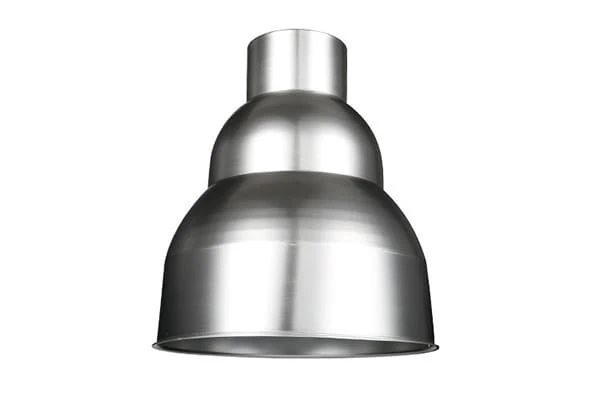
Lighting reflectors & optical components
Why 1060: very high reflectivity after bright rolling/polishing and minimal subsurface inclusions → excellent optical uniformity.
Typical thickness/temper: 0.5–3.0 mm; bright-rolled O or H14 depending on forming.
Decorative & architectural cladding
Why 1060: uniform surface finish, ease of polishing or surface treatment, excellent corrosion resistance for exterior/interior cladding.
Typical thickness/temper: 1.0–6.0 mm plates; O temper for deep forming and H14 for moderate stiffness.
Chemical, food processing & sanitary equipment
Why 1060: high purity, easily cleaned surfaces, good corrosion resistance to many food/chemical media, and excellent formability for vessels and hoods.
Typical thickness/temper: 1.0–10 mm depending on tank size; O temper often used for deep draws.

Heat-spreaders, thermal management & cookware components
Why 1060: very good thermal conductivity (close to pure Al) and low mass - ideal for heat spreaders, inner layers of multi-layer cookware and heat sinks where mechanical loads are modest.
Typical thickness/temper: 0.5–6.0 mm; O or H12 depending on forming needs.
Electrical applications & conductor parts
Why 1060: high electrical conductivity compared with alloyed grades-used for busbars, conductor strips, electrode supports and EMI shielding where high conductivity and light weight are important.
Typical thickness/temper: 2.0–20+ mm depending on current rating and mechanical support; O temper for maximum conductivity.
Deep-drawn kitchenware & pressed components
Why 1060: exceptional ductility permits deep drawing, spinning and complex forming without cracking-used for pots, pans liners, appliance housings.
Typical thickness/temper: 0.5–3.0 mm; O temper or light H-tempers for drawn parts.
5. 1060 Aluminum Plate High-Quality Manufacture - Huawei Aluminum
Note: the following is an illustrative supplier profile to show what "high-quality manufacture" looks like. It is not an endorsement but a template you can use to evaluate real vendors.
Capabilities of a high-quality 1060 plate manufacturer (example: "Huawei Aluminum")
Feedstock control: contracts with primary smelters and verified recycled streams; traceable ingot lots.
Advanced melting & filtration: induction melting with argon degassing and ceramic filtration.
Continuous casting + direct rolling line (CCR): for superior surface integrity and tight thickness control.
Modern hot & cold rolling mill: controlled pass schedules, online thickness gauges, automated lubrication.
Annealing and stretcher leveling: programmable furnace cycles; mechanical leveling for flatness ≤ 0.1 mm across plate.
Surface finishing: bright-rolling capability, mechanical polishing lines and clean chemical pickling booths.
Inspection & QA: in-line eddy-current/optical inspection, SPC control charts, full MTC with heat/lot traceability.
Certifications & compliance: ISO 9001, ISO 14001, product testing per EN/ASTM standards; capacity to provide food-contact conformity statements where required.
Customer services: pre-production sample runs, first article inspection (FAI), customizable cosmetic grades and packing for export.
Buyer takeaway: require supplier process descriptions and sample certificates matching the above practices when purchasing premium 1060 plate.

6. Quality Standards and Certifications
When specifying high-quality 1060 plate, refer to the applicable standards and certification documents:
Common material standards
ASTM B209 - specification for aluminium and aluminium-alloy sheet and plate (widely used for non-structural sheet/plate).
EN 573 / EN 485 - European standards for chemical composition and mechanical properties of wrought aluminium.
ISO 6361 - international standard for aluminium and aluminium alloy sheets, strips and plates.
Quality management & traceability
ISO 9001 - supplier quality system.
EN 10204 / EN 10204 3.1 - mill test certificate form for lot verification. Request 3.1 for critical lots.
Regulatory & application-specific
Food contact: EU Regulation (EC) No 1935/2004 and national regulations, FDA food contact standards in the U.S. - require documentation for any coatings or conversion layers.
RoHS / REACH: check for restricted substances depending on application and markets.
Inspection & testing
Chemical analysis (OES/ICP) per lot, tensile tests per ASTM E8 (or equivalent), surface roughness and visual accept/reject criteria, non-destructive testing (ultrasonic or eddy current) where lamination or inclusion risks are critical.
7. Conclusion
1060 aluminum plate high quality manufacture is a controlled, multi-step engineering discipline: starting from controlled feedstock, through clean melting and filtration, carefully scheduled casting and rolling, to precise annealing, leveling and surface finishing.
For demanding applications - reflectors, food equipment, architectural finishes - the difference between ordinary and premium 1060 lies in melt cleanliness, surface control and measurement & traceability.
Specify chemistry limits, temper, surface finish, flatness, and require MTCs and sample approvals. When these controls are enforced, 1060 plate delivers outstanding formability, excellent surface quality and dependable long-term performance.
FAQs
Q1 - What is the main difference between "1060 sheet" and "1060 plate"?
A: Industry convention often treats sheet as thinner (<3–6 mm) and plate thicker (≥3–6 mm). Functional distinctions include fabrication methods and finishing - plate typically requires heavier rolling passes and different handling. Specify exact thickness in mm on procurement documents.
Q2 - How pure is 1060 aluminium?
A: At least 99.60% Al by mass. Suppliers often hold other elements to low limits (Si, Fe, Cu, etc.) to preserve surface and forming behavior.
Q3 - Can 1060 be anodized and painted?
A: Yes - 1060 accepts conversion coatings, anodizing (though colour options are limited compared with alloys designed for anodizing), and paints well after proper cleaning and pre-treatment. Bright-rolled or polished 1060 yields very reflective finishes.
Q4 - What are common flatness tolerances for high-quality 1060 plate?
A: For premium plate: ≤ 0.10 – 0.20 mm across common plate sizes is achievable with stretcher leveling; specify exact requirement on drawings.
Q5 - How do I ensure a supplier delivers "high-quality" plate?
A: Require specific PO language: alloy & min Al content, maximum impurity limits, temper, thickness/flatness tolerances, surface finish spec, required MTC (EN 10204 3.1), sample approval and supplier process information (melting/filtration, casting method). Audit supplier capability if volumes and criticality justify it.
Send Inquiry
