






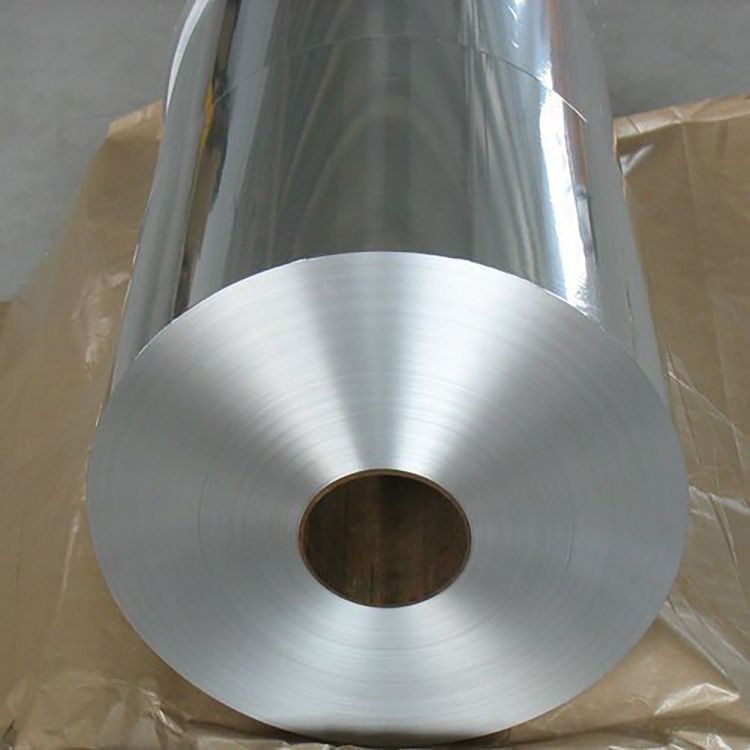
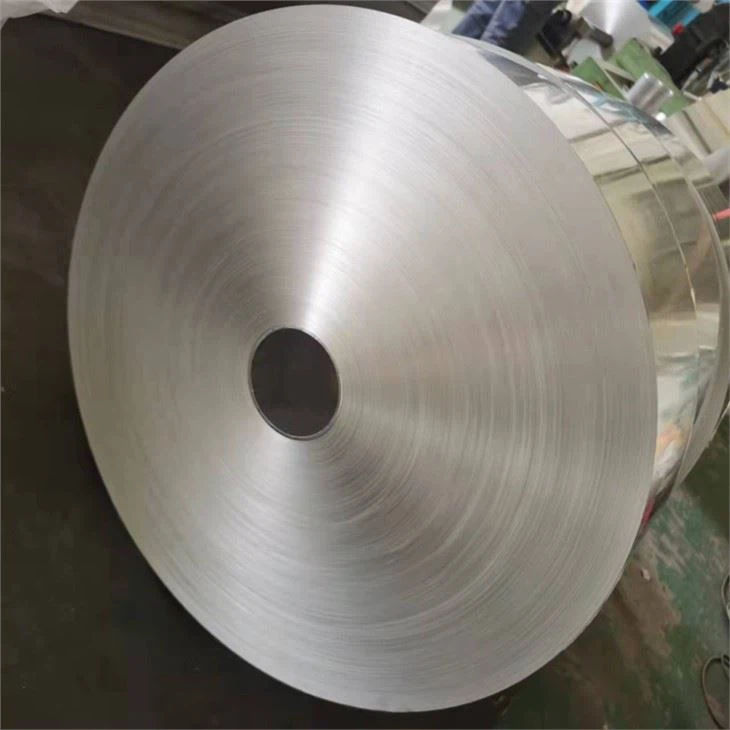
Aluminum Foil for Battery
![$NMY3`%CFKA22}D]M%EQEW0](/Content/uploads/2022753691/202206281712383856e4480be747fa93c1a56b7fed67b4.jpg)
In order to meet the performance requirements of lithium-ion batteries, the best aluminum alloys must be used to produce aluminum foils.
Our aluminum foil product line is the result of years of battery material research and development combined with upstream processes, producing high-quality aluminum alloys specifically developed for the lithium-ion battery market, with rolling technology capable of producing foil coils with thicknesses of 0.01-0.055 mm.

Specifications of aluminum foil for batteries
Product Name | Alloy | Temper | Item(mm) | |||
Thickness (mm) | Width (mm) | Inner Diameter | External Diameter | |||
Battery Shell Aluminum Foil | 2135/8011/8021/8079 | O,H22,H24 | 0.01 - 0.055 | 90 - 1500 | / | / |
Physical properties of aluminum foil for lithium-ion battery
Alloy | 1235 | 1145 | 1060 | 1070 |
Temper | H18 | H18 | H18 | H18 |
Tensile strength | ≥150N/mm | |||
Elongation | ≥1% |
Thickness and resistivity of aluminum foil for battery
Thickness/mm | 0.006 | 0.007 | 0.008 | 0.009 | 0.01 | 0.11 | 0.16 |
Resistance/(Ω.m) | 0.55 | 0.51 | 0.43 | 0.36 | 0.32 | 0.28 | 0.25 |
Why do lithium-ion batteries use aluminum foil for the positive electrode and copper foil for the negative electrode?

There are 4 reasons:
1. Copper and aluminum foil has good conductivity, soft texture and low price.
2. In lithium batteries, we mainly have winding and lamination processing methods. Compared with winding, the pole piece used to prepare the battery needs to be flexible to ensure that there is no brittle fracture when the pole piece is wound. Copper and aluminum foil is also a soft metal, which is very suitable for production.
3. Copper and aluminum foil is relatively stable in the air. Aluminum reacts easily with oxygen in the air A dense oxide film is formed to prevent further reaction, and this thin oxide film also has a protective effect on the aluminum in the electrolyte. Copper itself is relatively stable in air and does not react in dry air.
4. The positive and negative potentials of lithium batteries determine the use of aluminum foil for the positive electrode and copper foil for the negative electrode, not the other way around. High positive potential, copper foil is easily oxidized under the potential, while aluminum has a high oxidation potential, and there is a dense oxide film on the surface of aluminum foil, which also has a greater impact on the internal aluminum material.
Send Inquiry
