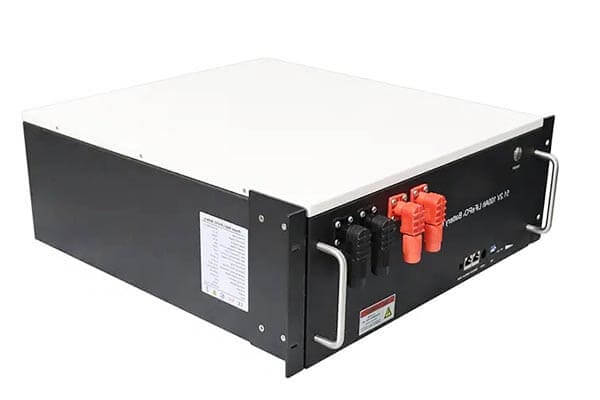
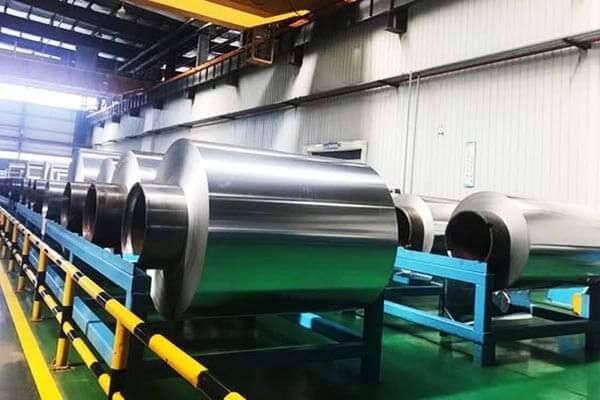
The global energy transformation is accelerating, and the heart of that transformation is the battery. From electric vehicles (EVs) and energy storage systems (ESS) to smart electronics and industrial backup power, high-performance battery cells are redefining how we store and use electricity.
At the core of each cell lies a critical but often overlooked component: the battery cell shell. In recent years, 3105 aluminum coil has rapidly emerged as a preferred material for battery cell shell manufacturing.
Its combination of mechanical strength, corrosion resistance, excellent formability, and cost-effectiveness makes it a compelling choice for both established and emerging battery technologies.
This in-depth guide explores why 3105 aluminum coil is reshaping the battery enclosure landscape, how it compares to other materials, and what you should know when selecting a supplier such as Huawei Aluminum.

Battery cell shells (or casings) are not just “containers.” They influence safety, performance, lifetime, and even cost. A well-designed shell must:
As battery manufacturers push for higher energy density and lower cost, the shell material becomes a key strategic lever. That’s where 3105 aluminum coil enters the picture.
3105 aluminum is an aluminum-manganese (Al-Mn) alloy, typically categorized in the 3xxx series.
It contains manganese as the primary alloying element and minor additions of other elements such as magnesium, copper, and silicon.
| Element | Typical Content (wt%) |
|---|---|
| Aluminum (Al) | Balance (~96–98%) |
| Manganese (Mn) | 0.3–0.8% |
| Magnesium (Mg) | ≤ 0.3% |
| Copper (Cu) | ≤ 0.3% |
| Silicon (Si) | ≤ 0.6% |
| Iron (Fe) | ≤ 0.7% |
| Others (each) | ≤ 0.05% |
| Others (total) | ≤ 0.15% |
This composition gives 3105 aluminum coil a unique mix of:
These features make it well-suited for applications that require extensive forming and shaping, like battery cell shells, closures, and caps.
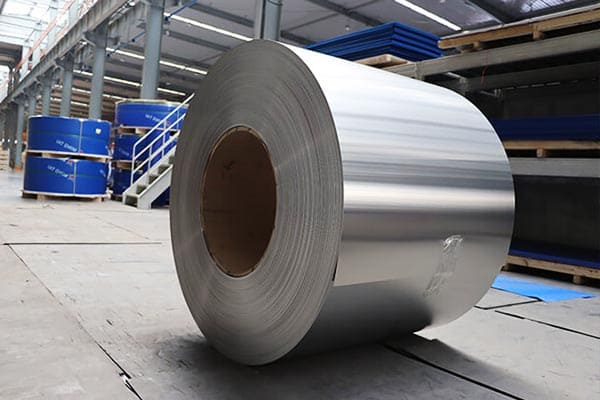
You often see “coil” and “sheet” used together. The difference lies in form, not composition:
For battery cell shells, coil form is particularly attractive because it supports:
Flexible width and thickness options

3105 aluminum coil delivers a balanced performance profile. While it doesn’t match high-strength aerospace-grade alloys, its properties align perfectly with mass-produced, thin-walled battery casings.
Below is a typical mechanical property range (depending on temper and thickness):
| Property | Typical Range (H14/H16 temper) |
|---|---|
| Tensile strength (MPa) | 135–180 |
| Yield strength (MPa) | 110–145 |
| Elongation (%) | 5–15 |
| Brinell hardness (HB) | 35–60 |
| Density (g/cm³) | ~2.73 |
Now let’s translate those numbers into practical benefits for battery manufacturers.
Battery cell shells often require:
3105 aluminum coil in tempers like H14, H16, or O offers:
Compared to higher-strength alloys like 3003 or 5052, 3105 strikes a better balance for applications where complex forming is more critical than ultimate strength.Practical impact:
Reduced scrap rates and material wastage

Lightweight materials directly enhance energy density at the pack and system level. With a density of around 2.73 g/cm³, 3105 aluminum offers:
This allows designers to use thin-walled shells while maintaining required safety and stability. Example: Replacing a steel shell (density ~7.85 g/cm³) with a 3105 aluminum shell can reduce shell mass by ~60–70%, depending on thickness differences and design.Benefits:
Battery environments can be harsh: electrolyte vapors, moisture, temperature fluctuations, and exposure to salts or chemicals in EV and ESS applications. 3105 belongs to the 3xxx series, which is known for:
With proper surface treatment and sealing (e.g., anodizing, coatings, or conversion layers), 3105 aluminum coil provides long-term shell integrity and reduces risk of:
3105 is a non-heat-treatable aluminum alloy, which simplifies processing and keeps costs manageable.
Compared with high-strength alloys (5xxx or 6xxx), 3105 typically offers:
For large-scale battery manufacturers, this translates into:
Battery shells need reliable sealing at:
3105 aluminum coil offers:
This allows manufacturers to design robust, leak-proof shells with consistent performance and low defect rates.
When choosing a material for battery shells, engineers look at multiple KPIs beyond just strength and cost. Typical requirements include:
Mechanical Properties
Sufficient yield and tensile strength to withstand internal pressure, stacking loads, and external forces High enough elongation to accommodate forming and avoid brittle failure
Formability
Deep drawing capability without cracking Good bending and flanging behavior Stable performance across large production batches
Corrosion and Chemical Resistance
Resistance to electrolyte seepage or vapors Stability under humidity, salt spray, and industrial environments
Thermal Properties
Adequate thermal conductivity to assist heat dissipation Stability under charge/discharge temperature cycles
Surface Quality
Clean, defect-free surface for further coating or printing Controlled roughness for sealing and adhesion
Manufacturability
Good performance in stamping, slitting, cutting, and welding High coil flatness and consistent thickness
Cost and Availability
Competitive cost per ton Reliable supply, especially for fast-growing markets

Battery shells can use different materials depending on design and application. Below is a comparative snapshot:
| Property / Material | 3105 Aluminum | 3003 Aluminum | 5052 Aluminum | Steel (Carbon) |
|---|---|---|---|---|
| Density (g/cm³) | ~2.73 | ~2.73 | ~2.68 | ~7.85 |
| Tensile Strength (MPa) | 135–180 | 130–180 | 210–260 | 270–550+ |
| Formability | Excellent | Very good | Good | Moderate |
| Corrosion Resistance | Very good | Very good | Excellent | Poor (needs coating) |
| Cost | Low–Medium | Low–Medium | Medium–High | Low–Medium |
| Weldability | Good | Good | Good–Very good | Good |
| Deep Drawing Suitability | Excellent | Very good | Good | Limited |
Key insights:
3105 vs 3003: Both are Al-Mn alloys, but 3105 often offers slightly better mechanical performance and improved surface quality for coil coating and finishing. 3105 is often chosen where a balance between forming, corrosion resistance, and strength is needed.
3105 vs 5052: 5052 has higher strength and better corrosion resistance (especially in marine environments), but it costs more and is slightly less formable in deep drawing applications. For many battery shell designs, 3105’s formability and cost advantages outweigh 5052’s higher strength.
3105 vs Steel: Steel offers higher strength but is much heavier and more prone to corrosion without coatings. In weight-sensitive applications like EVs and portable devices, 3105 is clearly superior.

For many cylindrical or prismatic cells where the shell is relatively thin and must be deeply drawn, 3105 aluminum coil becomes a “sweet spot” material.
Many cylindrical Li-ion cells (such as 18650, 21700, 4680-type formats) require thin, deeply drawn shells.
Traditionally, steel can be used, but aluminum shells are gaining popularity due to their weight advantages.
3105 aluminum coil advantages for cylindrical cells:
While pouch cells use aluminum-plastic films, many prismatic cells rely on aluminum housings or shell components. 3105 aluminum coils can be used for:
ESS installations demand long service life and robust corrosion resistance under wide environmental conditions. Use cases for 3105 aluminum coil in ESS:
Smaller-format batteries for laptops, power tools, communication systems, and UPS units also benefit from 3105 aluminum shells due to:
Good aesthetics after coating or printing

Producing high-quality 3105 aluminum coil involves several key stages:
Melting and Alloying
Precise control of composition to meet 3105 standards Removal of impurities and gas from molten aluminum
Casting
Direct Chill (DC) casting to form billets or slabs Controlled solidification to ensure uniform microstructure
Hot Rolling
Hot rolling the slab to intermediate thickness Control of rolling parameters to refine grain structure
Cold Rolling
Further thickness reductions for 0.2–2.0 mm or thinner coils Achieve desired mechanical properties and surface finish
Annealing / Tempering
Precise heat treatment for target temper (e.g., H14, H16) Balancing strength, hardness, and formability
Surface Treatment and Finishing
Degreasing and cleaning Optional coil coating, anodizing, or conversion coating
Slitting and Rewinding
Cutting coils to required widths Rewinding with controlled tension for flatness and shape Quality-oriented suppliers like Huawei Aluminum monitor each step with strict QC protocols to ensure consistency and performance.
Typical ranges used for battery cell shells:
For deep-drawn battery shells, many manufacturers prefer O or H14 tempers to avoid cracking. H16 may be used for shell components requiring more rigidity and less forming.
When sourcing 3105 aluminum coil for battery applications, pay attention to these parameters:
Chemical Composition
Strict adherence to 3105 standards Low impurity content for predictable behavior
Mechanical Properties
Consistent yield and tensile strength across the coil Stable elongation values to support deep drawing
Thickness Tolerance
Tight tolerance (e.g., ±0.01–0.02 mm depending on thickness) Uniform thickness to ensure consistent forming and sealing
Flatness and Shape
Minimal wave, buckling, or edge defects Good coil winding quality to support high-speed processing
Surface Quality
Low surface roughness as specified No dents, scratches, oil stains, or oxidation spots
Coating Compatibility
Good adhesion capacity for paints, lacquers, or functional coatings Clean surface treatment for reliable bonding
High-end battery manufacturers require suppliers to adhere to:
Leading suppliers like Huawei Aluminum invest heavily in quality and process control to meet these requirements reliably.
Huawei Aluminum is a specialized aluminum manufacturer with extensive experience in producing high-quality rolled products, including 3105 aluminum coil. The company serves a wide range of industries:
With a strong focus on technology and quality, Huawei Aluminum has established itself as a reliable partner for customers around the world.
Specialized 3xxx Series Production
Dedicated production lines for 3xxx series alloys like 3105 Deep metallurgical understanding of Al-Mn alloys
Advanced Rolling and Annealing Equipment
High-precision hot and cold rolling mills Continuous annealing lines with tight temperature control
Strict Quality Control
Mechanical and chemical testing labs Online inspection for thickness, flatness, and surface defects
Customized Solutions for Battery Shells
Tailored thickness and temper combinations Custom slitting and coil widths for specific cell formats Flexible order sizes for both pilot and mass production
Global Supply Capability
Stable raw material sourcing Logistics experience for international customers Technical support for material selection and process optimization
For battery manufacturers looking to leverage 3105 aluminum coil as a core shell material, Huawei Aluminum offers both the production expertise and the engineering support to de-risk adoption and scale.
Because 3105 offers an optimal balance of formability, corrosion resistance, mechanical strength, and cost. For deeply drawn, thin-walled battery shells, it often outperforms higher-strength alloys that are harder to form and more expensive.
Yes. 3105 is suitable for cell-level shells used in high-voltage EV battery packs, provided you design the shells properly and apply appropriate coatings and sealing systems. System-level insulation and safety also depend on pack design, not just shell material.
3105 aluminum maintains stable mechanical properties across typical battery operating temperatures (e.g., -20°C to 60°C or more). It does not suffer from brittle transitions like some steels. However, always validate performance under your specific thermal conditions and duty cycles.
Yes. It works well with:
Yes. 3105 can be anodized, painted, or treated with conversion coatings. For battery shells, specific functional coatings may be applied internally and externally to enhance corrosion resistance, insulation, and bonding.
Leading suppliers can provide thickness from around 0.2 mm and even thinner depending on equipment and quality requirements. The final usable thickness depends on your forming process and mechanical safety margins.
Huawei Aluminum combines:
This makes Huawei Aluminum a competitive and dependable partner for battery manufacturers scaling up production with 3105 aluminum coil.
As the battery industry moves into a new era defined by electrification, sustainability, and cost-competitiveness, material choices become strategic decisions.
3105 aluminum coil has proven itself as a robust, adaptable, and economically sound solution for battery cell shell applications.
With capable suppliers like Huawei Aluminum driving innovation in production quality and customization, 3105 aluminum coil will continue to play a central role in next-generation battery architectures-from EVs and energy storage systems to consumer and industrial power solutions.
For battery developers, engineers, and purchasing teams, understanding and leveraging the advantages of 3105 aluminum coil can unlock new levels of performance, reliability, and cost efficiency in battery cell shell design and manufacturing.