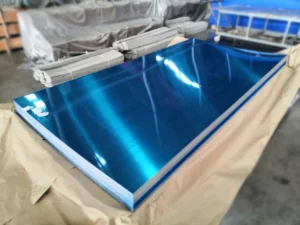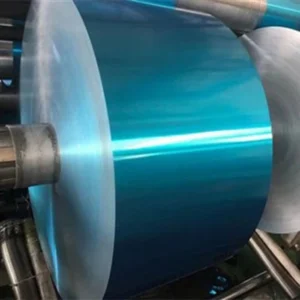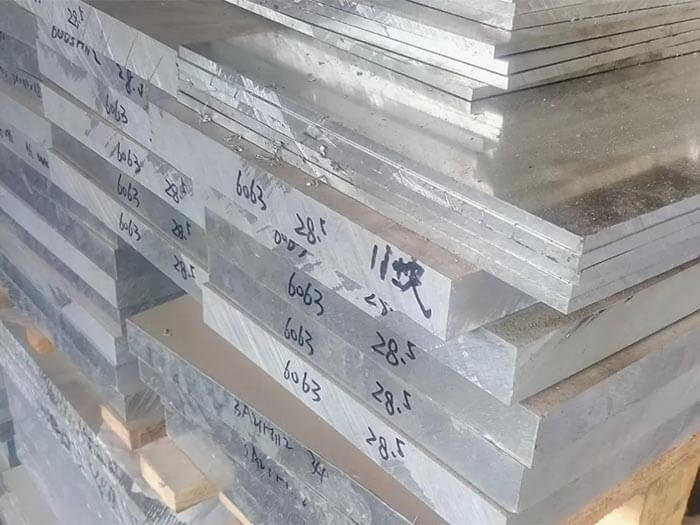
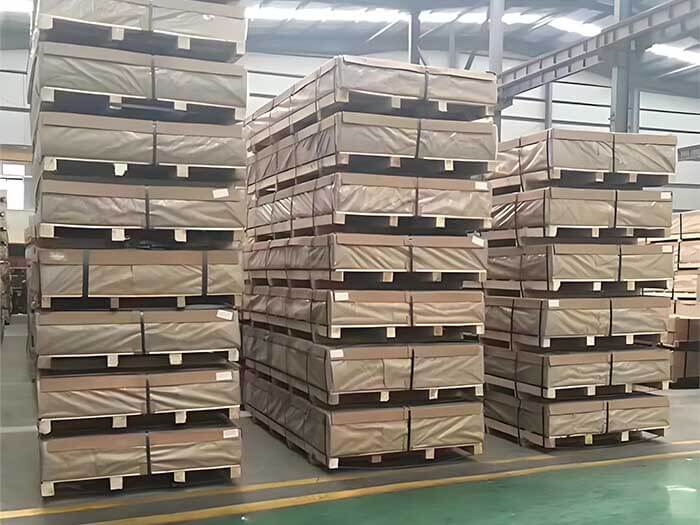
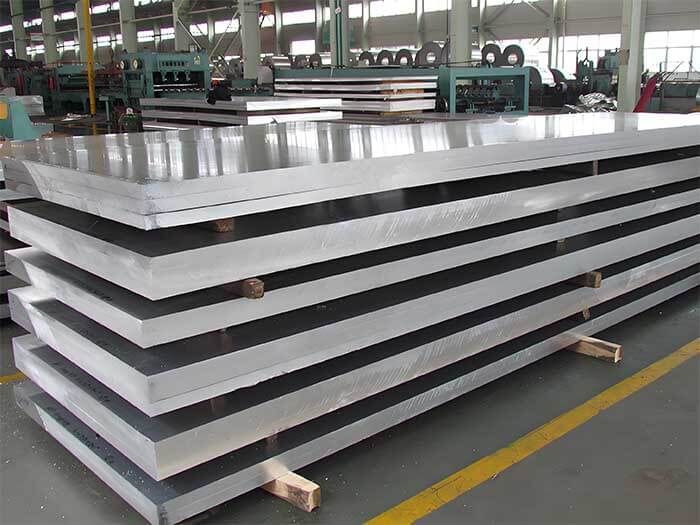
When it comes to designing and manufacturing heat sinks, the choice of material is critical. The material must possess excellent thermal conductivity, be lightweight, and be easy to manufacture. Among the various materials available, aluminum alloys, particularly the 6063 aluminum plate, stand out as an ideal choice for heat sink applications. The 6063 aluminum alloy is known for its superior mechanical properties and its ability to dissipate heat efficiently. It is widely used in various industrial applications, especially in the production of heat sinks for electronic devices, LED lighting, and other equipment that requires effective thermal management.

6063 aluminum plates have a high thermal conductivity, which allows them to efficiently transfer heat away from sensitive components. This property is crucial in heat sink applications, where the primary goal is to dissipate heat as quickly and efficiently as possible. The high thermal conductivity of 6063 aluminum ensures that the heat is spread evenly across the surface of the heat sink, preventing hotspots and ensuring the longevity of the electronic components.
One of the key advantages of using 6063 aluminum plates is their lightweight nature. This makes them ideal for applications where weight is a critical factor, such as in aerospace, automotive, and portable electronic devices. Despite being lightweight, 6063 aluminum is also highly durable, offering excellent resistance to corrosion and mechanical wear. This ensures that the heat sinks made from 6063 aluminum have a long service life, even in harsh environments.
6063 aluminum plates are easy to manufacture, which makes them a cost-effective choice for heat sink production. The alloy can be easily extruded, machined, and formed into complex shapes, allowing for the design of custom heat sinks that meet specific application requirements. This versatility in fabrication also means that 6063 aluminum heat sinks can be produced in large quantities without compromising on quality.
Compared to other materials like copper, 6063 aluminum is more affordable while still offering excellent thermal performance. This cost-effectiveness makes it a preferred choice for large-scale manufacturing of heat sinks, especially in industries where cost control is essential.

The 6063 aluminum plates used for heat sinks come in a variety of specifications to meet different application needs. Below is a table that outlines the typical specifications of 6063 aluminum plates:
| Specification | Details |
|
Alloy |
6063 |
|
Temper |
F, O, T4, T6, T651, etc. |
|
Thickness (mm) |
0.3 – 500 |
|
Width (mm) |
100 – 2400 |
|
Length (mm) |
500 – 16000 |
These specifications can be customized based on the specific requirements of the application, allowing for flexibility in design and manufacturing.

6063 aluminum plates are widely used in various heat sink applications, including but not limited to:
In electronic devices, heat sinks are essential for managing the heat generated by components such as CPUs, GPUs, and power transistors. 6063 aluminum plates are commonly used in these applications due to their excellent thermal conductivity and ease of fabrication. The lightweight nature of the material also makes it ideal for portable devices, where weight is a critical factor.
LED lighting generates heat that needs to be managed effectively to ensure the longevity of the LEDs. 6063 aluminum plates are often used to manufacture heat sinks for LED lighting due to their ability to dissipate heat efficiently, thereby extending the life of the LEDs and maintaining their brightness.
In the automotive industry, heat sinks are used in various components such as power inverters, battery chargers, and electronic control units. The 6063 aluminum plate is favored in these applications due to its high strength-to-weight ratio, corrosion resistance, and excellent thermal properties.
Telecommunication equipment, such as base stations and servers, generate significant amounts of heat that need to be managed effectively. 6063 aluminum plates are used in the heat sinks for these applications, providing reliable thermal management solutions that ensure the efficient operation of the equipment.
One of the most common applications of 6063 aluminum plates is in skived fin heat sinks. These heat sinks are manufactured by skiving (cutting) fins from a single block of 6063 aluminum plate, which allows for a high fin density and excellent thermal performance. Skived fin heat sinks are widely used in high-power electronic devices where efficient heat dissipation is critical.

To understand why 6063 aluminum is often the material of choice for heat sinks, it is useful to compare it with other commonly used materials, such as copper and steel.
| Material | Thermal Conductivity | Density | Corrosion Resistance | Ease of Fabrication | Cost |
|
6063 Aluminum |
High (200-240 W/m·K) |
Low |
Excellent |
Easy |
Low |
|
Copper |
Very High (380-400 W/m·K) |
High |
Good |
Moderate |
High |
|
Steel |
Low (16-50 W/m·K) |
High |
Moderate |
Difficult |
Low to Moderate |
Thermal Conductivity: While copper has higher thermal conductivity than 6063 aluminum, the difference in performance is often negligible in many applications, especially when considering other factors such as weight and cost.
Weight: 6063 aluminum is significantly lighter than both copper and steel, making it ideal for applications where weight reduction is important.
Corrosion Resistance: 6063 aluminum offers excellent corrosion resistance, which is crucial for heat sinks used in outdoor or harsh environments.
Ease of Fabrication: 6063 aluminum is easier to fabricate than both copper and steel, allowing for more complex designs and cost-effective manufacturing.
Cost: 6063 aluminum is more affordable than copper, making it the preferred choice for large-scale production of heat sinks.
The manufacturing process of 6063 aluminum heat sinks involves several key steps, each of which contributes to the final product's performance and quality. Below is an overview of the typical manufacturing process:
The process begins with the extrusion of 6063 aluminum alloy. The aluminum is heated to a specific temperature and then forced through a die to create the desired shape. Extrusion is commonly used to produce heat sinks with fins or other complex geometries.
After extrusion, the aluminum profiles are cut to the required length and further machined to achieve precise dimensions and features. This step may include drilling, milling, and tapping to create mounting holes or other necessary features.
To enhance the corrosion resistance and aesthetic appearance of the heat sinks, surface treatments such as anodizing are often applied. Anodizing increases the oxide layer on the surface of the aluminum, providing additional protection against corrosion and wear.
Finally, the individual components are assembled, and the heat sink is finished according to the application requirements. This may involve additional processes such as thermal interface material application or final quality inspection.