


1350 O Aluminium Foil For Transformer Winding
1. Introduction
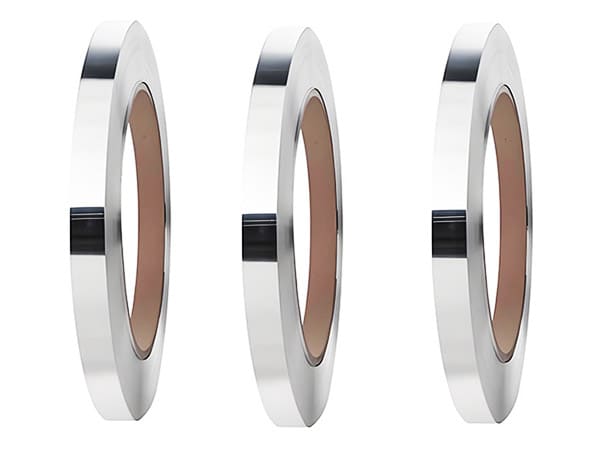
1350 O Aluminium Foil for Transformer Winding is a high-purity electrical-grade aluminum material specifically engineered for transformer coil manufacturing.
With an aluminum content of no less than 99.5% and electrical conductivity typically exceeding 61% IACS, it offers an optimal balance of conductivity, formability, lightweight performance, and cost efficiency.
The fully annealed O temper provides excellent flexibility and elongation, allowing the foil to be wound into transformer coils with minimal risk of cracking, deformation, or edge damage.
Typical transformer winding foil is available in thicknesses ranging from 0.20 mm to 4.00 mm and widths up to 1,600 mm, making it suitable for a wide variety of transformer designs.
Its excellent corrosion resistance, thermal conductivity, and recyclability further enhance its value in modern electrical infrastructure projects.

2. Understanding 1350 O Aluminium Foil for Transformer Winding
2.1 Chemical Composition of Alloy 1350
Aluminum Alloy 1350 is a high-purity electrical-grade aluminum alloy specifically designed for electrical conductor applications.
Typical chemical composition:
| Element | Content (%) |
|---|---|
| Aluminum (Al) | ≥99.50 |
| Silicon (Si) | ≤0.10 |
| Iron (Fe) | ≤0.40 |
| Copper (Cu) | ≤0.05 |
| Manganese (Mn) | ≤0.01 |
| Zinc (Zn) | ≤0.05 |
| Others | ≤0.03 each |
The exceptionally high aluminum content ensures superior electrical conductivity and stable transformer performance.
Benefits of High Purity
Lower electrical resistance
Reduced energy losses
Improved heat dissipation
Enhanced long-term reliability
Better conductivity consistency
2.2 Meaning of the "O" Temper
The "O" temper designation refers to a fully annealed condition.
During manufacturing, aluminum foil undergoes controlled annealing treatment to remove internal stresses generated during rolling operations.
Characteristics of O Temper:
| Property | Benefit |
| Maximum softness | Easier winding |
| High elongation | Reduced cracking |
| Low residual stress | Improved dimensional stability |
| Excellent flexibility | Better coil formation |
For transformer winding applications, flexibility is essential because the foil must be wound into multiple layers while maintaining dimensional accuracy.
2.3 Technical Requirements for Transformer Winding
Transformer winding foil must meet stricter requirements than general aluminium foil.
It must conduct current efficiently, fit the coil design accurately, and avoid damage to insulation.
Key requirements include:
| Requirement | Why It Matters |
|---|---|
| High conductivity | Reduces I²R loss and heat generation |
| Tight thickness tolerance | Stabilizes resistance and coil dimensions |
| Accurate width | Maintains layer alignment |
| Burr-free edge | Prevents insulation puncture and short circuits |
| Good flatness | Supports smooth winding tension |
| Clean surface | Improves compatibility with insulation paper, film, or resin |
| High ductility | Prevents cracking during winding |
| Stable coil shape | Improves transformer assembly and reliability |
3. Physical and Electrical Properties of 1350 O Aluminium Foil
The popularity of 1350 O aluminium foil is largely due to its balanced electrical, thermal, and mechanical properties.
| Property | Typical Value |
| Density | 2.70 g/cm³ |
| Electrical Conductivity | ≥61% IACS |
| Resistivity | 0.0282 Ω·mm²/m |
| Thermal Conductivity | 230–235 W/m·K |
| Tensile Strength | 60–95 MPa |
| Elongation | ≥25% |
| Melting Point | 660°C |
Electrical Performance
Electrical conductivity directly influences transformer efficiency.
For example:
Copper conductivity: 100% IACS
1350 aluminum conductivity: 61–62% IACS
Although aluminum conductivity is lower, larger conductor cross-sections compensate effectively while significantly reducing material costs.
Weight Advantage
Aluminum weighs approximately:
65% less than copper
This substantial weight reduction lowers transportation costs and simplifies installation.
Thermal Performance
Good thermal conductivity enables efficient heat dissipation, helping transformers maintain safe operating temperatures and reducing thermal aging.

4. Manufacturing Process of 1350 O Aluminium Foil for Transformer Winding
The production of 1350 O aluminum foil involves several steps to ensure high quality and precise specifications:
4.1 Casting
High-purity aluminum ingots are melted and cast into slabs.
Strict control of alloy composition ensures a minimum of 99.5% aluminum content.
4.2 Hot Rolling
The aluminum slabs are heated and rolled into thinner sheets.
This process refines the grain structure and prepares the material for further processing.
4.3 Cold Rolling
The sheets are cold-rolled to achieve the desired thickness, typically between 0.2 mm and 3.0 mm.
Cold rolling enhances the surface finish and dimensional accuracy.
4.4 Annealing
The foil is annealed to achieve the O temper, ensuring maximum ductility and softness for winding applications.
4.5 Slitting and Edge Treatment
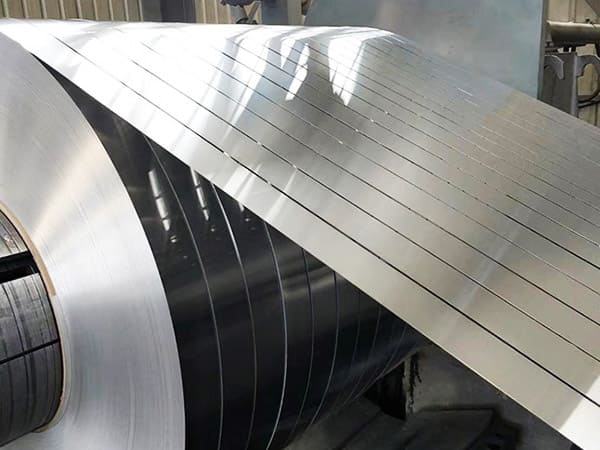
The foil is slit into narrow strips with precise width tolerances.
Edges are rounded or deburred to prevent damage to the insulation layers during winding.
4.6 Surface Cleaning and Packaging
The foil is cleaned and degreased to ensure a clean surface for insulation bonding.
Rolls are packaged with moisture-proof materials to prevent oxidation during storage and transportation.
5. Key Technical Requirements for Transformer Winding Foil
Edge Quality
Edge quality is one of the most important safety factors. Burrs or sharp edges can cut through insulating paper or film, creating a risk of partial discharge or short circuit.
Many transformer manufacturers prefer deburred, rounded, or carefully slit edges.
Thickness and Width Tolerance
Thickness affects resistance, heat generation, and winding volume.
Width affects layer alignment and coil geometry. Poor dimensional control can create uneven winding, local stress points, and inconsistent electrical performance.
Surface Cleanliness
Oil, dust, and aluminium fines can weaken insulation contact or contaminate resin systems.
Clean foil improves insulation reliability and winding appearance.
Flatness and Coil Shape
Good flatness helps the foil feed smoothly into winding machines.
Poor flatness may cause wrinkles, telescoping, uneven tension, and coil deformation.

6. Specifications of 1350 O Aluminium Foil for Transformer Winding
| Parameter | Typical Requirement |
|---|---|
| Product name | 1350 O aluminium foil for transformer winding |
| Alloy | 1350 |
| Temper | O |
| Aluminium purity | ≥99.50% |
| Thickness | Customized according to transformer design |
| Width | Customized according to winding machine |
| Conductivity | High electrical conductivity required |
| Surface | Clean, smooth, oil-controlled |
| Edge quality | Low burr, no edge crack; rounded edge optional |
| Flatness | High flatness required |
| Core ID | Customized |
| Packaging | Moisture-proof export packaging |
| Documents | Mill test certificate, conductivity report, dimensional report |
7. Why Choose 1350 O Aluminium Foil for Transformer Winding?
High Electrical Conductivity
1350 aluminium is designed for conductor applications.
Its high conductivity helps reduce winding resistance and heat generation.
Excellent Winding Flexibility
O temper gives the foil excellent ductility. This helps transformer manufacturers wind coils smoothly, especially in low-voltage foil windings where large-width foil must bend uniformly.
Lightweight Design
Aluminium's density is about 2.70 g/cm³, while copper's density is about 8.96 g/cm³.
This makes aluminium much lighter, even when designers use a larger cross-section to compensate for lower conductivity.
Cost-performance Advantage
Aluminium usually offers a lower material cost than copper.
For many distribution transformers, this cost advantage matters significantly, especially when electrical design allows a slightly larger aluminium winding area.
Good Heat Dissipation
Aluminium has high thermal conductivity. In foil windings, the broad conductor surface helps transfer heat to insulation and cooling media, supporting stable transformer temperature rise.
8. Applications of 1350 O Aluminium Foil for Transformer Winding
Thanks to its high electrical conductivity, excellent flexibility, lightweight characteristics, and cost-effectiveness, 1350 O aluminium foil for transformer winding is widely used across the power transmission and distribution industry.
Its ability to provide reliable electrical performance while reducing material and transportation costs has made it a preferred conductor material for numerous transformer applications.
Distribution Transformers
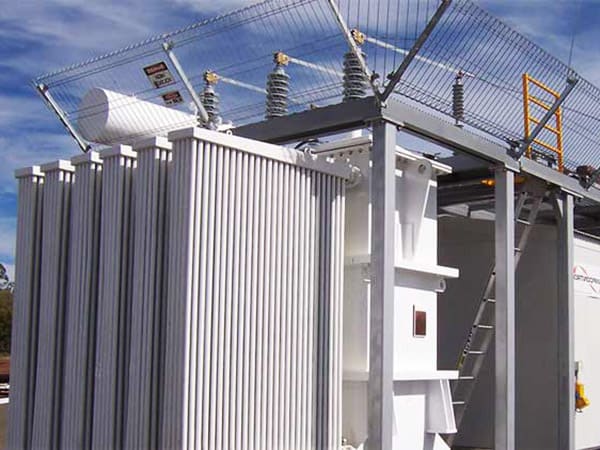
Distribution transformers represent one of the largest application areas for 1350 O aluminium foil.
These transformers are responsible for reducing medium-voltage electricity from power grids to lower voltages suitable for residential, commercial, and light industrial use.
Urban and rural power distribution networks
Residential electrical systems
Commercial buildings
Public utility infrastructure
Industrial parks
Power Transformers
Large power transformers used in substations and transmission systems require conductor materials capable of carrying substantial electrical loads while maintaining thermal stability.
1350 O aluminium foil provides a practical solution for many medium- and high-capacity transformer designs.
Transmission substations
Power generation facilities
Grid interconnection projects
Utility-scale electrical infrastructure
Dry-Type Transformers
Dry-type transformers are increasingly used in environments where fire safety, environmental protection, and low maintenance are priorities.
These transformers rely on effective thermal management and high-quality winding conductors.
Renewable Energy Transformers
The rapid expansion of renewable energy projects has created growing demand for reliable and cost-effective transformer materials.
1350 O aluminium foil is widely used in transformers designed for renewable energy systems due to its favorable balance of performance and economics.
Industrial Transformers
Many industrial facilities utilize specialized transformers to support manufacturing equipment, heavy machinery, and process operations.
Transformer-grade aluminum foil is commonly selected for these demanding applications.
Steel production
Mining operations
Chemical processing
Cement manufacturing
Oil and gas facilities
Automotive manufacturing
Electric Vehicle Charging Infrastructure
The rapid growth of electric vehicle (EV) charging stations is driving demand for distribution and power transformers.
Aluminum foil wound transformers provide an economical solution for expanding charging networks while maintaining reliable electrical performance.
Emerging Applications
As transformer technology continues to evolve, 1350 O aluminium foil is finding new applications in:
Offshore wind power platforms
Microgrid systems
Hydrogen energy infrastructure
High-efficiency energy storage networks
Green building electrical systems
9. 1350 O Aluminium Foil vs Other Materials
Choosing winding material affects transformer efficiency, size, weight, cost, temperature rise, manufacturability, and long-term reliability.
1350 O aluminium foil for transformer winding is often compared with copper foil and other aluminum grades such as 1050, 1060, and 1070.
Each material has its own advantages, and the right choice depends on electrical design, space limits, cost target, winding method, and insulation system.
| Material | Main Advantages | Limitations | Best-fit Applications |
|---|---|---|---|
| 1350 O aluminium foil | High conductivity, soft temper, good ductility, lightweight, cost-effective | Requires larger cross-section than copper for same resistance | Transformer foil windings, low-voltage windings, reactors |
| 1050 aluminium foil | Good formability, widely available, economical | Conductivity may be lower than electrical-grade 1350 | General electrical parts, less demanding windings |
| 1060 aluminium foil | Higher purity than 1050, good conductivity, good ductility | May cost more than 1050/1350 depending on market | Electrical foil, capacitor foil, selected winding applications |
| 1070 aluminium foil | Higher purity and higher conductivity potential | Higher cost, stricter sourcing | High-performance electrical applications |
| Copper foil | Excellent conductivity, compact conductor size, strong mechanical performance | Heavy, expensive, higher density | Compact transformers, high-efficiency premium designs |
| Copper wire | Mature design, excellent conductivity, flexible winding options | Lower space utilization in some low-voltage high-current designs | Conventional transformer windings |
| Aluminium wire | Economical and lightweight | Less compact than foil winding in some designs | General coils and cost-sensitive transformers |
10. Why Choose Huawei 1350 O Aluminium Foil for Transformer Winding
Henan Huawei Aluminum Co., Ltd. supplies aluminium sheet, plate, coil, strip, and foil products for electrical, packaging, and industrial applications.
For buyers sourcing Huawei 1350 O aluminium foil for transformer winding, the key value lies in specification customization, conductivity control, and export-ready packaging.
Huawei can support transformer foil buyers with:
1350 alloy aluminium foil supply
O temper annealing for soft winding performance
Customized thickness, width, core size, and coil weight
Clean surface and controlled flatness
Low-burr slitting options
Moisture-proof export packaging
Mill test certificates and batch traceability
Sample support for winding trials
Before ordering, buyers should provide winding design, target conductivity, foil thickness, foil width, edge requirement, insulation system, and packaging preference.
11. Conclusion
1350 O aluminium foil for transformer winding is a practical high-conductivity winding material for dry-type transformers, oil-immersed transformers, distribution transformers, reactors, and electrical coils.
Its 99.50% minimum aluminium content, soft O temper, good ductility, high thermal conductivity, and low density make it a strong alternative to copper in many transformer designs.
For reliable performance, buyers should evaluate conductivity, thickness tolerance, width accuracy, edge burrs, surface cleanliness, flatness, temper consistency, and supplier quality control.
The best results come from matching the foil specification to the transformer's electrical, thermal, and mechanical design.
FAQs
1. What is 1350 O aluminium foil?
1350 O aluminium foil is a high-purity electrical-grade aluminum foil containing approximately 99.5% aluminum and supplied in a fully annealed condition for transformer winding applications.
2. What conductivity does 1350 O aluminum foil provide?
Transformer-grade 1350 O aluminum foil typically achieves conductivity of 61–62% IACS.
3. Why is O temper preferred for transformer winding?
O temper offers maximum softness, flexibility, and elongation, making winding easier and reducing the risk of cracking.
4. Can aluminum foil replace copper foil in transformers?
Yes. Many distribution and power transformers successfully use aluminum foil, especially where cost and weight reduction are important considerations.
5. What thickness is commonly used for transformer winding foil?
Typical thickness ranges from 0.2 mm to 4.0 mm, depending on transformer design requirements.
6. What are the main advantages of 1350 O aluminium foil?
Key advantages include high conductivity, low weight, lower cost, excellent formability, corrosion resistance, and sustainability.
7. How should transformer aluminum foil be stored?
It should be stored in a dry, clean environment away from moisture, corrosive substances, and mechanical damage.
8. Is 1350 O aluminium foil suitable for renewable energy transformers?
Yes. It is widely used in solar, wind, and energy storage transformer applications because of its excellent electrical and economic performance.
Send Inquiry
