

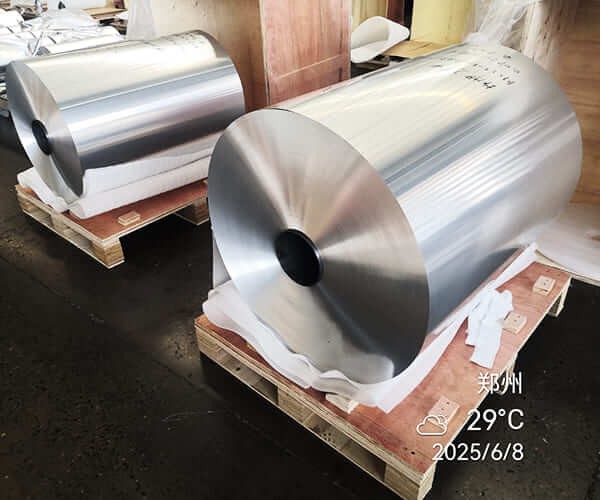

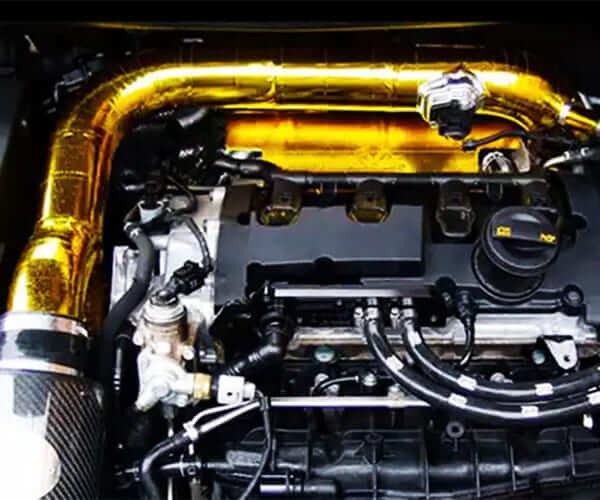
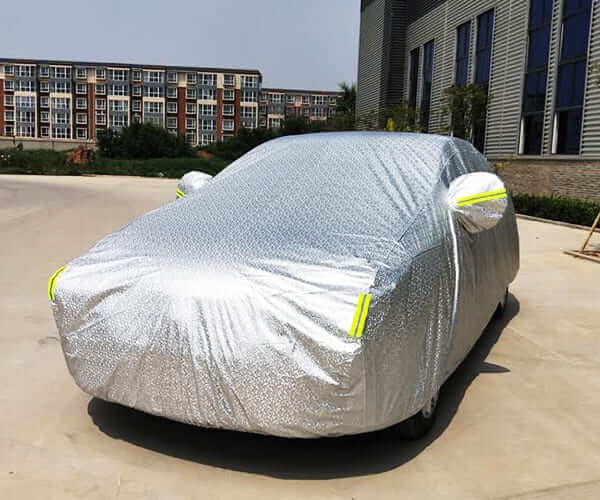
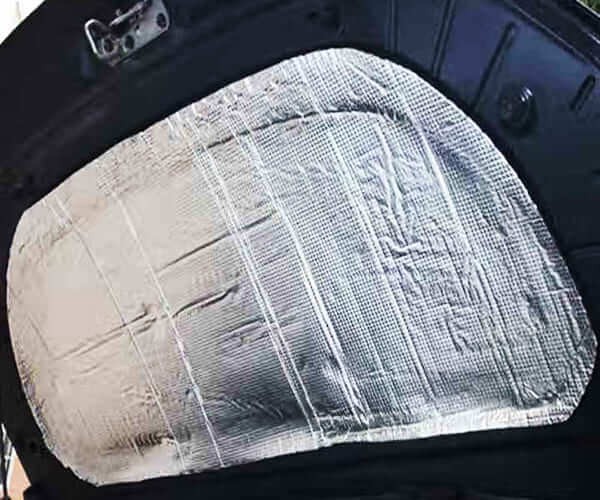
Coated Aluminum Foil For Automotive Heat Shields
Introduction: Coated Aluminum Foil for Automotive Heat Shields
Coated Aluminum Foil for Automotive Heat Shields has become a cornerstone in modern vehicle design, where the balance between thermal management, weight reduction, and durability drives engineering decisions.
In automotive applications, heat shields must protect sensitive components, manage radiant and conductive heat, and withstand harsh service environments under the hood and in the engine bay.
Coated aluminum foil blends high thermal conductivity, strength, and lightweight properties with protective or functional coatings that tailor emissivity, reflectivity, barrier performance, and chemical resistance.
This article provides a comprehensive, data-backed view of coated aluminum foil for automotive heat shields, covering material science, manufacturing, performance testing, design considerations, regulatory context, supplier landscape, and practical guidance for engineers and buyers.
Huawei Aluminum appears later in this guide as a supplier perspective. As a recognized producer of aluminum foil and related products, Huawei Aluminum offers coated foil solutions that are commonly used for automotive heat shields, with a focus on consistent quality, scalable manufacturing, and customization to meet vehicle program requirements.
Understanding the capabilities of leading suppliers helps buyers compare technical options, manage supply risk, and align product selection with program milestones.

Overview of Coated Aluminum Foil for Automotive Heat Shields
What makes coated aluminum foil suitable for heat shields
High thermal conductivity: Aluminum facilitates rapid heat spread away from hot surfaces, reducing localized hotspots and protecting critical components.
Lightweight: Compared with many metal alternatives, aluminum foils contribute to overall vehicle weight reduction, which supports fuel efficiency targets.
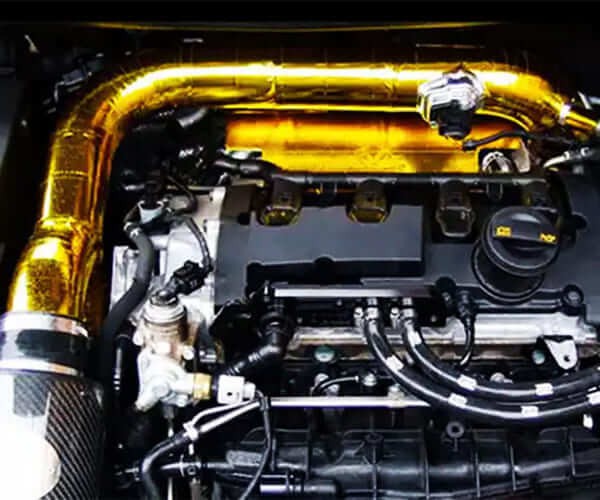
Flexible form and coverage: Foil can conform to complex shapes, enabling effective shielding over curved manifolds, pipes, and structural members.
Coatings for tailored performance: Functional coatings on aluminum foil modulate emissivity, reflectivity, abrasion resistance, chemical resistance, and moisture barriers to match specific engine bay environments.
Key performance metrics to consider
Temperature rating: The operating thermal environment in engine bays can exceed 200–400°C for short durations; coatings must resist degradation under radiant and convective heat exposure.
Emissivity and reflectivity: A coating can lower heat transfer to protected components by reflecting radiant heat or reducing absorptivity.
Adhesion and durability: Coatings must adhere to foil under thermal cycling, vibration, and potential contact with fluids (coolants, oils, salts) to maintain shielding integrity.
Pinholes and barrier integrity: The foil must provide a consistent barrier to moisture and contaminants; coatings should minimize defect density.
mechanical compatibility: Foil thickness, ductility, and coating flexibility must tolerate bending and mounting without cracking or delamination.
A practical view of use cases
Under-hood heat shields around exhaust manifolds and turbochargers.
Shielding for electrical harnesses and battery compartments in high-heat zones.
Shielding around air intake ducts to maintain intake air temperature and prevent heat soak.
Firewalls and bulkhead barriers that require robust heat reflection and moisture resistance.
Table: Typical foil and coating options used in automotive heat shields
| Foil base | Common coating types | Primary function | Typical advantages | Considerations |
|---|---|---|---|---|
| Aluminum foil (30–50 µm) | Silicone, PVDF, polyimide, ceramic-based | Embedding protective or functional films on foil | High reflectivity, good heat handling, light weight | Coating thickness affects flexibility and cost |
| Aluminum foil (15–25 µm) | Adhesive laminates, fluoropolymer coatings | Reduced emissivity, moisture barrier, chemical resistance | Thin and flexible; cost effective | Lower surface durability in contact with abrasive surfaces |
| Aluminum foil backing with metalized film | Multi-layer laminates | Enhanced barrier, lower permeation | Improved barrier properties | Higher processing complexity |
Note: Values vary with alloy, thickness, coating formulation, and processing.

Material Science: Aluminum Foil and Coatings
Base aluminum foil characteristics
Alloy and temper: Automotive foils typically use industry-standard aluminum alloys with good formability and ductility, such as 1100, 1235, or similar commercially available grades, processed to a soft or temper condition to ease shaping in complex heat shield geometries.
Thickness: Foil thickness commonly ranges from about 6 µm to 40 µm, depending on the required balance of formability, barrier properties, and cost. Thicker foils provide higher barrier performance and puncture resistance but add weight.
Mechanical properties: Foil exhibits high in-plane strength and ductility in the rolling direction, enabling it to conform to contours without cracking. The material's thermal conductivity (~205 W/m·K for pure aluminum) supports rapid heat distribution away from hot zones.
Surface properties: Clean, oxide-stabilized surfaces support coating adhesion and protect foil from corrosion. Surface roughness can influence coating adhesion and peel strength.
Coatings and their roles
Silicone-based coatings: Often used for high-temperature resilience and flexibility. They help maintain integrity under thermal cycling, while offering moisture resistance and some resistance to oils and fuels.
PVDF (polyvinylidene fluoride) coatings: Offer chemical resistance, abrasion resistance, and good UV stability. They provide a glossy finish and can contribute to improved emissivity control.
Polyimide and ceramic-based coatings: Target high-temperature performance, improved barrier properties, and enhanced fire-safety characteristics. They can tolerate higher radiant fluxes but may require careful processing to avoid delamination.
Fluoropolymer laminates and PET/foil laminates: Used to tailor barrier properties and reflectivity, often in multi-layer configurations to balance heat management with mechanical durability.
How coatings influence heat shield performance
Thermal emissivity and reflectivity: Coatings with high reflectivity reduce radiant heat absorption on the protected side, helping to limit heat transfer into components such as wiring harnesses, sensors, and intake systems.
Barrier properties: Coatings can act as moisture barriers, protecting against corrosion and moisture ingress in the engine bay, where humidity, road salt, and puddle exposure occur.
Abrasion and chemical resistance: Engine bays expose shields to oil vapors, fuels, solvents, and particulate matter. Durable coatings prevent coating wear, which could otherwise expose the foil to degradation.
Adhesion and durability: Strong adhesion between foil and coating ensures long-term performance under vibration and thermal cycling, reducing risks of delamination that could compromise shielding effectiveness.
Surface engineering considerations
Substrate-coating interface: Proper surface preparation and adhesion promoters improve coating bonding to foil. Inadequate adhesion increases the risk of coating peel and micro-cracking.
Coating thickness: Thicker coatings may improve barrier properties but increase stiffness and potential cracking during forming. The optimal coating thickness balances flexibility with protective performance.
Thermal cycling behavior: Materials in automotive heat shields undergo repeated heating and cooling. Coatings should exhibit minimal growth of surface roughness and crack formation during cycles.
Manufacturing and Processing
Production of aluminum foil
Rolling and annealing: Foil sheets are produced through a sequence of hot and cold rolling steps, followed by annealing to achieve the desired softness and formability. The final temper impacts ductility and conformity to complex shapes.
Surface treatment: Cleaning and oxide formation steps prepare the foil surface for coating adhesion. Surface energies are optimized to promote robust bonding with coatings.
Coating application technologies
Lamination: A common approach involves laminating a polymer or ceramic-coated film onto the foil with an adhesive layer. This method is suitable for multi-layer barrier structures and can provide tailored emissivity properties.
Co-extrusion and co-rolling: Some coatings are applied through co-extrusion processes or through multi-layer roll-coating systems to yield integrated barrier and reflective layers.
Direct coating: In some cases, a directly deposited coating (e.g., silicone or polyimide) is sprayed or brushed onto the foil surface, followed by curing steps. This approach reduces the number of interfaces but requires careful curing control.
Adhesive and metallized layers: Adhesives and metallized layers (e.g., aluminum oxide or thin metal layers) can be used to augment barrier and reflective performance.
Quality control and testing during manufacturing
Coating thickness measurement: Non-destructive methods measure coating thickness to ensure uniform coverage.
Adhesion testing: Peel or pull tests verify that coatings adhere to the foil across the intended temperature range.
Pinhole and defect inspection: Visual and automated inspection detects pinholes or coating defects that could compromise barrier properties.
Thermal age and aging tests: Simulated engine bay thermal cycles validate coating regeneration, delamination resistance, and emissivity stability.
Processing challenges and solutions
Delamination risk: Proper adhesion promoters and surface preparation help minimize delamination due to thermal cycling.
Bending and formability: Foil and coating combinations are tuned to maintain flexibility without cracking during forming.
Corrosion under coatings: Barrier coatings must resist corrosion due to moisture and salts; selecting compatible base alloys and coatings minimizes corrosion risk.
Performance and Testing
Thermal performance in real-world engine bays
Engine bays present radiant heat sources (manifolds, exhaust, turbochargers), convective heat from air flows, and localized hotspots.
Coated foils must reflect or resist radiant heat while allowing manageable conduction and minimizing heat transfer to protected components.
Temperature ranges: Engine bay components can experience heat up to 150–350°C intermittently, with higher peak temperatures near exhaust systems. Coatings designed for these conditions typically offer resistance across the 150–300°C range for sustained periods and higher resistance during short peaks.
Radiant heat management: High-reflectivity coatings reduce radiant heat absorption by reflecting a portion of the incident infrared energy, thereby reducing heat transfer to sensitive components.
Convective cooling: Foil surfaces can be designed to favor convective heat transfer away from shields, provided the coating does not impede the underlying foil's ability to conduct heat away from hot zones.
Durability and environmental testing
Thermo-mechanical cycling: Repeated heating and cooling tests evaluate the coating's ability to withstand thermal cycling without delamination or cracking.
Humidity and salt spray: Exposure to humid and saline environments simulates road use and vehicle wash cycles; coatings should maintain barrier integrity and corrosion resistance.
Abrasion and surface wear: Shield surfaces experience contact with wiper blades, debris, and mounting hardware; coatings should resist surface wear while preserving reflective properties.
Comparative data: coating types under typical conditions
Silicone-based coatings: Excellent flexibility and high-temperature tolerance; good resistance to moisture and oils; moderate abrasion resistance.
PVDF coatings: Strong chemical resistance and UV stability; good barrier properties; may be less flexible than silicone, depending on formulation.
Polyimide coatings: Very high-temperature capability; strong barrier properties; higher processing costs but excellent durability under extreme thermal conditions.
Ceramic-based coatings: Superior high-temperature resistance and refractive properties; often used in demanding heat shield regions; may be more brittle under bending.
Table: Representative performance indicators for common coating types
| Coating type | Temperature tolerance (°C) | Adhesion behavior | Barrier against moisture | Abrasion resistance | Typical use case in heat shields |
|---|---|---|---|---|---|
| Silicone | 200–350 | Very good with proper cure | Good | Moderate | Flexible seams, corners, contact areas |
| PVDF | 150–250 | Good | Very good | Good | Exterior-facing shield surfaces with chemical exposure |
| Polyimide | 250–400+ | Excellent | Excellent | Moderate | High-temperature zones near manifolds |
| Ceramic-based | 300–500 | Good under controlled conditions | Excellent | High | Extreme radiant areas near exhausts |
Note: Values vary by specific formulation, foil thickness, and processing methods.
Design Considerations for Automotive Heat Shields
Thermal insulation versus reflection strategy
Reflective strategy: High-reflectivity coatings minimize heat absorption, reducing heat flux toward protected components.
Insulative strategy: Some coatings and multi-layer laminates create insulating barriers to slow heat flow and reduce conduction through the shield.
Hybrid approaches: A combination of reflective surfaces and insulating inner layers can achieve a balance between thermal protection and mechanical durability.
Fitment, geometry, and mounting
Complex geometries: Engine bays present curves and irregular surfaces; foil flexibility and coating performance under forming are critical to achieving full coverage without inducing cracks.
Mounting hardware: Coatings must resist abrasion from mounting clamps, screws, and fasteners; consideration of edge treatments and protective overlayers can reduce wear.
Tolerances: Heat shields require precise tolerances to ensure closure near sources of heat, while leaving room for thermal expansion and vibration without noise or rubbing.
Weight, cost, and supply chain
Weight and fuel efficiency: Although thin, coated foils contribute to overall weight reduction in heat shields; packaging and assembly costs are also part of the total cost equation.
Material costs: Foil cost is influenced by base alloy, thickness, and coating complexity. Higher-performance coatings increase cost but can reduce thermal load on protected components.
Supply chain considerations: Automotive programs demand stable supply with traceability, quality certifications, and the ability to ramp production to meet vehicle launch timelines.
Reliability and service life
Environmental exposure: Engine bay conditions include temperature, humidity, oil vapors, and salts. Coatings must maintain barrier properties and adhesion throughout the service life.
Maintenance and repair: In some vehicles, shield replacement is possible during service intervals; coatings should enable straightforward inspection and replacement if needed.
Regulatory Standards and Certification
Automotive and industry standards
IATF 16949: Automotive Quality Management System standard; suppliers for heat shields should operate a robust quality management system aligned with this standard.
ISO 9001: Quality management system applicable to many manufacturing environments, including foil and coating production.
Automotive program specifications: Vehicle manufacturers often specify coating types, thickness, adhesion, and barrier properties for heat shields to meet program requirements.
Environmental and safety standards
REACH and RoHS: Compliance with chemical safety regulations for coatings and adhesives used on automotive components.
Fire safety and flammability standards: Some coatings must meet specific fire-safety criteria to ensure that shield materials do not contribute to fire propagation in the event of an accident.
Testing standards for heat shields
Thermal cycling tests: Simulate engine bay conditions to assess coating adhesion, delamination risk, and surface stability.
Humidity and salt spray tests: Assess corrosion resistance and barrier performance in harsh exposure environments.
Adhesion tests: Standardized peel strength tests evaluate the durability of the coating–foil bond under service conditions.
Supplier Spotlight: Huawei Aluminum
Company overview
Huawei Aluminum is a recognized producer of aluminum foil and related products, with a broad portfolio that includes coated aluminum foil solutions used in automotive and industrial applications.
The company emphasizes quality control, traceability, and the ability to provide customized foil and coating configurations to meet program requirements.
Capabilities and product lines
Coated foil options: Huawei Aluminum offers coatings designed to improve barrier properties, reflectivity, and temperature resistance for automotive heat shields.
Thickness and width ranges: The company provides foil in a variety of thicknesses and widths to accommodate different heat shield geometries and assembly processes.
Customization: Coating formulations, adhesion promoters, and laminate configurations can be tailored to specific vehicle program needs, including compatibility with adhesives and sealants used in shield assembly.
Quality and certifications
Quality management systems: Huawei Aluminum typically maintains relevant ISO certifications and process controls to support automotive-grade supply.
Traceability and documentation: Documentation such as material certificates, test results, and process parameters help buyers validate conformity to program requirements.
Why choose Huawei Aluminum for coated foil
Global supply reliability: A large-scale foil producer with established logistics to support automotive supply chains.
Customization: Ability to tailor coating types, thicknesses, and laminates to meet performance targets, weight constraints, and cost targets.
Technical collaboration: Capable of engaging with automakers and tier suppliers during design and testing phases to optimize shielding performance and manufacturability.
Comparison Table: Coated Aluminum Foil for Automotive Heat Shields
| Aspect | Silicone-coated foil | PVDF-coated foil | Polyimide-coated foil | Ceramic-coated foil | Huawei Aluminum options (general) |
|---|---|---|---|---|---|
| Temperature tolerance | Up to 350°C | 250–300°C | 350–400°C | 400–500°C | High-temperature variants available; adjustable to program needs |
| Emissivity control | High reflectivity; good stability | Moderate to high reflectivity | Very high thermal stability; emissivity tunable | Excellent high-temperature reflection | Varied emissivity options with coatings tailored to spec |
| Barrier properties | Moisture and oil resistance | Excellent chemical resistance | Outstanding barrier performance | Superior barrier against heat and fuels | Barrier-focused laminates and coatings available |
| Mechanical durability | Excellent flexibility; durable under bending | Good abrasion resistance | Excellent for high-temp cycling | High hardness; robust in extreme heat | Customizable laminates to balance flexibility and durability |
| Formability | Highly formable; suitable for complex shapes | Good formability | Moderate due to higher temperature demands | Formability varies by laminate design | Capability to tailor to complex engine bay geometries |
| Typical automotive use | Flexible shielding in corners and seams | Exterior-facing shield surfaces | High-temp zones near exhaust and manifolds | Extreme radiant zones and high-heat areas | Solutions aligned with program requirements |
Note: This table presents general tendencies. Specific product data from manufacturers, including Huawei Aluminum, should define exact performance in your application.
FAQs
Q: What temperature can coated aluminum foil heat shields withstand in automotive applications?
- A: Temperature tolerance depends on the coating and foil thickness. Silicone-coated foils typically withstand up to about 200–350°C under real-world radiant heating, PVDF coatings up to 250–300°C, polyimide coatings up to 350–400°C, and ceramic-coated systems can handle higher radiant flux, often 400–500°C in short-term peaks. Long-term performance depends on thermal cycling, mounting, and exposure conditions.
Q: How does a coating affect the foil's thermal performance?
- A: Coatings primarily influence emissivity, reflectivity, and barrier properties. Reflective or high-emissivity coatings reduce heat absorption and radiant heat transfer. Barrier coatings protect against moisture and chemical exposure, improving durability. The coating adds a small amount of thermal resistance and can affect flexibility; the overall shielding effectiveness is a function of both foil conductance and coating properties.
Q: What thickness and coating are common for automotive heat shields?
- A: Foil thickness often ranges from 6 µm to 40 µm, depending on the balance between formability and protection. Coating thickness varies by formulation, typically from a few micrometers up to tens of micrometers in laminated configurations. The exact combination is driven by heat source intensity, shield geometry, and assembly constraints.
Q: How do manufacturers test adhesion and barrier performance?
- A: Common methods include standardized peel tests to measure coating adhesion, cross-cut tape tests for adhesion uniformity, humidity and salt spray tests for corrosion resistance, thermal cycling tests for durability under temperature changes, and pinhole tests to assess barrier integrity.
Q: Why consider Huawei Aluminum as a supplier for coated foil heat shields?
- A: Huawei Aluminum is a recognized manufacturer with capabilities in aluminum foil production and coating technology. They offer customizable film laminates and coating configurations suitable for automotive heat shields, with a global supply footprint and quality control measures aligned with automotive program needs. Their flexibility in tailoring coatings and lamination formats can support program-specific performance and manufacturing requirements.
Conclusion
Coated Aluminum Foil for Automotive Heat Shields represents a pragmatic fusion of materials science, coating technology, and engineering pragmatism.
The right foil and coating combination delivers effective heat management, mechanical durability, and compatibility with automotive manufacturing processes.
By carefully considering alloy choices, foil thickness, coating type and thickness, adhesion, barrier properties, and thermal performance, engineers can design heat shields that meet safety, performance, and cost objectives.
In selecting a supplier, including Huawei Aluminum, buyers should prioritize technical capability, process control, quality certifications, and the ability to support program timing and scale.
The supplier landscape for coated foil heat shields is increasingly diverse, with options for multi-layer laminates, advanced coatings, and customized laminates designed for specific engine bay environments.
A well-structured specification, robust testing plan, and clear supplier engagement can lead to heat shield solutions that perform reliably throughout a vehicle's life cycle while contributing to weight reduction and improved thermal management in modern vehicles.
Whether for conventional petrol and diesel engine platforms or for emerging powertrains in electric and hybrid vehicles, coated aluminum foil heat shields offer a flexible, high-performance path to protecting critical components, maintaining system efficiency, and supporting vehicle reliability.
The ongoing development of coatings and laminates promises even more capable and economical options in the years ahead, keeping Coated Aluminum Foil for Automotive Heat Shields at the forefront of automotive thermal management.
Send Inquiry
