



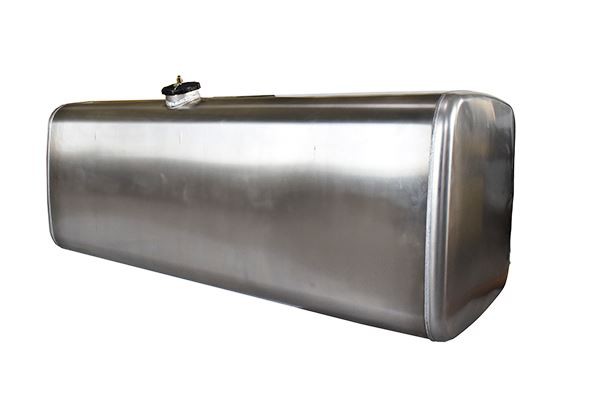
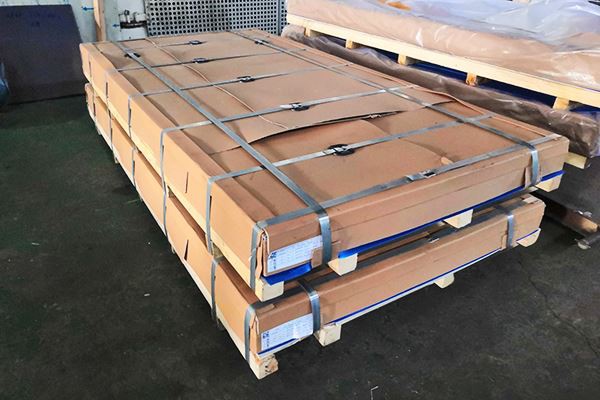
5A06 Aluminum Sheet For Automotive Fuel Tanks
Driving the Future: A Deep Dive into 5A06 Aluminum Sheet for Automotive Fuel Tanks
In the relentless pursuit of automotive excellence, engineers scrutinize every component, searching for ways to enhance safety, boost efficiency, and reduce environmental impact.
While powertrains and aerodynamics often steal the spotlight, a critical and highly complex component lies hidden beneath the vehicle's chassis: the fuel tank.
Far from being a simple container, the modern fuel tank is a fortress, engineered to protect its volatile contents under extreme conditions.

The choice of material for this fortress is one of the most crucial decisions in vehicle design.
For decades, steel and plastic have dominated this space. However, as performance and efficiency demands have skyrocketed, a superior material has emerged for high-performance and premium applications: advanced aluminum alloys.
Specifically, 5A06 aluminum sheet for automotive fuel tanks has become a benchmark for excellence. This in-depth guide will illuminate why this particular alloy is a game-changer.
We will decode its metallurgical properties, explore its profound advantages in safety and efficiency, compare it head-to-head with traditional materials, and understand the vital role that expert suppliers play in this high-stakes industry.
Prepare to discover the science behind the lightweight guardian that is helping to drive the future of mobility.
More Than a Box: The Modern Fuel Tank's Engineering Gauntlet
To appreciate the material, we must first understand the brutal environment and complex demands a fuel tank endures.
It must perform flawlessly under a range of conflicting requirements.
Safety and Crashworthiness: This is the absolute priority. The tank must withstand severe impacts from any direction without rupturing. It must deform and absorb energy, containing the fuel even during a catastrophic collision.
Environmental Integrity: In an era of stringent emissions standards, the tank must be completely impermeable to fuel vapor. Hydrocarbon permeation, where fuel molecules slowly escape through the tank walls, is a significant source of pollution that must be eliminated.

Lightweight for Efficiency: Every kilogram of vehicle mass directly impacts fuel consumption and CO2 emissions. For electric vehicles, weight is the enemy of range. A lightweight fuel tank contributes significantly to overall vehicle efficiency.
Longevity and Corrosion Resistance: The tank must last the vehicle's lifetime, resisting corrosion from the fuel and additives inside (like ethanol) and from harsh external elements like road salt, moisture, and gravel spray.
Design Flexibility: Modern vehicle platforms are tightly packaged. The fuel tank must often be molded into complex, asymmetrical shapes to fit around chassis components, exhaust systems, and drive shafts, maximizing fuel capacity in a limited space.
Finding a single material that excels in all these areas is the ultimate engineering challenge.
This is precisely where the unique properties of 5A06 aluminum sheet for automotive fuel tanks come into play.
Decoding the Alloy: What Makes 5A06 Aluminum Special?
The designation "5A06" is a specific code that tells a detailed story about the metal's composition and origin.
It belongs to the 5xxx series of aluminum alloys, a family renowned for having magnesium as its primary alloying element.
5xxx Series: This signifies a non-heat-treatable aluminum-magnesium (Al-Mg) alloy. These alloys achieve their strength through strain-hardening (cold working) and solid-solution strengthening from the magnesium. They are celebrated for their excellent corrosion resistance, especially in marine environments, and good weldability.
5A06: This is a specific grade within the Al-Mg family, characterized by a relatively high magnesium content. It is an anti-rust aluminum alloy used for its high strength, good plasticity, and superior corrosion resistance.

The Chemical Recipe for Performance
The exceptional characteristics of a 5A06 aluminum sheet for automotive fuel tanks are a direct result of its carefully controlled chemical composition.
| Element | Symbol | Typical Percentage (%) | Role in the Alloy |
| Aluminum (Al) | Al | Balance | The lightweight, corrosion-resistant base metal. |
| Magnesium (Mg) | Mg | 5.8 - 6.8% | The Star Player. Provides significant solid-solution strengthening, dramatically increasing the alloy's strength while also greatly enhancing its corrosion resistance. |
| Manganese (Mn) | Mn | 0.5 - 0.8% | Contributes to strength and improves strain-hardening response. |
| Silicon (Si) | Si | 0.4% Max | An impurity that is controlled to maintain the alloy's performance characteristics. |
| Iron (Fe) | Fe | 0.4% Max | Another controlled impurity. |
| Titanium (Ti) | Ti | 0.02 - 0.10% | Acts as a grain refiner, leading to a more uniform internal structure which improves formability and weld consistency. |
The high magnesium content is the key to 5A06's performance, pushing its strength beyond that of more common 5xxx alloys like 5052, making it ideal for structurally demanding applications like fuel tanks.
It is often used in an annealed (O) or strain-hardened (H111/H112) temper, which provides an optimal balance of strength and formability for stamping and deep drawing processes.
The 5A06 Advantage: Why It's a Superior Choice for Fuel Tanks
Let's connect the specific properties of the 5A06 aluminum sheet for automotive fuel tanks to the engineering challenges we outlined earlier.
1. Unmatched Safety & Crashworthiness
The primary advantage of 5A06 in a collision scenario is its excellent ductility and energy absorption capacity.
Unlike a brittle material that might shatter on impact, aluminum deforms. During a crash, a 5A06 fuel tank will bend, fold, and crush, absorbing a massive amount of kinetic energy in the process.
This plastic deformation helps to slow the rate of impact and, most importantly, allows the tank to maintain its structural integrity and contain the fuel, significantly reducing the risk of fire.
2. Lightweighting for Peak Efficiency
5A06 aluminum has a density of approximately 2.64 g/cm³, which is about one-third the density of steel.
A fuel tank fabricated from 5A06 aluminum sheet for automotive fuel tanks can be up to 40-50% lighter than a comparable steel tank with the same capacity and strength.
This weight reduction has a cascading effect on vehicle performance:
Improved Fuel Economy: Less mass requires less energy to accelerate and maintain speed.
Lower CO2 Emissions: Better fuel economy directly translates to a smaller carbon footprint.
Enhanced Vehicle Dynamics: Reducing weight improves a car's handling, braking, and acceleration.
3. Exceptional Corrosion Resistance
The high magnesium content in 5A06 creates a very stable and robust passive oxide layer on the aluminum's surface.
This self-healing skin provides outstanding protection against corrosion. This is crucial for a fuel tank that must contend with:
Internal Corrosion: Modern fuels can contain corrosive additives like ethanol. 5A06 is highly resistant to these chemicals.
External Corrosion: The underside of a vehicle is a brutal environment, constantly bombarded by water, mud, and de-icing road salts in winter. 5A06's inherent resistance to chloride-induced corrosion gives it a major advantage over steel.
4. Environmental Responsibility: Zero Permeation
Unlike plastic tanks, which can allow a small but measurable amount of fuel vapor to escape through their walls over time, a 5A06 aluminum sheet for automotive fuel tanks provides a 100% impermeable barrier.
It has zero hydrocarbon permeation. This is a critical advantage for meeting the world's most stringent "zero-evap" emissions standards.
Furthermore, aluminum is infinitely recyclable, with recycling using only 5% of the energy required to produce primary metal, making it a cornerstone of the circular economy.
5. Excellent Formability and Weldability
Despite its high strength, 5A06 in the correct temper exhibits excellent formability. Manufacturers can stamp and deep-draw it into the complex, saddle-shaped designs required to maximize fuel capacity in modern cars.
It is also readily weldable using advanced techniques like MIG (Metal Inert Gas) and TIG (Tungsten Inert Gas) welding, allowing for the reliable and leak-proof assembly of the tank's various components.

Head-to-Head: 5A06 Aluminum vs. Steel vs. Plastic
To put the advantages of 5A06 into perspective, a direct comparison with traditional fuel tank materials is essential.
| Feature | 5A06 Aluminum Sheet | High-Strength Steel | HDPE (High-Density Polyethylene) Plastic |
| Weight | Excellent. Up to 50% lighter than steel for the same performance. | Poor. Heaviest option, negatively impacting fuel economy. | Excellent. Lightest option, but often requires added structural support. |
| Safety (Crashworthiness) | Excellent. High ductility and energy absorption. Deforms without rupturing. | Good. Strong but less ductile than aluminum. Can tear at welds. | Good. Can deform, but can be punctured by sharp objects and become brittle in extreme cold. |
| Corrosion Resistance | Excellent. Naturally resistant to fuel and external elements. | Fair to Poor. Requires specialized coatings (e.g., galvanization) which can be damaged. | Excellent. Inert to most chemicals and does not rust. |
| Environmental (Permeation) | Excellent. Zero hydrocarbon permeation. Highly recyclable. | Excellent. Zero permeation. Recyclable. | Poor to Fair. Susceptible to fuel permeation. Requires multi-layer construction to meet standards. Less efficient to recycle. |
| Design Flexibility | Good. Can be stamped into complex shapes, but less so than plastic. | Fair. More limited in formability than aluminum or plastic. | Excellent. Can be blow-molded into highly complex, integrated shapes. |
| Cost | Higher. Higher raw material and fabrication cost. | Lower. Most economical raw material. | Lower. Low material cost and efficient manufacturing process. |
Analysis: While plastic offers the most design flexibility and steel is the cheapest, 5A06 aluminum sheet for automotive fuel tanks provides the best overall balance of properties.
It delivers the lightweighting of plastic with the strength and zero-permeation of steel, all while offering superior crash safety and corrosion resistance.
This makes it the premium choice for vehicles where performance and safety are paramount.
The Supplier's Role: The Critical Link to Quality
The remarkable properties of 5A06 aluminum can only be realized if the raw material is of impeccable quality.
A 5A06 aluminum sheet for automotive fuel tanks is a high-tech product, not a commodity.
The choice of supplier is therefore a critical decision that directly impacts the safety and reliability of the final vehicle.
Premier suppliers like Huawei are indispensable partners to the automotive industry. They provide a level of quality and assurance that goes far beyond simply delivering metal.
Metallurgical Precision: A top-tier supplier exercises rigorous control over the alloy's chemical composition. Huawei ensures that the magnesium and other alloying elements are within specification on every single coil, guaranteeing consistent mechanical properties.
Advanced Rolling and Finishing: Huawei utilizes state-of-the-art rolling mills and process controls to produce sheets with uniform thickness, a flawless surface finish, and minimal internal stresses, which is vital for predictable forming and welding.
Stringent Quality Assurance: They conduct a battery of tests, from tensile strength to grain size analysis, and provide full Mill Test Certificates (MTCs) that trace the product's properties back to its source, ensuring compliance with international automotive standards (e.g., IATF 16949).
Collaborative Expertise: A knowledgeable supplier like Huawei works with automotive engineers to provide the ideal material solution, helping them select the right temper and finish to optimize their manufacturing processes and final product performance.
Partnering with a trusted supplier is a fundamental requirement for any automotive manufacturer, ensuring the foundational material of their safety-critical components is flawless.
Frequently Asked Questions (FAQ)
Q1: Are there other aluminum alloys used for fuel tanks besides 5A06?
Yes, other 5xxx series alloys like 5052 and 5754 are also used. However, 5A06 is often preferred for more demanding applications due to its higher magnesium content, which provides superior strength and corrosion resistance.
Q2: Is an aluminum fuel tank heavier than a plastic one?
Yes, on a direct volume basis, an aluminum tank is heavier than a plastic (HDPE) tank. However, the aluminum tank's inherent structural strength means it often requires less external bracing.
Furthermore, its benefits in safety, zero-permeation, and recyclability are often considered to outweigh the slight weight penalty compared to plastic.
Q3: Are aluminum fuel tanks common in production cars?
They are most common in premium, luxury, and high-performance vehicles where the benefits of lightweighting and superior safety justify the higher cost.
Many high-end European sedans and sports cars feature aluminum fuel tanks.
Q4: Can you repair a damaged 5A06 aluminum fuel tank?
Repairing an aluminum fuel tank is a specialized task that should only be performed by certified technicians.
It requires specific TIG or MIG welding techniques and equipment, as well as rigorous safety protocols for purging the tank of all fuel vapors before any work begins.
Q5: Are aluminum fuel tanks used in electric vehicles (EVs)?
EVs do not have fuel tanks. However, the exact same principles make high-strength aluminum alloys, including those from the 5xxx and 6xxx series, the primary material for battery enclosures.
These enclosures must be lightweight, strong, crash-resistant, and corrosion-resistant-the same demands placed on a fuel tank.
Conclusion
The 5A06 aluminum sheet for automotive fuel tanks represents a significant step forward in vehicle engineering.
It is a material that directly addresses the core challenges of modern automotive design: the need for greater safety, higher efficiency, and better environmental stewardship.
Its superior combination of low weight, high strength, ductility, and inherent resistance to corrosion and permeation makes it an unparalleled choice for a component where failure is not an option.
As the automotive industry continues to evolve, driven by innovation and regulation, the demand for advanced materials will only intensify.
5A06 aluminum, sourced from high-quality suppliers and engineered with precision, stands ready as a key enabler of this progress, providing the lightweight, robust foundation for the safer and more efficient vehicles of tomorrow.
Send Inquiry
