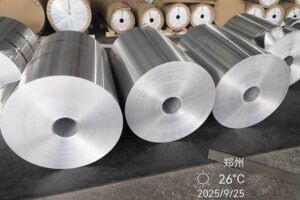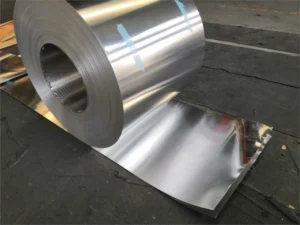
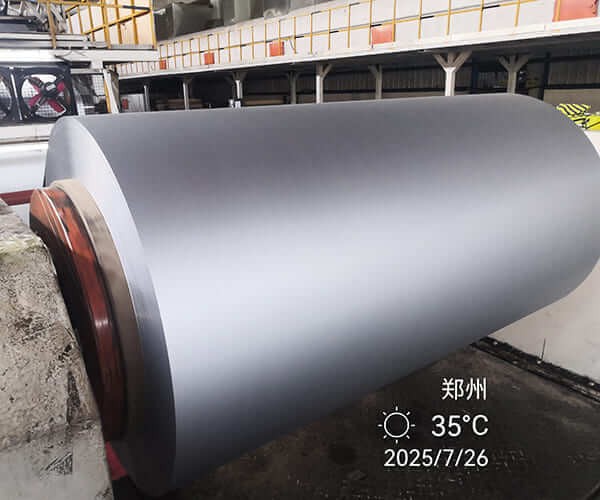
8011 coated aluminum foil for food packaging is the dominant thin-metal material where a combination of absolute barrier performance, thermal robustness and functional surface properties is required.
The 8011 alloy provides the mechanical and forming characteristics demanded by high-speed converting and deep-draw or lidding operations; modern coatings deliver heat-sealability, printability and controlled food compatibility.
8011 coated aluminum foil combines an engineered metal substrate with thin functional coatings to meet the complex demands of contemporary food packaging: long shelf life, thermal processing (ovenable/retort), machinability on high-speed filling lines, attractive printed graphics, and regulatory assurance of food safety.
The material’s success rests on matching alloy temper and foil gauge to product form (lidding vs tray vs blister), and formulating/processing coatings so they deliver adhesion, sealability, and low migration without compromising recyclability or causing processing defects (pinholes, blocking, delamination).

The 8011 family is an aluminum-dominant alloy engineered for foil production.
Typical compositional characteristics are:
Aluminium (Al): ≈ 97.3–99.0 wt% (primary matrix).
Iron (Fe): ≈ 0.60–1.0 wt% (controls grain structure and strength).
Silicon (Si): ≈ 0.50–0.90 wt% (improves rollability and surface quality).
Minor elements: trace Mn, Zn, Cu, Ti as manufacturing or impurity constituents.
This composition is chosen to minimize edge cracking and pinhole formation during aggressive rolling to thin gauges, while providing sufficient strength for handling and forming.
Small variations in Fe and Si within the specified ranges significantly affect rolling behavior and final surface condition-important variables when targeting ultra-thin lidding foils (<10 µm).
Key practical attributes for packaging design include:
Gauge ranges and use cases: typical commercial gauges for food packaging are:
Lidding / blister foil: 8–30 µm
Household foil: 12–18 µm
Rigid / semi-rigid trays: 40–250 µm (dependent on structural needs)
Temper and ductility: O-temper (annealed) foils are used where high ductility and drawability are required; light H-tempers may be specified where higher stiffness prevents wrinkling on high-speed lines.
Surface finish: one-side bright / one-side matte finishes are common. The bright side is produced by rolling against polished rolls and enhances appearance; the matte side improves coating adhesion and reduces blocking risk.
Mechanical performance: tensile strength and elongation depend on temper and gauge; designers must balance thinness (for barrier economy) against tear resistance and puncture resistance required by end-use.
Coatings convert the bare foil into a usable packaging web:
Primers / adhesion promoters: very thin layers (often <1 g/m²) that improve bonding between metal and subsequent polymeric layers or inks. Typical chemistries: waterborne acrylics or crosslinkable polymers formulated for food compatibility.
Heat-seal coatings / sealants: polymeric layers that create reliable hermetic seals when heat/pressure are applied. Common base resins include polyethylene (PE) blends, ethylene vinyl acetate (EVA), ethylene acrylic acid (EAA), and engineered copolymers designed for specified hot-tack and peel behavior. Coat weights commonly range 1–6 g/m² depending on the required seal strength and processing temperature.
Functional barrier coatings: where enhanced oxygen or aroma barrier is needed beyond the native foil, thin inorganic coatings or EVOH-based layers are used as part of laminated structures.
Print varnishes / protective overcoats: applied to protect printed images from abrasion and to control surface gloss; coat weights are typically low (fractions of a g/m²).
Coating selection is driven by processing temperature windows, migration risk for specific food types, cure method (thermal vs UV), and end-of-life targets (recyclability).

Aluminum foil provides near-absolute barrier to light, oxygen and moisture vapor at very low thickness.
When paired with appropriate sealant layers, the laminate becomes hermetic.
This makes 8011 coated foil ideal for oxygen-sensitive or light-sensitive foods (e.g., fried snacks, dehydrated products, certain dairy forms) and for packaging that must retain volatiles (flavors, aromas).
Quantitatively, a continuous metal foil layer has an oxygen transmission rate effectively at the detection limit of common instruments for practical package sizes, and water vapor transmission is dominated by imperfections at seals and edges rather than by the foil itself.
Coating integrity and seal quality therefore control overall package permeability.
For identical barrier performance, foil-based laminates typically offer lower mass and thickness than comparable rigid containers.
This reduces shipping weight and material usage. Mechanical durability (resistance to tears, punctures and abrasion) depends on gauge, temper and laminate reinforcement; multi-web laminates can tailor both barrier and mechanical needs.
Coatings enable high-definition printing and controlled gloss, enabling premium shelf presence.
In many markets, printed lidding is a standard merchandising feature; coatings also protect ink rub resistance and prolong shelf-appearance.
8011 foil’s thermal conductivity and stability make it suitable for ovenable and retortable formats.
Coatings must be chosen to withstand sealing and downstream thermal cycles. Typical considerations:
Sealing window: many heat-seal coatings bond reliably between ~120–200 °C depending on dwell and pressure.
Retort stability: adhesives and laminates must resist hydrolytic degradation at elevated temperature/pressure (e.g., 121 °C in sterilization cycles). Appropriate polymer chemistries and crosslinking strategies are required.
Food safety is a function of material selection, process control and validation:
Migration control: coatings must be formulated and fully cured so that unreacted monomers, additives or oligomers do not migrate into food beyond acceptable limits under worst-case conditions (high fat, high temp, long storage).
Crosslinking and curing: incomplete cure is a common root cause of migration. Proper time/temperature profiles, oven design and line speed control are essential.
Contamination control: surface cleanliness, lubricant residue control and avoidance of particulate contaminants are basic requirements.

Aluminum is highly recyclable and theoretically compatible with circular economy goals: recycling aluminum uses around 90–95% less energy than primary production.
However, coated or laminated foils can complicate mechanical recycling if coatings or polymer layers cannot be separated economically.
Design strategies to improve recycling include single-side coatings, peelable seals, and specifying coatings compatible with current recycling stream processing.
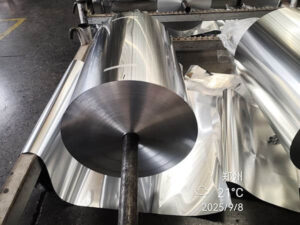
The production of 8011 coated aluminum foil involves several sophisticated stages, ensuring precision and quality.
Direct Chill (DC) Casting
Ingot dimensions: 500-600mm thickness, 1,500-2,000mm width
Casting temperature: 690-710°C
Cooling rate: Controlled at 2-4°C/s for grain structure optimization
Hot Rolling
Initial thickness: 500mm → 3-6mm
Temperature range: 350-480°C
Reduction ratio: 85-95% per pass
Cold Rolling
Intermediate gauge: 6mm → 0.3-0.5mm
Rolling speed: 800-1,500 m/min
Lubrication: Synthetic ester-based coolants
Foil Rolling (Tandem Mill)
Final thickness: 0.3mm → 0.006-0.2mm
Multi-pass reduction with intermediate annealing
Thickness tolerance: ±3% (6-30μm), ±5% (>30μm)
Annealing Treatment
Intermediate annealing: 340-380°C for 4-6 hours (H24 temper)
Final annealing: 360-400°C for 6-10 hours (O temper)
Atmosphere: Nitrogen with dew point <-40°C
Once the raw 8011 foil is produced, it proceeds to the coating stage:
Pre-treatment: The foil surface may be chemically cleaned or treated (e.g., with primers) to enhance coating adhesion.
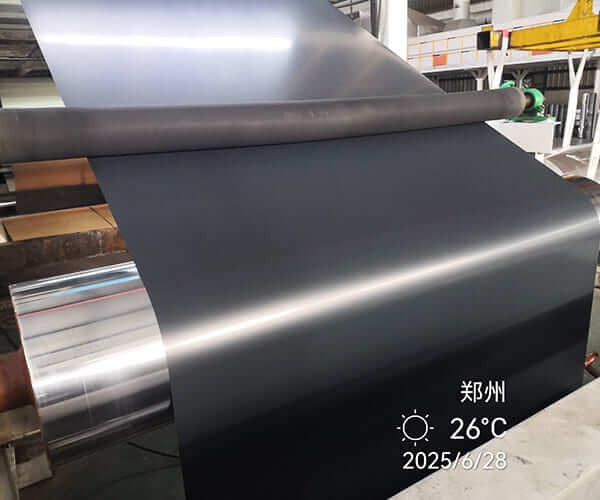
Coating Application: Liquid coatings (polymers or lacquers) are applied to one or both sides of the foil using precision coating methods such as roll coating, gravure coating, or extrusion coating.
Curing/Drying: The coated foil passes through a drying oven where solvents evaporate (for lacquers) or polymers melt and consolidate (for extrusion coatings), forming a solid, adherent layer. The temperature and dwell time are critical for proper curing and performance.
In many applications, 8011 coated aluminum foil is not used alone but as part of a multi-layer laminate:
Lamination: The coated foil is bonded to other materials like plastic films (e.g., PET, PP, Nylon) or paper/cardboard using adhesives (solvent-based, solventless, or water-based) or extrusion lamination. This creates a composite structure with enhanced properties like increased strength, specialized barrier, or printability.
Slitting: The wide rolls of laminated foil are slit into narrower rolls suitable for subsequent packaging machinery.
Forming and Heat Sealing: The final packaging material is then fed into form-fill-seal machines. The heat-sealable coating on the 8011 foil allows it to be fused to itself or to other layers of the packaging structure under controlled heat and pressure, forming hermetically sealed pouches, lids, or trays.
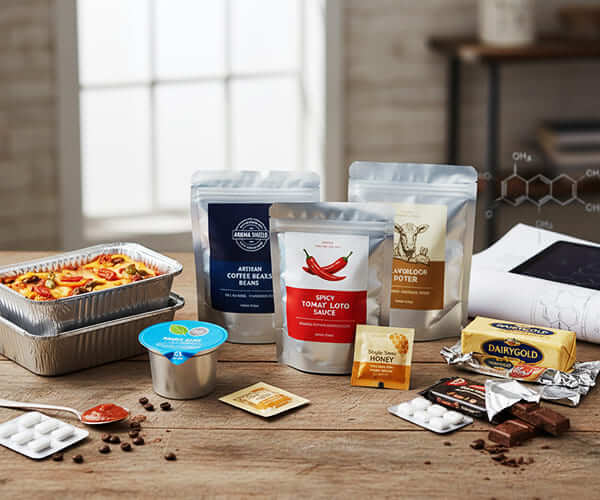
The versatility of 8011 coated aluminum foil allows for its widespread adoption across numerous food categories.
Coated 8011 foil trays (smoothwall or wrinklewall) are ideal for ready meals, casseroles, and baked goods.
The heat-resistant coatings allow them to go directly from the refrigerator or freezer into conventional ovens, providing convenience and maintaining food quality.
Lidding foils for these trays ensure freshness and easy peelability.

From potato chips to nuts and energy bars, coated 8011 foil laminates provide an impermeable barrier against oxygen and moisture, preventing staleness and rancidity.
The high printability of these foils enhances brand appeal for competitive snack markets.
For instance, the shelf life of potato chips can be extended from a few weeks to several months when packaged in foil laminates compared to basic plastic films.
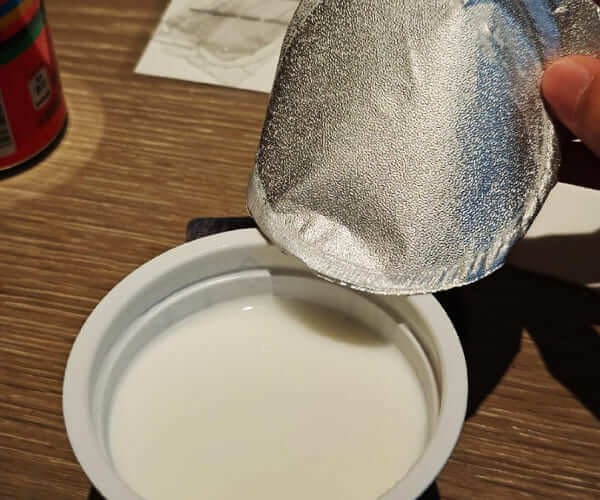
Yogurt lids, cheese wrappers, and butter foils extensively utilize coated 8011.
The barrier properties protect against oxidation and microbial contamination, preserving flavor and texture.
Heat-seal lacquers on yogurt lids ensure a secure, yet easy-to-peel seal.
Although less common for primary liquid beverage containers (due to rigidity), coated 8011 foil is critical for beverage pouches (e.g., juice boxes, wine bags-in-box), coffee pods, and chocolate drink powders, offering an absolute barrier against oxygen and light.
This prevents spoilage and preserves the delicate flavors of beverages.
For frozen vegetables, pizzas, or processed meats, coated 8011 foil provides freezer-to-oven convenience and prevents freezer burn by eliminating moisture loss.
Its ability to withstand extreme cold without becoming brittle is a key advantage.
Chocolate bars, candies, and chewing gum benefit from 8011 coated foil's dead-fold characteristic and barrier properties.
It keeps products fresh, prevents bloom in chocolate, and provides an attractive, protective wrap that maintains shape.

The production of 8011 coated aluminum foil for food packaging adheres to stringent industry specifications and rigorous quality control measures to ensure consistent performance, safety, and regulatory compliance.
Raw Material Inspection: Incoming 8011 alloy coils are tested for chemical composition, mechanical properties, and surface quality.
Foil Gauging: Continuous online gauges monitor foil thickness during rolling to maintain precise specifications.
Pinholes and Defects: High-speed optical inspection systems detect pinholes (a critical defect for barrier properties) and other surface flaws. Acceptable pinhole counts for food-grade foils are extremely low, often specified as less than 10 pinholes per square meter at 12 microns gauge.
Coating Thickness and Uniformity: Non-contact sensors measure coating weight and thickness across the web, ensuring consistent application.
Adhesion Testing: Cross-hatch adhesion tests and peel strength tests evaluate the bond between the coating and the foil, and between laminated layers.
Heat Seal Strength: Testing of seal integrity (e.g., burst strength, peel strength) is crucial to ensure packaging remains hermetically sealed during distribution and use. Typical peel strengths for heat-sealed flexible packaging might range from 2-10 N/15mm.
Barrier Property Testing: WVTR and OTR measurements are performed on final products to confirm the desired barrier performance.
Food Contact Compliance: Migration tests are conducted to ensure no harmful substances from the foil or coatings transfer to the food, complying with international standards like FDA 21 CFR 177 and EU Regulation 10/2011.
Surface Tension (Dyne Level): Critical for printability and coating adhesion, typically measured to be >38 dynes/cm.

| Criterion | 8011 Coated Aluminum Foil | Bare Aluminum Foil (1xxx / 8011) | Metallized Film (Al on PET/OPP) | Multilayer Polymer (PET/EVOH/PE) | Rigid Metal Cans (Al/Steel) | Glass |
|---|---|---|---|---|---|---|
| Barrier (O₂ / H₂O / Light) | Near-absolute barrier; light-impermeable; coatings add grease/seal functions | Absolute metal barrier; no inherent seal layer | Very good but not fully absolute; limited for long-term/retort | Good–very good; EVOH sensitive to humidity | Excellent barrier; light-proof | Excellent barrier; light transmission unless amber/opaque |
| Typical Thickness | 8–200 µm | 8–200 µm | 12–50 µm film + nm metallization | 40–200 µm (structure-dependent) | ~0.2–0.35 mm wall (varies) | mm-scale wall thickness |
| Heat / Thermal Processing | Excellent; suitable for ovenable and retort (coating-dependent 120–200 °C+) | Excellent metal heat tolerance | Limited; generally not for retort | Some retortable grades; oven use limited | Excellent; fully retortable | Excellent; sterilization and oven capable |
| Sealability & Printability | Excellent with heat-seal coatings and primers | Poor without lamination | Good; requires seal layer | Excellent; designed for FFS lines | Good with internal lacquer; labels required | Excellent labeling; requires closures |
| Mechanical / Convertibility | Excellent formability; deep-draw, lidding | Excellent formability | Excellent machinability; flexible | Highly flexible; laminate tunable | Very robust; stackable | Rigid; brittle under impact |
| Relative Weight per Unit Area | Low | Low | Very low | Low–moderate | High | Very high |
| Relative Material Cost (1–5) | 3 | 2–3 | 2 | 3 | 4 | 4 |
| Recyclability / End-of-life | High metal value; coatings may complicate separation | Highly recyclable | Limited in some streams | Mono-material recyclable; multilayers difficult | Widely recycled | Widely recycled; transport energy high |
| Typical Applications | Lidding, trays, retort meals, blister backing | Industrial wrap, lamination substrate | Snack pouches, wrappers | Flexible pouches, MAP foods | Canned foods | Bottles, jars |
| Key Advantages | Highest barrier-to-weight ratio; thermal conductivity; mature supply chain | Pure barrier performance | Lightweight; cost-effective | Design flexibility; good sealing | Exceptional durability and shelf life | Chemical inertness; premium image |
| Key Limitations | Coatings affect recycling complexity | Needs secondary processing | Lower barrier than foil; limited heat resistance | Multilayer recycling challenges | Heavy; higher transport cost | Heavy; breakable |
8011 coated aluminum foil represents a critical material in the ongoing evolution of food packaging.
Its inherent strengths-an absolute barrier to light, moisture, and gases, coupled with excellent thermal conductivity and formability-are meticulously enhanced by a diverse array of specialized coatings.
These coatings unlock essential functionalities such as heat sealability, corrosion resistance, and superior printability, making the material indispensable across a vast spectrum of food products, from sensitive dairy items to convenience-driven ready meals.
The industry's commitment to stringent quality control and regulatory compliance ensures the safety and reliability of 8011 coated foil.
While challenges related to initial energy consumption and complex multi-material recycling persist, ongoing innovations in sustainable coatings, lightweighting, and advanced recycling technologies are continuously improving its environmental profile.
As consumer demands for freshness, convenience, and sustainability continue to grow, 8011 coated aluminum foil, with its unmatched combination of properties and adaptability, is poised to remain a vital and evolving solution, safeguarding our food supply and contributing to a more efficient and appealing packaging future.
Q1: Is 8011 coated aluminum foil safe for direct food contact?
Yes-provided the coating/ink/adhesive system complies with the target market’s food-contact regulations and migration limits (supported by DoC/CoC and relevant test reports), and manufacturing follows GMP/cleanliness controls. In practice, safety depends more on the coating system and compliance evidence than on “8011” alone.
Q2: Can I put food packaged in 8011 coated aluminum foil in the microwave?
Generally no. Metal foil can cause arcing/sparking in a microwave and creates a safety risk. Only use it if the package is explicitly labeled microwave-safe and designed for microwave use, and then follow the instructions.
Q3: How thin can 8011 foil be for lidding?
For lidding, a common thickness range is about 20–40 µm, depending on the cup/tray material, sealing method, peel requirements, and line speed. Thinner gauges may be possible, but they require tighter control of pinhole rate, wrinkling, and seal yield, and must be validated on the actual structure.
Q4: Is 8011 coated aluminum foil recyclable?
Aluminum is highly recyclable, but “coated foil” in food packaging is often laminated with plastics or paper, and real-world recyclability depends on local recycling infrastructure and whether the structure can be separated/recognized. Mono-material aluminum is easier; multi-material laminates are often more difficult.
Q5: What distinguishes 8011 alloy from other aluminum alloys for food packaging?
8011 (an Al–Fe–Si alloy) is valued for stable strength and consistent rollability/converting performance at common packaging gauges, making it well-suited for high-volume production. It also retains the foil’s inherent high barrier and heat tolerance, while final performance still depends heavily on cleanliness/pinhole control and coating-system compatibility.