



1050 Aluminum Disc For Lighting Reflector
1. Introduction
1050 aluminum disc for lighting reflector is a specialized high-purity aluminum product engineered to meet the demanding optical, thermal, and mechanical requirements of modern illumination systems.
With an aluminum content of ≥99.5% , this alloy offers exceptional reflectivity (85-95% after mirror polishing), superior thermal conductivity (227 W/m·K), and excellent formability (elongation 30-40% in O temper), making it the preferred substrate for high-performance lighting reflectors.
The material's ability to maintain optical surface integrity through deep drawing and spinning processes-with surface roughness as low as Ra ≤ 0.10 μm for premium grades-enables manufacturers to achieve precise beam control and maximum lumen efficiency.
This comprehensive analysis explores the material's metallurgical foundations, surface engineering requirements, manufacturing processes, application-specific considerations, and quality standards, providing a definitive reference for lighting engineers, optical designers, and procurement specialists.

2. What is 1050 Aluminum Disc
A 1050 aluminum disc is a circular flat blank precision-cut from rolled aluminum sheet or coil, manufactured from commercially pure aluminum alloy 1050.
These discs serve as the starting material for manufacturing lighting reflectors through deep drawing, spinning, stamping, or hydroforming processes.
2.1 1050 Alloy Overview
1050 aluminum belongs to the 1000 series of commercially pure aluminum alloys, characterized by minimum aluminum content of 99.50%.
The chemical composition is tightly controlled to minimize impurities that could affect optical performance:
| Element | Content (%) | Function/Rationale |
|---|---|---|
| Aluminum (Al) | ≥ 99.50 | Base metal; high purity essential for reflectivity |
| Silicon (Si) | ≤ 0.25 | Impurity control; minimized to reduce light scattering |
| Iron (Fe) | ≤ 0.40 | Impurity control; affects anodizing quality |
| Copper (Cu) | ≤ 0.05 | Impurity control; minimized for corrosion resistance |
| Manganese (Mn) | ≤ 0.05 | Impurity control |
| Magnesium (Mg) | ≤ 0.05 | Impurity control |
| Zinc (Zn) | ≤ 0.05 | Impurity control |
| Titanium (Ti) | ≤ 0.03 | Grain refiner |
The high purity ensures uniform metal flow during forming and provides a clean, defect-free substrate for subsequent surface finishing operations.
2.2 Common temper for lighting applications
O temper (fully annealed) is the common supply condition for discs intended for forming into reflectors. O temper maximizes ductility and minimizes risk of cracking during large plastic strains (deep draw, spin forming).
Some applications may use a lightly strain-hardened temper (H-series) if additional spring stiffness is required after forming, but H tempers reduce ultimate formability.
2.3 Typical Specification Range
The specifications for 1050 aluminum discs can vary based on application requirements, but typical ranges include:
Thickness: Generally from 0.3 mm to 5.0 mm, though specialized applications might require outside this range. Common thicknesses for reflectors are often between 0.5 mm and 2.0 mm.
Diameter: From 50 mm up to 1200 mm, with custom sizes available. The dimension depends entirely on the luminaire's design.
Surface Finish: Initially supplied as a mill finish, ready for subsequent polishing, chemical brightening, or anodizing. The critical aspect here is a consistently smooth and clean surface, free from major defects that could impede optical finishing.
Tolerance: Adherence to international standards like ASTM B209 or EN 485-4 for dimensional tolerances (thickness, diameter, flatness) is crucial for consistent reflector production.

3. Why 1050 Aluminum Disc for Lighting Reflector?
The selection of 1050 aluminum for lighting reflectors is not coincidental; it is a deliberate choice driven by a confluence of superior material characteristics and manufacturing advantages.
3.1 Optical Performance Potential
This is arguably the most critical attribute. 1050 aluminum's high purity directly translates to its exceptional ability to achieve high levels of specular and diffuse reflectivity upon proper surface treatment.
High Specular Reflectance: After mirror polishing and chemical brightening, 1050 aluminum can achieve specular reflectance values exceeding 85-90% in the visible light spectrum. Some specialized surface treatments (e.g., vacuum metallization with an additional silver layer) can push this even higher, approaching 95-97%. This means minimal light loss and precise light control.
Consistency: The uniform microstructure resulting from its purity ensures consistent reflectivity across the entire surface of the reflector, preventing hot spots or uneven light distribution.
3.2 Processability
The excellent ductility and formability of 1050 aluminum in O temper make it highly adaptable to various shaping processes.
Deep Drawing: It can be deep-drawn into complex parabolic or elliptical shapes with minimal risk of tearing or wrinkling.
Spinning: Suitable for spinning processes to create intricate reflector profiles, allowing for design flexibility.
Pressing/Stamping: Efficient for high-volume production of simpler reflector forms.
This ease of processing reduces manufacturing costs and allows for greater design freedom in creating specialized optical components.
3.3 Surface Engineering Adaptation: Polishing, Chemical Brightening, and Anodizing
1050 aluminum's surface responds exceptionally well to various finishing techniques, which are essential for its optical function.
Mechanical Polishing: Provides an initial smooth surface, removing micro-scratches and preparing for chemical treatments.
Chemical Brightening: A crucial step involving chemical etching in acid baths to dissolve surface irregularities, resulting in a significantly brighter, mirror-like finish. This process is far more effective on high-purity alloys like 1050.
Anodizing: (Electrochemical passivation) While it can slightly reduce initial reflectivity (by 3-5%), clear anodizing provides a durable, transparent, and hard oxide layer that protects the highly reflective surface from scratches, corrosion, and environmental degradation, thus ensuring long-term optical stability. This is particularly important for outdoor or harsh environment lighting.
3.4 Lightweighting and Thermal Management
Lightweight: With a density of approximately 2.7 g/cm³, aluminum is significantly lighter than materials like steel or glass. This reduces the overall weight of luminaires, simplifying installation, reducing structural load, and lowering transportation costs.
Thermal Conductivity: As mentioned, 1050 aluminum's excellent thermal conductivity (209 W/m·K) is vital for modern lighting, especially with high-power LEDs. It efficiently draws heat away from the light source, helping to maintain optimal operating temperatures, which extends the lifespan of LED chips and other electronic components, and prevents color shift.
3.5 Cost and Supply Chain Maturity
Cost-Effectiveness: 1050 aluminum is relatively inexpensive compared to alternative highly reflective materials like silver or specialized composites. Its widespread availability and mature processing technologies contribute to its economic viability.
Supply Chain: The global aluminum industry is robust, with a well-established supply chain for 1050 alloy, ensuring consistent availability and competitive pricing.
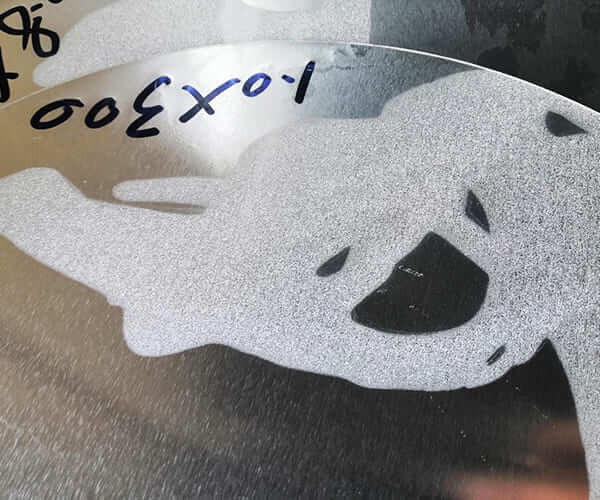
4. Manufacturing Process of 1050 Aluminum Discs for Lighting Reflector
The production of high-quality 1050 aluminum discs for lighting reflector is a multi-stage process requiring precision and stringent quality control.
4.1 Raw Material Preparation
The process begins with high-purity aluminum ingots. For optical applications, manufacturers often specify primary aluminum with very low impurity levels to ensure the best possible surface finish and reflectivity.
Ingots are melted in a furnace, and any necessary alloying (though minimal for 1050) or fluxing agents are added, followed by degassing to remove dissolved hydrogen and filtration to remove inclusions, ensuring a clean melt.
4.2 Rolling Process
The molten aluminum is cast into large slabs, which then undergo:
Hot Rolling: Slabs are heated to a high temperature (e.g., 400-500°C) and passed through rollers to reduce their thickness significantly, refine the grain structure, and achieve a homogeneous material.
Cold Rolling: After hot rolling, the material is further reduced in thickness at room temperature. Cold rolling provides excellent control over the final gauge, improves surface quality, and increases the mechanical strength (work hardening). For reflector applications, the goal is often a specific final thickness with minimal surface defects.
4.3 Annealing for O Temper
After cold rolling, the aluminum coils are subjected to an annealing process.
Full Annealing: The material is heated to a specific temperature (e.g., 340-410°C) for a controlled period and then slowly cooled. This process recrystallizes the grain structure, relieving internal stresses induced during cold rolling, and restoring the material to its soft, ductile "O" temper. This is crucial for subsequent forming operations into reflector shapes.
4.4 Surface Preparation for Optical Finishing
While the aluminum coil or sheet leaves the mill with a relatively smooth surface, further preparation is often required before optical finishing. This includes:
Cleaning: Removal of rolling oils, dust, and other contaminants using aqueous degreasing solutions.
Brushing/Buffing (Optional): Mechanical treatment to remove any minor surface imperfections or to pre-polish the surface for better subsequent chemical brightening.
4.5 Surface Finishing Processes
These are often performed after the disc has been formed into its final reflector shape, but the base material must be prepared for it.
Mirror Polishing: Mechanical polishing using abrasive compounds to achieve a highly smooth, near-mirror finish. This removes macro-scale scratches and improves specular gloss.
Chemical Brightening: Immersion in a specialized chemical bath (e.g., phosphoric-nitric acid mixtures) that selectively dissolves the aluminum surface, creating a microscopic smoothing effect and enhancing the specular reflectance. This step is extremely sensitive to alloy purity.
Anodizing: An electrochemical process where the aluminum is immersed in an electrolytic solution (e.g., sulfuric acid) and an electric current is passed. This creates a transparent, hard, and corrosion-resistant aluminum oxide layer on the surface, sealing the reflective finish. For optical reflectors, clear anodizing is used to preserve transparency and high reflectivity.

4.6 Disc Blanking
This is the process of cutting the finished 1050 aluminum sheet or coil into precise circular discs.
Punching/Stamping: For higher volumes and standard sizes, hydraulic presses with dies are used to punch out discs efficiently.
Shearing/Laser Cutting: For larger or custom-sized discs, advanced shearing machines or precision laser cutting systems are employed to ensure clean, accurate edges and minimal material deformation. Maintaining edge quality is important to prevent defects that could propagate during subsequent forming.
5. Applications of 1050 Aluminum Discs for Lighting Reflector
5.1 Commercial and Industrial Lighting
High Bay and Low Bay Luminaires: Essential for directing light efficiently in warehouses, factories, and large retail spaces, often paired with LED or HID sources. The high reflectance ensures maximum light delivery to the work plane.
Office & Retail Lighting: Used in downlights, track lighting, and panel lights to provide uniform illumination and minimize glare. For example, a typical 150mm diameter 1050 aluminum disc for lighting reflector in a downlight can achieve a beam angle of 60-90 degrees with over 88% optical efficiency.

5.2 Residential Lighting
Recessed Lighting (Downlights): Common in homes for ambient and task lighting, where compact and efficient light delivery is needed.
Decorative Fixtures: Can be shaped into various forms to create unique lighting aesthetics while maintaining functional light output.
5.3 Outdoor & Public Lighting
Street Lights & Area Lights: Critical for directing light onto roads and pathways, ensuring safety and visibility. Anodized 1050 reflectors provide necessary weather resistance.
Floodlights & Security Lighting: Used in stadiums, parking lots, and building facades, where powerful, directed light is required.
5.4 Automotive Lighting
Headlights (Low and High Beam): Precisely engineered 1050 reflectors are crucial for creating specific beam patterns that meet stringent safety regulations and maximize driver visibility. For instance, a parabolic reflector can ensure a broad, even spread of light, while an ellipsoidal reflector can gather light more intensely for a focused beam.
Fog Lights & Signal Lights: Contribute to overall vehicle safety by ensuring effective light projection under challenging conditions.
5.5 Specialty Lighting
Stage & Studio Lighting: Used in theatrical and broadcast settings for focused spotlights and floodlights, where precise light control is paramount.
Medical & Dental Lights: Provide bright, uniform, and shadow-free illumination for examination and surgical procedures.
Horticultural Lighting (Grow Lights): Maximize the PPFD (Photosynthetic Photon Flux Density) directed towards plants, optimizing growth.
5.6 LED Architectural & Decorative Lighting
With the rise of LED technology, 1050 aluminum disc for lighting reflector is being designed with increasingly complex micro-facets and textures to precisely manage the light output from compact LED sources, creating bespoke lighting effects and achieving specific light distribution curves for modern architectural designs.

6. Comparison with Alternative Materials and Alloys
| Property / Material | AA-1050 (O) | AA-3003 / 3004 | AA-5052 / 5xxx | Stainless Steel (304/430) | Clad Materials (Al + SS) | PVD Metallized Plastic |
|---|---|---|---|---|---|---|
| Thermal Conductivity (W/m·K) | 200–230 | 150–170 | 110–140 | 14–16 | Depends (Al core dominant) | ~0.2 (very low) |
| Density (g/cm³) | 2.71 | 2.73 | 2.68 | ~7.9 | Composite | 1.0–1.3 |
| Tensile Strength (MPa) | 40–90 (O) | 100–170 | 200–300 | 200–520 | Varies | Low |
| Specular Reflectance (%) | 86–92 | 84–90 | 80–88 | 60–75 | 80–90 | 60–85 |
| Formability | Excellent | Very Good | Good | Poor–Moderate | Good | Excellent |
| Weight Advantage | Excellent | Excellent | Excellent | Poor | Medium | Excellent |
| Corrosion Resistance | Good | Good | Excellent | Excellent | Excellent | Moderate |
| Thermal Management | Excellent | Very Good | Good | Poor | Very Good | Poor |
| Surface Finish Potential | Excellent (mirror polish) | Very Good | Good | Good | Good | Good (initial) |
| Durability | Moderate | Good | Very Good | Excellent | Excellent | Moderate–Low |
| Relative Cost | Low | Low–Medium | Medium | High | High | Low–Medium |
| Typical Applications | Indoor reflectors, downlights | Stronger reflectors | Outdoor/large fixtures | Harsh environments | Premium/induction | Decorative, low-cost lighting |
7. Quality Standards and Certifications
Adherence to rigorous quality standards is paramount for 1050 aluminum disc for lighting reflector, ensuring consistent performance and reliability.
Material Composition: Conformance to international standards like ASTM B209 (Standard Specification for Aluminum and Aluminum-Alloy Sheet and Plate) or EN 573-3 (Aluminum and aluminum alloys - Chemical composition and form of products) for 1050 alloy.
Dimensional Tolerances: Specifications governed by standards such as EN 485-4 (Aluminum and aluminum alloys - Sheet, strip and plate - Part 4: Tolerances on form and dimension for cold-rolled products) or relevant ASTM standards to ensure consistent disc diameter, thickness, and flatness.
Surface Quality: Visual inspection standards for defects (scratches, inclusions, pits) and quantitative measurements for surface roughness (e.g., Ra values) before and after finishing.
Optical Performance:
Spectrophotometric Analysis: Measuring spectral reflectance across the visible spectrum (and sometimes UV/IR) to confirm desired reflectivity.
Goniophotometric Testing: Used to characterize the entire light distribution curve of the finished reflector, ensuring it meets specified beam angles and intensity.
Corrosion Resistance: Salt spray tests (e.g., ASTM B117) or other accelerated weathering tests for anodized reflectors to confirm long-term durability.
ISO 9001 Certification: Demonstrates a manufacturer's commitment to a robust quality management system throughout the production process.
RoHS/REACH Compliance: Ensuring the material and manufacturing processes meet environmental and hazardous substance regulations.
8. Why Choose Huawei 1050 Aluminum Discs for Lighting Reflectors
If you are evaluating a branded supplier such as Huawei, look for:
Traceable mill test certificates for alloy and temper (ensures repeatable forming and optical results).
Demonstrated optical finishing capability - sample reflectance spectra and goniophotometer data from prior projects.
Robust coating qualifications: thermal endurance at LED junction temperatures, low yellowing, adhesion and abrasion performance.
Process controls for forming: forming strain mapping, die maintenance records and scrap/yield statistics.
Quality management: ISO certification, incoming inspection, lot traceability and corrective-action processes.
Supply chain capacity to meet production volumes with consistent quality and batch uniformity.
9. Conclusion
The 1050 aluminum disc for lighting reflector, underpinning the performance and efficiency of countless luminaires worldwide.
Its high purity grants it exceptional optical potential, making it amenable to advanced surface treatments that yield high specular reflectivity.
Coupled with its outstanding processability, excellent thermal management capabilities, lightweight nature, and cost-effectiveness, 1050 aluminum offers a compelling solution for a diverse range of lighting applications.
As lighting technology continues to evolve, particularly with the proliferation of LEDs, the demand for high-performance, durable, and precisely engineered reflector materials will only intensify.
The 1050 aluminum disc, backed by stringent quality standards and continuous manufacturing innovation, is poised to continue its critical role in shaping the future of illumination.
FAQs
Q1: What is the primary advantage of 1050 aluminum over other aluminum alloys for reflectors?
A1: The primary advantage is its high purity (minimum 99.5% aluminum), which allows it to achieve significantly higher specular reflectance after chemical brightening and anodizing compared to alloys like 3003 or 5052, which have more alloying elements that interfere with optical finishing.
Q2: Why is the "O" temper important for 1050 aluminum discs in reflector applications?
A2: "O" temper (fully annealed) signifies maximum ductility and formability. This soft state is crucial for allowing the disc to be deep-drawn, spun, or pressed into complex parabolic or elliptical reflector shapes without cracking or tearing, which would be difficult with harder tempers.
Q3: How does 1050 aluminum contribute to the lifespan of LED lighting fixtures?
A3: 1050 aluminum has excellent thermal conductivity (approx. 209 W/m·K). This allows it to efficiently dissipate heat generated by LED modules, keeping them within optimal operating temperatures. Lower operating temperatures significantly extend the lifespan of LED chips and associated electronic components, preventing premature degradation and color shift.
Q4: What surface treatments are typically applied to 1050 aluminum reflectors to enhance reflectivity and durability?
A4: Common treatments include mechanical polishing, chemical brightening (to achieve a mirror-like finish), and clear anodizing. Anodizing creates a hard, transparent oxide layer that protects the reflective surface from scratches, corrosion, and environmental factors, ensuring long-term optical performance.
Q5: Can 1050 aluminum discs be recycled?
A5: Yes, aluminum is highly recyclable. 1050 aluminum is 100% recyclable without significant loss of its properties, making it an environmentally friendly choice. This contributes to a circular economy and reduces the energy required for primary aluminum production.
Send Inquiry
