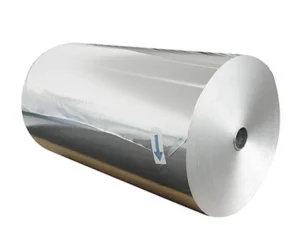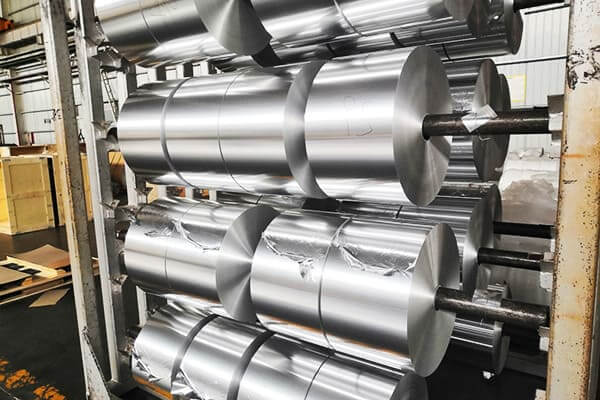
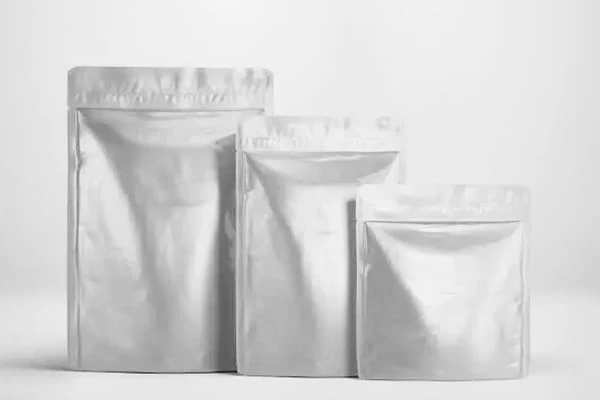
8079 Aluminum Foil For Flexible Packaging has become a critical material across food, pharmaceutical, cosmetic, and industrial packaging due to its unique structural, mechanical, and barrier characteristics.
As global supply chains expand and product protection standards rise, modern packaging must offer more than simple containment-it must ensure shelf-life stability, contamination prevention, regulatory compliance, brand differentiation, and cost efficiency.
In this context, the 8xxx-series alloy 8079 has gained strong market presence because it was engineered specifically for thin-gauge production, excellent ductility, superior formability, and minimal pinhole occurrence, making it particularly well-suited for high-performance laminates and complex pouch structures.
Compared with more conventional alloys like 8011 and 1235, 8079 aluminum foil provides enhanced elongation, surface quality, and tensile balance, enabling converters to achieve higher line speeds, deeper draws, and more reliable sealing-while maintaining an exceptionally stable barrier to oxygen, water vapor, aromas, UV light, and microbial intrusion.

The 8079 alloy belongs to the 8xxx-series aluminum family, characterized by enhanced ductility and controlled iron–silicon content to improve deep-drawability and minimize pinholes.
| Element | Typical Range (%) | Function / Material Role |
|---|---|---|
| Aluminum (Al) | 98.0–99.0 | Base matrix; provides corrosion resistance, lightweight structure, and purity for food/pharma safety. |
| Iron (Fe) | 0.6–1.0 | Strengthens alloy, enhances toughness, reduces pinholes, improves rolling stability. |
| Silicon (Si) | 0.05–0.30 | Contributes to ductility, improves alloy workability, refines grain structure. |
| Copper (Cu) | ≤ 0.05 | Minimal impurity to maintain corrosion resistance and avoid chemical interactions with packaged goods. |
| Manganese (Mn) | ≤ 0.05 | Provides slight strengthening without reducing elongation. |
| Magnesium (Mg) | ≤ 0.05 | Very low to maintain softness and avoid excessive hardening. |
| Other Elements (Ti, Zn, Cr) | ≤ 0.03 (combined) | Controlled for foil-grade purity and regulatory compliance. |
Key Insight:8079’s carefully balanced Fe–Si chemistry results in superior elasticity and anti-cracking behavior, essential for ultra-thin foils (<10 μm) and deep-drawn flexible packaging structures.
8079 foil is widely preferred due to its combination of high elongation, optimized strength, excellent surface characteristics, and unmatched barrier performance.
| Property Category | Typical Value Range | Technical Significance |
|---|---|---|
| Tensile Strength | 70–120 MPa (O–H18 tempers) | Balanced strength ideal for lamination, forming, and high-speed packaging. |
| Yield Strength | 30–80 MPa | Ensures foil stability during deep-draw forming and cold-form blistering. |
| Elongation | 15–35% | Much higher than 8011/1235; reduces risk of tearing and pinholes in thin gauges. |
| Thickness Range | 6–60 μm (typical packaging grades) | Supports diverse applications from ultra-thin laminates to heavy-duty food/pharma packaging. |
| Density | 2.70 g/cm³ | Lightweight; enables downgauging and transportation cost reduction. |
| Melting Range | 590–650°C | Ensures thermal stability for retort sterilization (121–135°C). |
| Surface Roughness (Ra) | 0.20–0.40 μm | Ideal adhesive anchorage for lamination and print quality. |
| WVTR (Water Vapor Transmission Rate) | ~0 g/m²/day | Maximum moisture barrier; critical for pharmaceuticals and dehydrated foods. |
| OTR (Oxygen Transmission Rate) | ~0 cc/m²/day | Zero oxygen ingress ensures extended shelf-life. |
| Light Barrier | 100% UV & visible light block | Protects light-sensitive ingredients such as vitamins, oils, and APIs. |
| Corrosion Resistance | High (due to Al₂O₃ passive layer) | Prevents reactions with foods, chemicals, acids, or organic compounds. |
| Thermal Conductivity | ~235 W/m·K | Supports uniform heat-sealing at controlled temperatures. |
| Electrical Conductivity | ~35–38% IACS | Characteristic of 8xxx alloys; indicates purity and stability. |
A continuous aluminum layer in a laminate provides near-absolute oxygen and light barrier and extremely low water vapor transmission relative to polymer-only films.
While barrier metrics depend on the complete laminate, an aluminum foil layer essentially reduces OTR to zero and drops effective WVTR orders of magnitude versus polymer-only structures. That manifests as:
Full light opacity – essential for photolabile actives.

8079 was optimized to permit:
These properties reduce converting downtime, increase yield and improve finished pouch aesthetics (smooth surfaces, fewer wrinkles).
Because aluminum offers superior barrier per unit thickness, many packages can be downgauged (use thinner foil) and still meet barrier targets. Practical impacts:
Aluminum itself is inert and widely accepted for food and pharmaceutical contact when used appropriately. 8079 foil is used widely in applications that demand compliance with:
High-purity primary aluminum is alloyed in controlled furnace environments.
Melt control for 8079 focuses on precise Fe/Si ratios and minimizing tramp elements.
Casting (direct chill or continuous) produces slabs with uniform microstructure, an important first step to achieve consistent foil at thin gauges.
Slabs undergo hot rolling to produce intermediate gauge coils.
Hot rolling breaks down cast microstructure; temperature control and schedule timing influence grain size and downstream cold-rolling behavior.
Multi-stage cold rolling reduces thickness to target gauge. Between rolling passes, intermediate anneals are applied to restore ductility.
Final anneal (batch or continuous) optimizes temper: too soft and foil wrinkles; too hard and foil cracks in forming. Typical objectives:
Converters require clean surfaces for adhesion of primers, lacquers and inks. Typical surface preparation steps include:
Corona treatment or chemical conversion coatings (chromate-free alternatives) to raise surface energy (target 32–38 dyn/cm) for reliable bonding.

Depending on end use, foil is coated with:
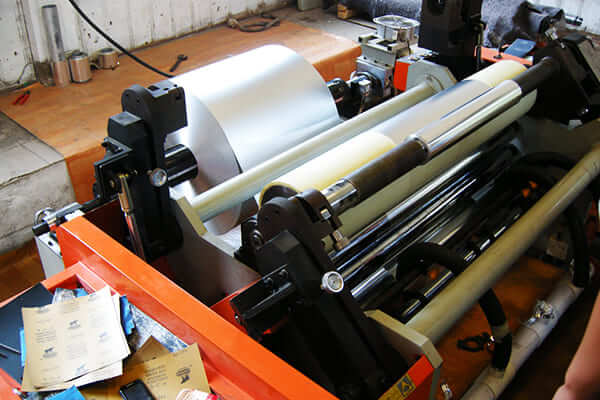
Lamination to polymer films (PET/AL/PE, OPA/AL/CPP, etc.) is carried out via adhesive lamination or extrusion lamination. Parameters: nip pressure, line speed, adhesive coat weight and oven cure conditions are all controlled to achieve defect-free laminates.
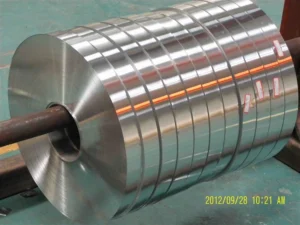
Finished coils are slit to width and inspected for:
Traceable CoA and batch records (anneal profiles, roll history) are generated for downstream quality assurance and regulatory audits.

Because of its exceptional barrier properties, high ductility, and compatibility with complex multilayer structures, 8079 aluminum foil is widely used across multiple industries where product safety, shelf-life extension, and packaging performance are critical.
Below is a detailed analysis of its major application sectors.
The food industry is one of the largest users of 8079 aluminum foil, especially for products requiring strict control over oxygen, moisture, aroma, and light exposure.
Snack & Dry Food PackagingUsed in chips, nuts, cereals, instant noodles, and powdered drinks to ensure longer shelf life and improved freshness.

The pharmaceutical sector demands extremely stable barrier solutions; 8079 foil is widely recognized for meeting stringent pharmacopeia requirements.
The cosmetic industry increasingly uses 8079 foil due to rising demand for travel-size, sample-size, and high-barrier beauty formulations.
For non-consumer sectors, 8079 foil provides robust protection against environmental stress and chemical degradation.
Chemical product sachetsSuitable for adhesives, solvents, catalysts, and moisture-sensitive chemicals.

With advancements in flexible packaging, new use cases for 8079 foil continue to grow:
7–15 micron uncoated foil, used for simple applications such as chocolate wraps, cheese sleeves, or as a barrier layer in multi-layer laminates.
It is cost-effective and versatile, making it the most common type for basic flexible packaging needs.
Foil with functional coatings:
Heat-sealable Coated (8–12 micron): PE or EVA coating for direct sealing in pouches and sachets.
Anti-stick Coated (10–15 micron): Silicone coating for bakery products (e.g., cake mixes, pizza bases) to prevent adhesion.
Printable Coated (9–12 micron): Acrylic coating that accepts pharmaceutical-grade inks for batch numbers and branding.
Multi-layer structures combining 8079 foil with other materials:
PET/8079 Foil/PE: For snack pouches and coffee bags, balancing stiffness, barrier, and sealability.
Nylon/8079 Foil/PE: For retort pouches, adding puncture resistance and heat tolerance.
Paper/8079 Foil/PE: For dry food packaging (e.g., flour, sugar), combining barrier performance with a recyclable paper outer layer.
6–9 micron foil, designed for lightweight, single-serve packaging (e.g., ketchup sachets, instant drink mixes).
It reduces material usage by 20% compared to 12-micron foil, improving sustainability and lowering transportation costs.
Ultra-thin 8079 foil maintains barrier performance (OTR ≤0.1 cm³/(m²·24h·atm)) while enabling more compact packaging.
| Property / Parameter | 8079 Aluminum Foil | 8011 Aluminum Foil | 8021 Aluminum Foil | 1235 Aluminum Foil | Metallized PET Film |
|---|---|---|---|---|---|
| Material Type | Aluminum Alloy | Aluminum Alloy | Aluminum Alloy | Aluminum Alloy | Polyester Film (PET) with Vacuum-Deposited Aluminum |
| Primary Use Cases | High-barrier food & pharma laminates | Household & food packaging | Cold-form blisters & deep draw | Cigarette packaging & light lamination | Snacks, coffee, dry foods, stand-up pouches |
| Al Content (Approx.) | 98.5–99% | 97.5–98.5% | 98–99% | ≥99.35% | ~0.02–0.04 µm metal layer on PET |
| Tensile Strength | Medium–High | Medium | High | Low | Very High (PET base film) |
| Elongation | High | Medium | Medium–High | High | Medium |
| Pinhole Resistance | Excellent | Good | Excellent | Fair | No pinholes (continuous film; metal layer may crack) |
| Barrier Level (O₂/H₂O) | Very High (near-zero) | Medium | Very High | Medium | Good but not zero; weaker than foil |
| Light Protection | 100% light-proof | Good | 100% | Good | Moderate to high depending on metallization density |
| Thermal Stability | Excellent | Good | Excellent | Moderate | Excellent (up to ~200°C) |
| Formability | Excellent (high ductility) | Good | Very Good | Good | Poor (not suitable for deep draw) |
| Thickness Range | 6–50 μm | 7–200 μm | 20–60 μm | 4–30 μm | 8–20 μm PET + 30–80 nm metal layer |
| Cost Level | Moderate | Low–Moderate | High | Low | Low |
| Best-Known Strength | Superior flexibility & barrier | Economical multipurpose foil | High strength for deep formability | Ultra-thin lamination foil | Excellent cost-to-barrier ratio; high mechanical strength |
| Limitations | Not transparent; weaker than 8021 | Lower ductility | Higher cost; less flexible | Lower strength | Barrier weaker than real foil; metal layer cracks under fold stress |
8079 aluminum foil contributes to sustainable flexible packaging initiatives in three key ways:
100% Recyclability: Aluminum is infinitely recyclable with no loss of quality. Recycling 8079 foil requires only 5% of the energy needed for primary aluminum production, reducing carbon dioxide emissions by 95% (data from the Aluminum Association).
Lightweight Design: Its low density reduces packaging weight, cutting transportation-related greenhouse gas emissions by 15–20% compared to rigid packaging.
Waste Reduction: By extending product shelf life, 8079 foil reduces food and consumer goods waste. Globally, 1.3 billion tons of food are wasted annually, and 8079-based packaging can reduce this by 20–25% for perishable products (UN Food and Agriculture Organization estimate).
8079 aluminum foil is a high-performance packaging material tailored to applications where barrier, formability and low defect rates are decisive.
It enables converters to produce thinner, lighter, high-barrier laminates that extend product shelf life, improve runnability and reduce material waste.
For food, pharmaceutical and specialty industrial uses-particularly where deep drawing, retort resistance or ultra-low pinhole incidence are required-8079 is often the technical optimum.
Selecting 8079 successfully requires: working with qualified suppliers, defining measurable acceptance criteria (pinholes/m², tensile/elongation, surface cleanliness, lacquer adhesion), validating laminate structures and performing E&L/migration studies when packaging food or pharma products.
Sustainability gains are attainable through downgauging, recycled-content sourcing and improved converter scrap management, but designers must also address the recycling challenge of multi-material laminates.
Q: What is the typical thickness range of 8079 foil for flexible packaging?
A: 7–15 microns: 7–9 μm for single-serve sachets, 10–12 μm for snack/coffee pouches, 12–15 μm for retort pouches and industrial packaging.
Q: Is 8079 foil compatible with microwave heating?
A: Pure 8079 foil is not microwave-safe, but foil-laminated packaging with microwave-safe plastics (e.g., polypropylene) can be designed for microwave use-always follow the package’s heating instructions.
Q: How does 8079 foil compare to 8011 for flexible packaging?
A: 8079 has higher elongation (≥25% vs. 8011’s ≥18%) and lower pinhole density (≤0.5 vs. ≤1.0 pinholes/m²), making it better for complex forming and high-barrier applications where defect-free performance is critical.
Q: Can 8079 foil be recycled with other aluminum products?
A: Yes. It is fully compatible with standard aluminum recycling streams, and recycled 8079 foil retains all its original material properties.
Q: What is the shelf life of unused 8079 foil for flexible packaging?
A: When stored in vacuum-sealed, moisture-proof packaging (per industry best practices), it has a shelf life of 24 months. After opening, it should be used within 6 months to prevent oxidation or coating degradation.